The shrimp are the part of this salad that can go wrong fastest: a little too long in the skillet and they turn firm instead of tender. I keep the shrimp in a single layer so each one cooks evenly, then take them off the heat as soon as they’re opaque and cooked through.
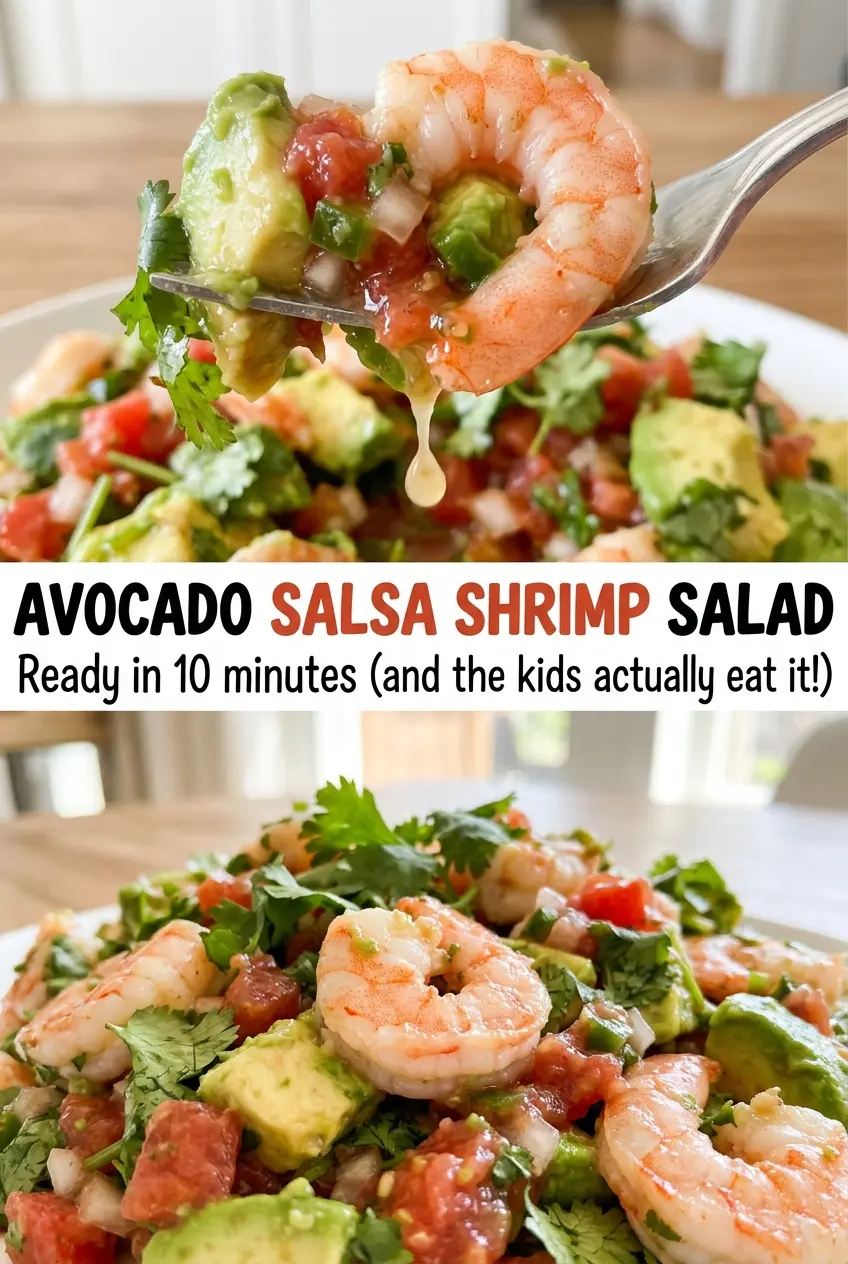
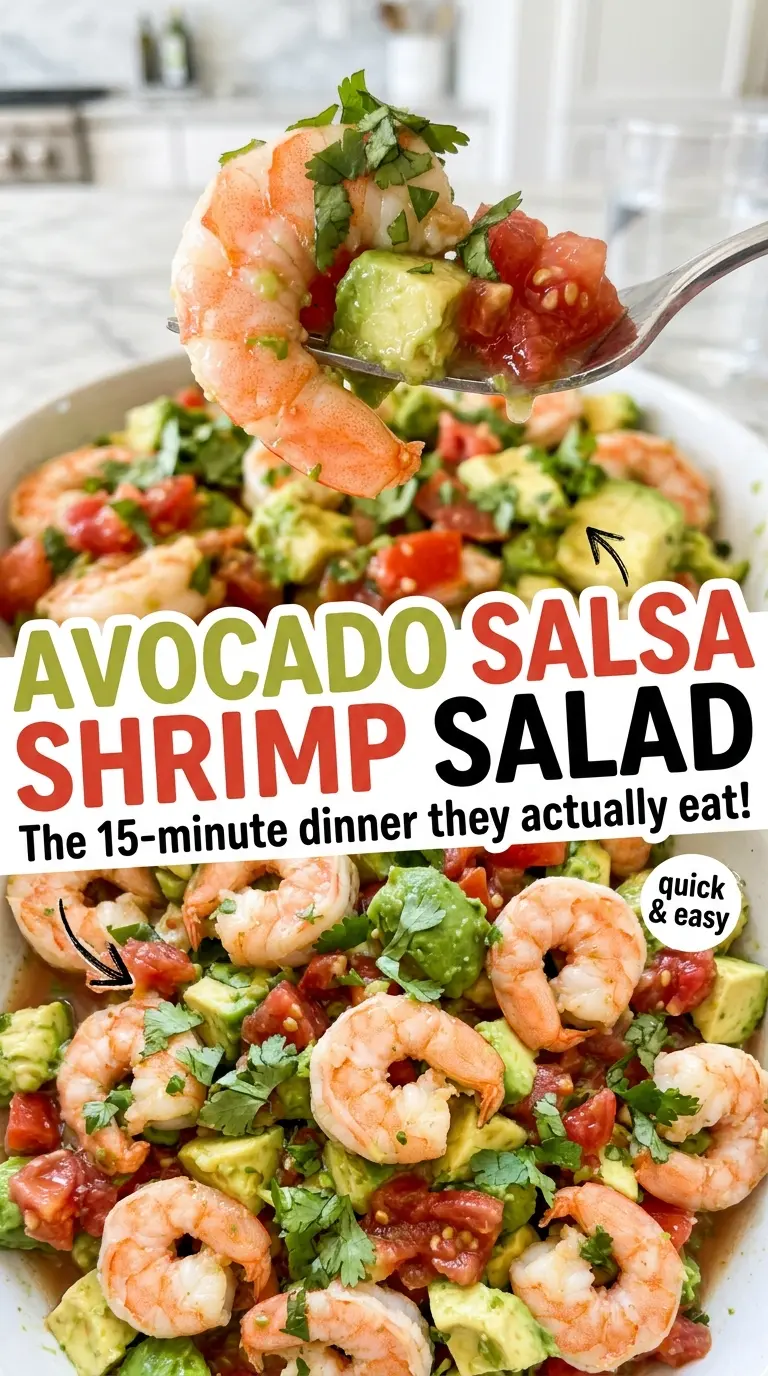
For Avocado Salsa Shrimp Salad, the salsa does the work of both topping and dressing. Avocado gives it a creamy texture, while tomato and lime keep every bite bright. I like how the warm shrimp soften the cool, crisp romaine without turning the whole bowl heavy.
The best contrast comes when the salsa is freshly mixed and the shrimp have had a few minutes to rest. You get juicy shrimp, creamy avocado, and crisp lettuce in every forkful.
Kitchen Note
Bake, Serve, Wear the Vibe 👕
Editor-picked tees our Oven To Fork readers love.



We may earn from qualifying purchases at no extra cost to you.
Let the shrimp rest on the plate for the full five minutes before adding them to the salad. That short pause helps them stay juicy instead of leaking their cooking juices over the romaine.
Save Avocado Salsa Shrimp Salad for a fresh, satisfying lunch with tender shrimp and a creamy lime-avocado salsa.
The Salsa Is the Dressing, So Keep the Lettuce Crisp
This salad doesn’t have a separate dressing to weigh down the romaine. The avocado salsa brings its own creamy coating, with lime juice and tomato adding enough moisture to cling to the shrimp and lettuce. That balance is what makes the bowl feel complete without another sauce.
Because the salsa is soft and the romaine is crisp, how you bring them together matters. The shrimp and salsa go over the lettuce rather than being stirred through it in advance, so the leaves keep their crunch. Build the plates just before serving, and each bite will have distinct textures instead of a bowl of softened greens.
The tomato and lime also give the avocado a fresher, lighter taste than avocado alone. Red onion and jalapeño add sharper notes, so the salsa has contrast rather than reading as a plain mashed-avocado topping. Keep the avocado diced and mix gently; the goal is a chunky salsa, not a smooth puree.
Why Large Shrimp and Ripe Avocados Matter Most
- Large raw shrimp — Shrimp in the 21 to 25 per pound range are substantial enough to stay distinct beside the diced salsa and chopped romaine. Choose peeled and deveined shrimp to keep prep straightforward. Thawed frozen raw shrimp work in place of fresh; thaw them fully and pat them dry so they sear rather than release excess water.
- Avocados — Ripe avocados give the salsa its creamy body while still holding their shape when diced and gently mixed. Choose fruit that yields slightly to gentle pressure; hard avocados won’t blend into the salsa, while very soft ones can collapse. There isn’t a close replacement that gives the same creamy texture, so wait for ripe fruit rather than using an unripe one.
- Tomato and lime — A ripe tomato brings juicy freshness, and lime juice brightens the avocado while helping slow browning. Any good, ripe tomato works diced. Freshly squeezed lime has a cleaner, livelier taste, but bottled lime juice works when that’s what you have.
- Red onion, jalapeño, and cilantro — These give the salsa its bite, heat, and fresh herbal edge. Finely chop the onion and jalapeño so they’re distributed instead of landing in oversized, sharp bites. Cilantro should look fresh and green; wilted leaves won’t bring the same lift.
- Romaine lettuce — Romaine is sturdy and crisp enough to hold the salsa and shrimp without disappearing under them. Keep the pieces bite-size so they’re easy to pick up with the toppings. The chopped leaves should be dry before serving; wet lettuce dilutes the salsa.
- Cumin and black pepper — Cumin adds warm, earthy seasoning to the shrimp, while black pepper gives it a little bite. Ground cumin is the right form here because it coats the shrimp evenly with the salt.
Cook the Shrimp Quickly, Then Assemble the Salsa Salad
Season the Shrimp for an Even Sear
Pat the shrimp dry, then toss them with half of the kosher salt, the black pepper, and ground cumin. Dry surfaces brown more readily than wet ones, and seasoning each shrimp before it reaches the pan gives the spice time to cling. Heat the olive oil in a 12-inch skillet over medium-high heat. Add the shrimp in a single layer rather than crowding them.
Watch for Opaque Centers
Cook the shrimp for 2 to 3 minutes per side, turning once. They’re ready when they’re opaque and reach 145°F in the thickest part; don’t wait for them to shrink into tight curls. If the skillet is crowded, the shrimp won’t cook as evenly, so keep them in that single layer. Transfer them to a plate and let them rest for 5 minutes.
Mix a Chunky Avocado Salsa
While the shrimp rest, gently mix the diced avocados with the tomato, red onion, jalapeño, cilantro, lime juice, and the remaining salt in a medium bowl. Use a light hand so the avocado stays in pieces instead of turning creamy all the way through. The salsa should look chunky, with the lime and tomato juices lightly coating the other ingredients. If you stir vigorously, the avocado can break down before it reaches the salad.
Layer Instead of Tossing
Divide the chopped romaine among four plates or bowls. Top each portion with the shrimp and avocado salsa, keeping the salsa on top rather than mixing the whole bowl together. This leaves the lettuce crisp and makes it easier to get shrimp, salsa, and romaine in the same bite. Serve as soon as the plates are assembled.
Simple Ways to Change the Heat or Make It Vegetarian
A Milder Avocado Salsa
Leave out the seeded jalapeño for a gentler salsa. You’ll lose its fresh chile heat, but the lime, red onion, and cilantro still keep the avocado lively.
A Vegetarian Avocado Salsa Salad
Leave out the shrimp and serve the avocado salsa over the romaine for a vegetarian version. It becomes a lighter salad without the savory, cumin-seasoned seafood, so think of this as a different, simpler meal rather than a direct replacement for the shrimp salad.
A Cilantro-Free Salsa
Skip the cilantro if you don’t enjoy its distinct herbal flavor. The salsa will taste less leafy and fresh, but the lime and tomato still bring brightness to the avocado.
Storage and Reheating
- Refrigerator: Store the shrimp, salsa, and romaine separately in airtight containers. The shrimp keeps for 3 to 4 days; for the best texture, use the salsa and chopped lettuce within a day, since avocado browns and greens soften.
- Freezer: Don’t freeze the assembled salad. The romaine and avocado turn soft and watery after thawing.
- Reheating: The salad is best served cold or with freshly cooked shrimp. If you want to warm refrigerated shrimp, heat only the shrimp gently in a skillet and add it to the cold romaine and salsa; warming the assembled salad wilts the lettuce and softens the avocado.
Questions That Come Up With Avocado Salsa Shrimp Salad
Avocado Salsa Shrimp Salad
Ingredients
Equipment
Method
- Pat the shrimp dry and toss with 1/2 teaspoon of the salt, the black pepper, and cumin.
- Heat the olive oil in a 12-inch skillet over medium-high heat.
- Add the shrimp in a single layer and cook for 2 to 3 minutes per side, until opaque and 145°F in the thickest part.
- Transfer the shrimp to a plate.
- Let the shrimp rest for 5 minutes.
- Gently mix the avocados, tomato, red onion, jalapeño, cilantro, lime juice, and remaining 1/4 teaspoon salt in a medium bowl.
- Divide the romaine among four plates or bowls, top with the shrimp and avocado salsa, and serve.