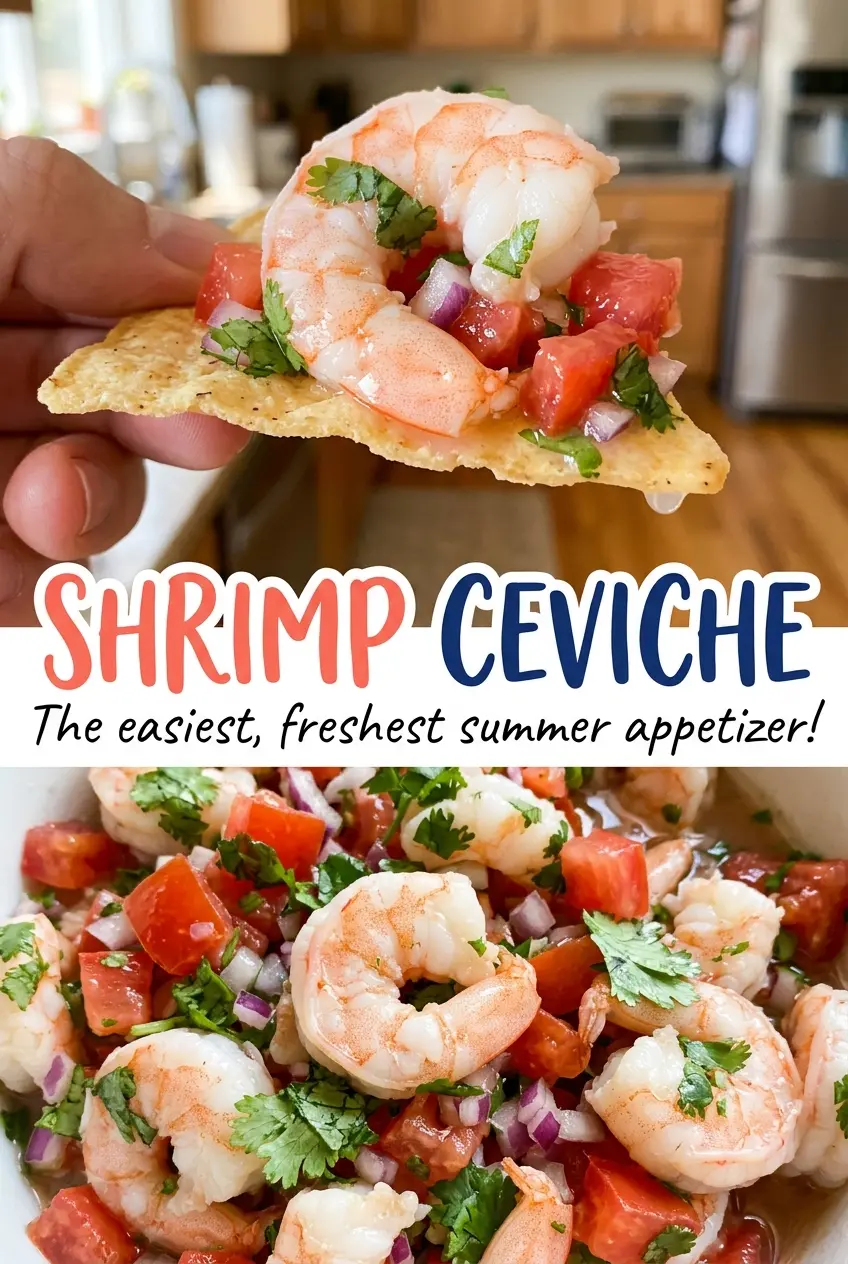
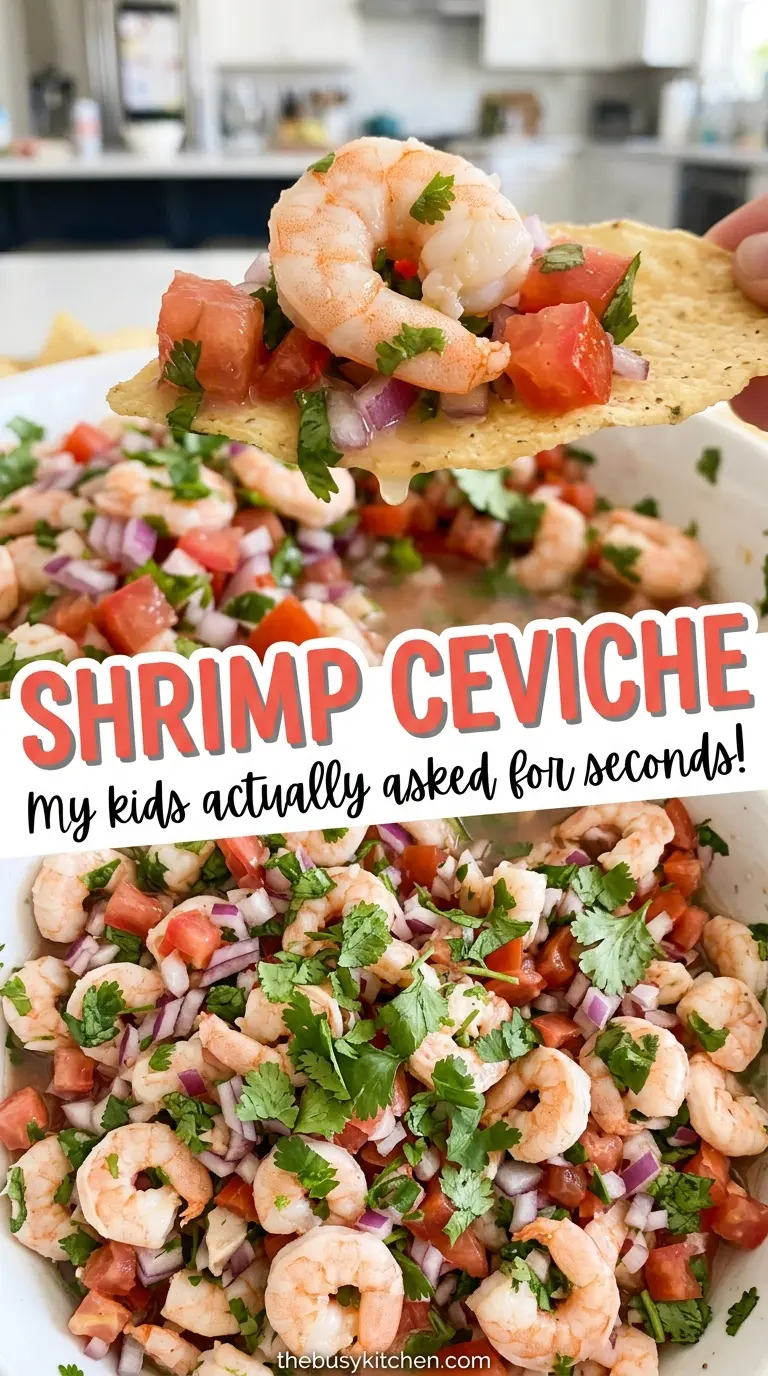
The water is still steaming when the shrimp turn opaque, and those few minutes are where this bowl gets its clean, tender bite. I cook the shrimp first, then chill them with lime, salt, and crisp vegetables for a bright shrimp ceviche that feels fresh without asking citrus to do the cooking.
Seeding the jalapeño keeps its peppery flavor in the mix without letting the heat take over. I dice it finely so a little lands in each bite, alongside the red onion and tomato. The result is lively and citrusy, with cool avocado to soften the edges.
Kitchen Note
Bake, Serve, Wear the Vibe 👕
Editor-picked tees our Oven To Fork readers love.



We may earn from qualifying purchases at no extra cost to you.
Fold in the avocado right before serving, using a light hand. It bruises easily, and a few gentle turns keep the pieces intact instead of turning the bowl creamy all over.
Save this shrimp ceviche for a bright, citrusy bowl with tender shrimp, a little jalapeño heat, and avocado folded in at the last minute.
Why the Lime Goes on After the Shrimp Is Cooked
The name ceviche often brings to mind seafood that sits in citrus until it looks opaque. That isn’t the method here. I cook the shrimp in boiling water first, then use the lime juice to season it and bring the onion, tomato, jalapeño, and cilantro together. That choice gives you a more predictable texture: the shrimp are cooked through before the citrus rest begins, rather than relying on lime to change the appearance of raw seafood.
The 15-minute chill still matters. It gives the lime and salt time to coat the shrimp and lets the flavors mingle, but it isn’t a substitute for cooking. Keep the shrimp pieces bite-size so they take on the seasoning evenly, and don’t leave the lime mixture sitting for hours; the texture can become firmer and less tender. This version lands between a seafood salad and a classic citrus-forward ceviche, with a clear, fresh shrimp flavor at the center.
What Fresh Lime, Firm Avocado, and Good Shrimp Bring to the Bowl
- Raw shrimp — Peeled and deveined shrimp keep prep straightforward, and raw shrimp are what this method is built around. Fresh or frozen raw shrimp both work; if yours are frozen, thaw them completely in the refrigerator before cooking so they heat evenly. There’s no need to seek out a premium size for this chopped dish, but choose shrimp that smell clean and mild.
- Fresh lime juice — Fresh juice gives the bowl a bright, clean acidity. Bottled lime juice works in a pinch, though its flavor is usually flatter and sometimes sharper. Taste the finished mixture before serving; the lime should wake up the shrimp and vegetables without drowning them.
- Red onion — Its crisp bite and mild sweetness stand up to lime. Finely diced pieces distribute through the bowl better than large chunks. White onion can replace it if that’s what you have, though the flavor will be more direct and pungent.
- Tomato — Choose a ripe tomato that still feels firm enough to dice neatly. Very soft tomatoes collapse as you stir and make the mixture wetter. A flavorful in-season tomato is worth choosing when you can; a basic firm tomato is fine when you can’t.
- Jalapeño — This brings fresh chile flavor as well as heat. Remove the seeds and finely dice the pepper for the balanced version here. If you prefer a stronger burn, keep a few seeds; the heat will be less restrained.
- Fresh cilantro — Cilantro adds a green, citrus-friendly note that dried herbs can’t replicate. Use fresh leaves and tender stems, chopped just before mixing. Flat-leaf parsley can stand in if cilantro isn’t for you, but the bowl will taste more grassy and less characteristic.
- Avocado — A ripe avocado adds a soft, buttery contrast to the sharp lime and crunchy vegetables. Pick one that yields gently when pressed but isn’t mushy. If it’s rock-hard, leave it out rather than forcing it into the bowl underripe.
The Short Boil and the 15-Minute Chill That Set the Texture
Bring the Water to a Full Boil
Pour the water into a 3-quart saucepan and bring it to a boil before the shrimp go in. Starting with boiling water gives the shrimp a quick, controlled cook. Don’t crowd the pan with extra shrimp beyond the amount here; a sudden drop in water temperature can make the timing less predictable. Have a colander and a bowl ready so you can move straight into cooling.
Cook Just Until the Shrimp Turn Opaque
Add the shrimp and cook for 2 to 3 minutes, checking the thickest piece rather than judging only by the smaller ones. The shrimp should look opaque, and the thickest part should reach 145°F. If the center still looks translucent, give them a little more time; if they’re tightly curled and firm, they’ve gone too far. Drain them and rinse under cold running water until cool.
Let Lime and Salt Season the Shrimp
Cut the cooled shrimp into bite-size pieces and put them in a bowl with the lime juice and kosher salt. Toss until the pieces are coated, then cover the bowl and refrigerate for 15 minutes. A short rest lets the seasoning reach the cut surfaces without leaving the shrimp in acid for too long. Keep the pieces fairly even so you don’t end up with a mix of sharply seasoned small bits and bland large ones.
Add the Vegetables, Then Finish Gently
Stir in the red onion, tomato, jalapeño, and cilantro after the shrimp have rested. Use a spoon to distribute everything without crushing the tomato. Fold in the diced avocado just before serving, turning the mixture only enough to spread it through the bowl. The finished ceviche should have distinct pieces, not a mashed avocado coating.
How to Change the Heat or Make a Plant-Based Bowl
A Milder, No-Chile Version
Leave out the jalapeño for a gentler bowl. You’ll lose its fresh pepper note along with the heat, while the lime, cilantro, and red onion still keep the mixture lively.
A Vegetarian Hearts-of-Palm Bowl
For a plant-based take, replace the shrimp with drained hearts of palm, cut into bite-size pieces. Skip the boiling and cooling steps, then toss the hearts of palm with the lime juice and salt and chill before adding the vegetables. The texture is tender and flaky rather than springy, but the citrus, tomato, onion, and cilantro still make a bright bowl.
Storage and Reheating
- Refrigerator: Keep leftovers covered in an airtight container and use within 2 days for the best texture. The avocado may soften and darken, and the tomato will release more juice as it sits.
- Freezer: Freezing isn’t a good fit. The tomato and avocado turn watery and soft after thawing, and the shrimp can lose its pleasant texture.
- Reheating: Serve this ceviche cold; reheating makes the shrimp firm and the avocado mushy. Take out only the amount you plan to serve instead of warming the whole container.
Questions That Come Up When Making Shrimp Ceviche
Shrimp Ceviche
Ingredients
Method
- Bring the water to a boil in a 3-quart saucepan.
- Add the shrimp and cook for 2 to 3 minutes, until opaque and 145°F in the thickest part.
- Drain the shrimp and rinse under cold running water until cool.
- Cut the shrimp into bite-size pieces.
- Toss the shrimp with the lime juice and salt in a bowl.
- Cover and refrigerate for 15 minutes.
- Stir in the red onion, tomato, jalapeño, and cilantro.
- Gently fold in the avocado just before serving.