The dough for these bars is thick enough that it needs to be spread into the pan, not poured. That’s a good thing: it gives you a tender, chewy center and edges that hold their shape once you cut the slab. I reach for these gingerbread cookie bars when I want the warm spice of a cookie without rolling, chilling, or baking tray after tray.
Unsulphured molasses gives the bars their deep gingerbread character, while a simple cream cheese frosting keeps the spice from tasting too sharp. The dough comes together in one bowl after the dry ingredients are whisked, and the parchment overhang makes the cooled bars much easier to lift out in one piece. Each square has a soft middle, a little edge chew, and a smooth layer of frosting.

Kitchen Note
Bake, Serve, Wear the Vibe 👕
Editor-picked tees our Oven To Fork readers love.


We may earn from qualifying purchases at no extra cost to you.
Leave parchment overhanging two sides of the pan. Once the bars are cool, you can lift the whole slab out instead of trying to pry the corners loose.
Save these gingerbread cookie bars for a soft, warmly spiced bake with a creamy cream cheese frosting.
Why Gingerbread Bar Dough Should Be Thick, Not Pourable
Cookie bars sit between drop cookies and cake: you want a dough that can be spread evenly, but you don’t want to loosen it until it flows like batter. Here, the brown sugar, softened butter, egg, and molasses make a dense mixture that holds the flour and spices in place. Once it’s in the pan, smooth it into an even layer so the center and edges bake at a similar pace.
Adding extra liquid to make spreading easier can throw off that balance. The dough should feel thick and a little sticky, not dry and crumbly, and it may take a few passes with a spatula to get it level. If it’s piled higher in the middle, the center will need longer to set while the edges continue baking. Taking a moment to even the surface gives you the best chance of bars that are soft through the middle and easy to portion.
What Molasses, Butter, and Cream Cheese Bring to These Bars
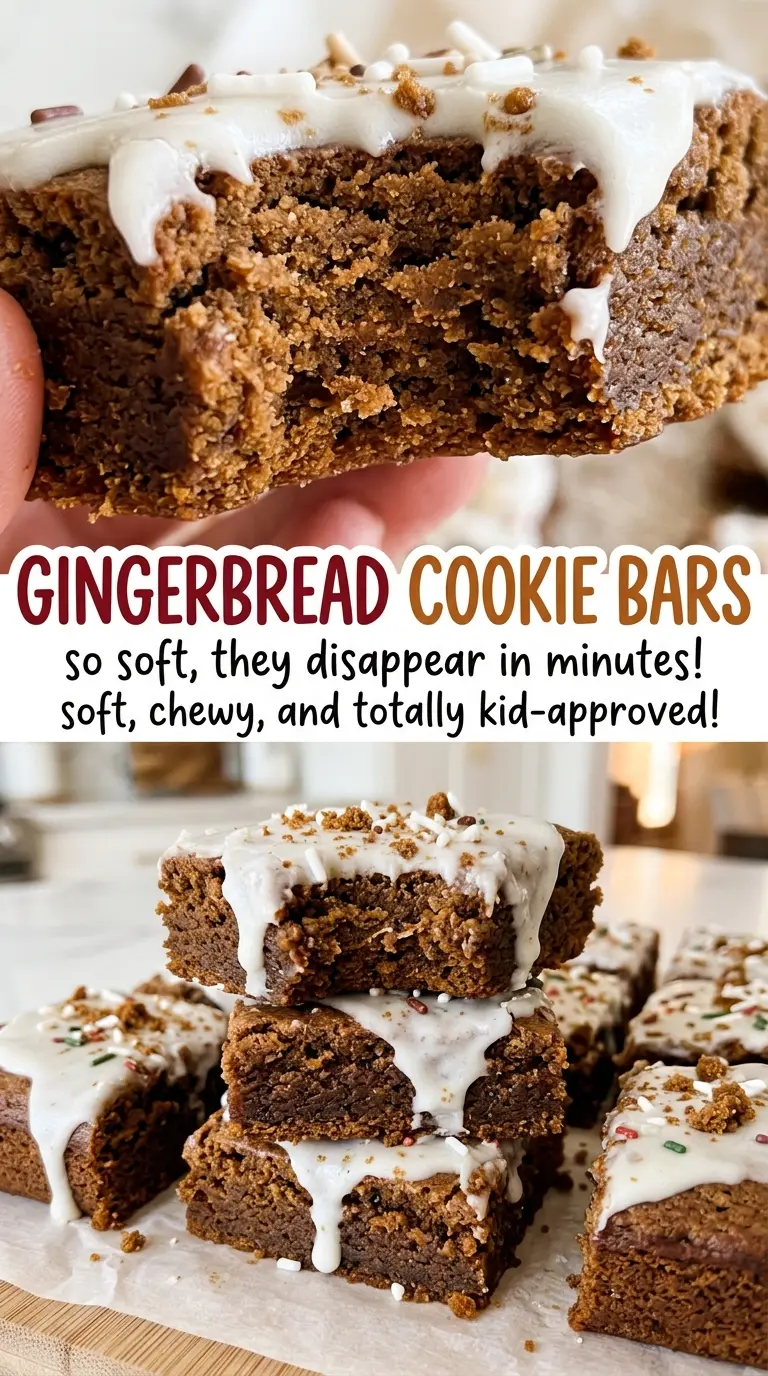
- Unsulphured molasses — It adds the deep, rounded sweetness that makes these taste like gingerbread rather than a plain spice bar. Choose unsulphured molasses, not blackstrap; blackstrap is much more intense and can make the bars taste bitter. A fresh bottle isn’t necessary, but avoid using a product whose aroma has turned stale or harsh.
- Ground ginger, cinnamon, and cloves — Together, these give the bars their familiar warmth, with ginger leading and cloves adding a sharper, deeper note. Fresh, aromatic spices make a noticeable difference here; if a jar has been open for years and barely smells when you open it, the baked bars will taste muted. Ordinary grocery-store ground spices work well when they’re still fragrant.
- Unsalted butter and light brown sugar — Softened butter creams smoothly with the sugar and carries the spices through the dough. Light brown sugar brings moisture and a mild caramel note; pack it firmly when measuring so the sweetness stays consistent. The recipe uses unsalted butter so the salt level is controlled.
- Egg and vanilla — The egg binds the thick dough and helps it bake into a sliceable bar, while vanilla rounds out the molasses. Use a large egg at room temperature if you have time; it blends more easily with softened butter than a cold egg does. Pure or standard vanilla extract both work.
- Cream cheese and powdered sugar — Cream cheese gives the topping its gentle tang, which balances the dark sweetness of the bars. Full-fat block cream cheese is the most dependable choice for a smooth, spreadable frosting; tub-style cream cheese can be softer. Powdered sugar dissolves into the frosting without the graininess granulated sugar would leave.
From Thick Dough to Clean-Cut Frosted Squares
Get the pan and spice mixture ready
Heat the oven to 350°F, grease a 9×13-inch pan, then line it with parchment so it overhangs two sides. Whisk the flour, baking soda, ginger, cinnamon, cloves, and salt in a medium bowl until the spices are evenly distributed. Breaking up any small flour or spice clumps now helps prevent concentrated pockets in the finished bars. Set the bowl aside while you cream the butter and sugar.
Cream the butter and build the molasses base
Beat the softened butter with the packed light brown sugar for about 2 minutes, until the mixture looks lighter and fluffy. If the butter is too firm, it won’t blend evenly; if it’s melted, it won’t cream into the same airy base. Beat in the egg, molasses, and vanilla until combined, scraping the bowl if you see streaks of butter or molasses along the sides. The mixture should look cohesive before the dry ingredients go in.
Mix just until the flour disappears
Add the flour mixture and mix only until no dry streaks remain. The dough will be thick, so stop once it comes together rather than continuing to beat it smooth. Scrape it into the prepared pan and spread it into an even layer, paying attention to the corners. A thin spot at the edge can bake faster than the center.
Bake until the center gives a few moist crumbs
Bake for 20–24 minutes, checking for set edges and a toothpick inserted in the center that comes out with a few moist crumbs. A toothpick covered in wet batter means the center needs more time; a completely clean toothpick can mean the bars have gone a little too far. The surface should look set rather than glossy in the middle. Cool the bars completely in the pan before adding the frosting.
Frost the cooled slab and portion it
Beat the softened cream cheese and butter until smooth, then beat in the powdered sugar until the frosting looks creamy. If you start with cold cream cheese, small lumps are harder to work out, so let it soften before mixing. Spread the frosting across the cooled bars in an even layer, then lift the slab from the pan using the parchment and cut it into 24 pieces. A long, sharp knife makes it easier to keep the edges neat.
Three Ways to Adjust the Spice, Frosting, or Flour
Make a gluten-free batch
Replace the all-purpose flour with a cup-for-cup gluten-free baking blend that includes xanthan gum, using the same measured amount. The bars may have a slightly more delicate crumb, so let them cool completely before lifting and cutting.
Make the spice gentler
Leave out the ground cloves if you prefer a milder, less pungent gingerbread flavor. Ginger and cinnamon will still come through clearly, but the finish won’t have the same sharp, peppery warmth.
Serve them without frosting
Skip the cream cheese frosting for a simpler, less sweet bar with the molasses and spices front and center. The tops won’t have the creamy contrast, but the bars are still easy to portion once cooled.
Storage and Reheating
- Refrigerator: Keep frosted bars covered in an airtight container for up to 4 days. The frosting firms up and the bars become a little denser when chilled.
- Freezer: Freeze the unfrosted bars, well wrapped or in an airtight container, for up to 2 months. Thaw them overnight in the refrigerator, then frost before serving.
- Reheating: These are best served cool or after sitting out briefly; don’t microwave them with the cream cheese frosting on top, since it softens and can turn greasy.
Questions That Come Up When Baking Gingerbread Cookie Bars
Gingerbread Cookie Bars
Ingredients
Equipment
Method
- Preheat the oven to 350°F.
- Grease a 9x13-inch baking pan and line it with parchment paper, leaving an overhang on two sides.
- Whisk the flour, baking soda, ground ginger, ground cinnamon, ground cloves, and salt in a medium bowl.
- Beat the butter and brown sugar in a large bowl until light and fluffy, about 2 minutes.
- Beat in the egg, molasses, and vanilla extract until combined.
- Add the flour mixture and mix just until no dry streaks remain, then spread the thick dough evenly in the prepared pan.
- Bake for 20–24 minutes, until the edges are set and a toothpick inserted in the center comes out with a few moist crumbs.
- Cool the bars completely in the pan.
- Beat the cream cheese and butter in a bowl until smooth, then beat in the powdered sugar until creamy.
- Spread the frosting over the cooled bars, then lift them from the pan using the parchment and cut into 24 pieces.