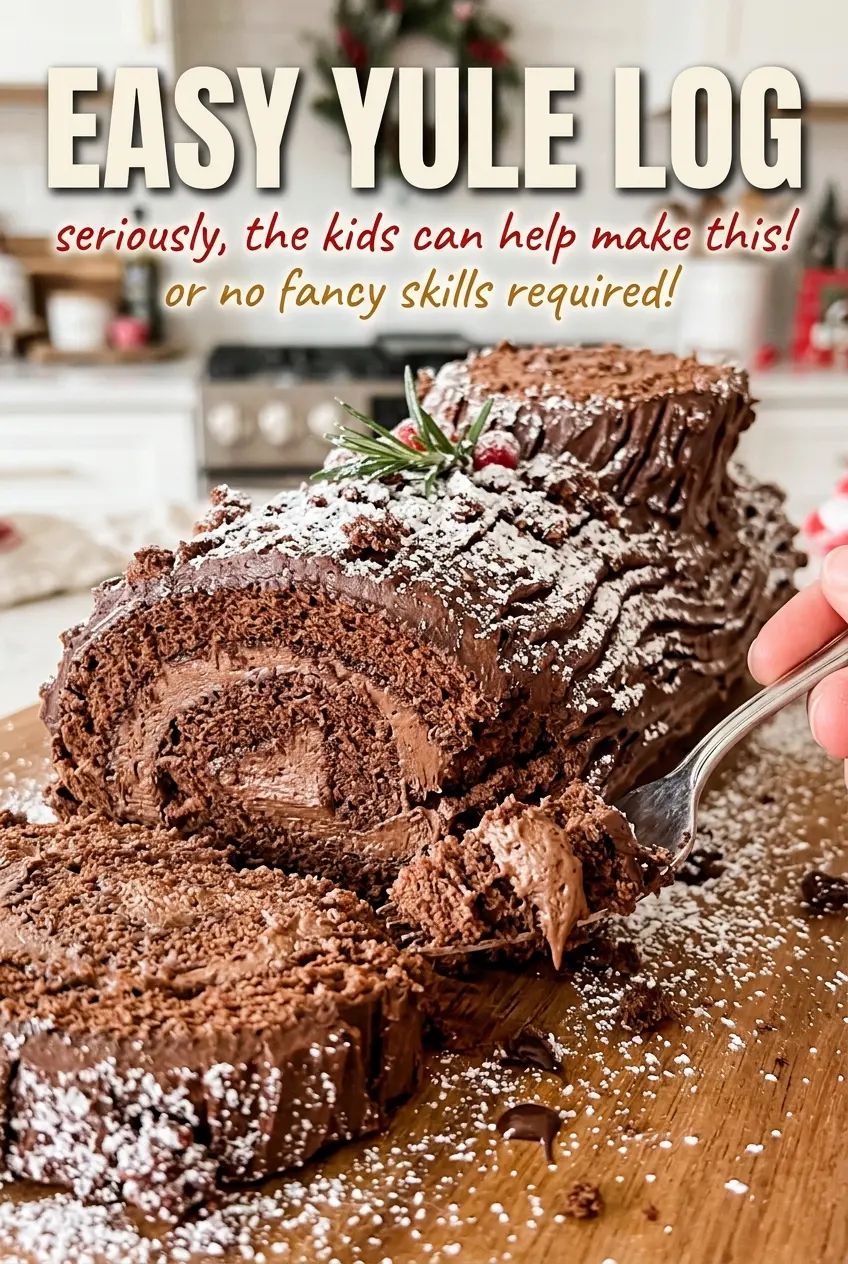
The first time I unrolled a chocolate sponge after it had cooled flat, the center split before I could get the filling on. Rolling the cake while it’s still warm solves that problem: it cools in a curve instead of fighting you later. These Easy Yule Log slices have a light cocoa cake wrapped around honey-vanilla cream, then a smooth chocolate coating scored to look like bark.
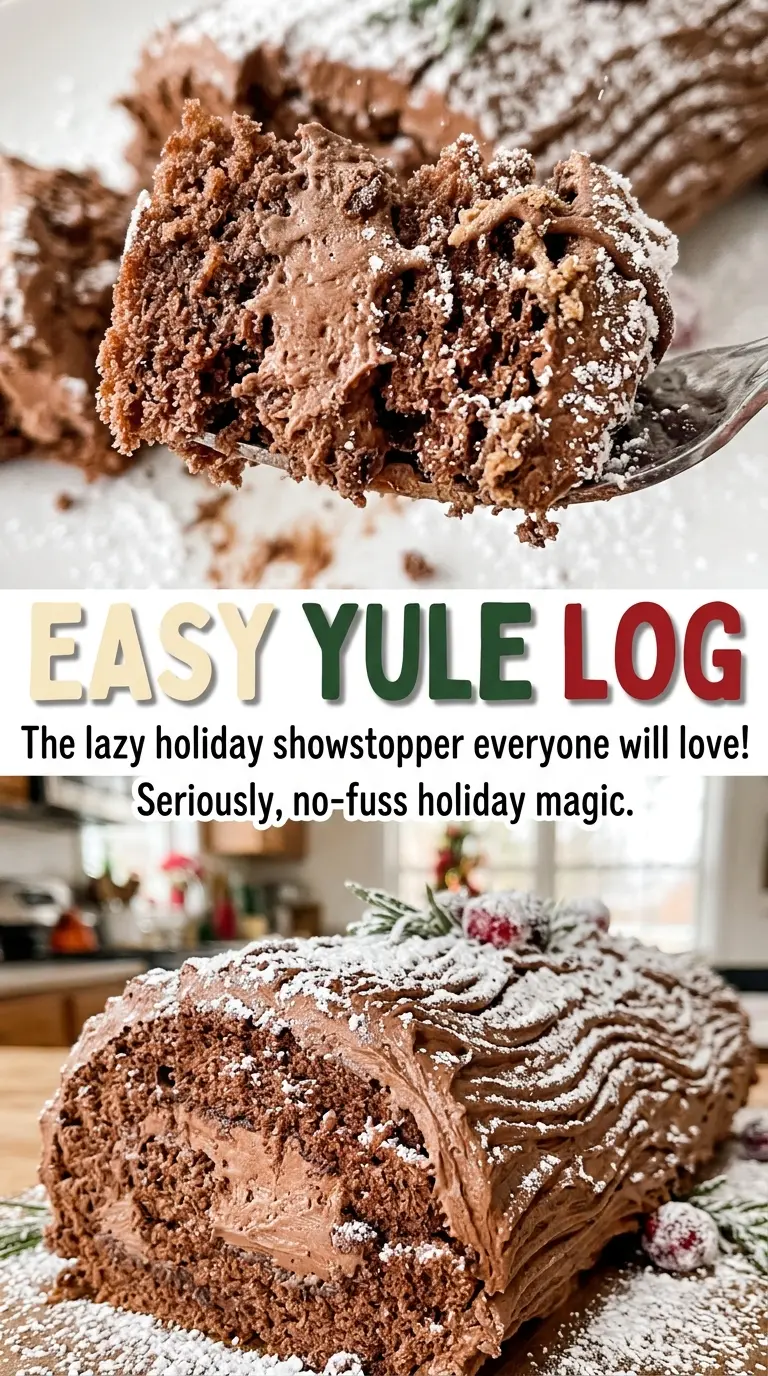
This cake depends on a thin, flexible sponge rather than a dense layer cake, so the pan size and the way you handle the batter both matter. I keep the folding gentle and move quickly once the cake comes out of the oven. The frosting also needs a little patience; it should be thick enough to stay on the log, but still soft enough to spread without pulling at the cake. After a chill, each slice shows the cream spiral against the dark cake and chocolate.
Kitchen Note
Bake, Serve, Wear the Vibe 👕
Editor-picked tees our Oven To Fork readers love.

We may earn from qualifying purchases at no extra cost to you.
Cold cream and a chilled bowl give the filling a better chance of reaching medium-stiff peaks in the short beating time. I chill the bowl before I start, so I’m not trying to rescue soft cream after it’s already been whipped.
Save this Easy Yule Log for a dessert with a soft cream spiral, a cocoa sponge, and a chocolate bark finish.
Why the 10×15-Inch Pan Makes This Cake Easier to Roll
A jelly-roll cake needs enough room to spread into a thin, even sheet. In the 10×15-inch pan, the batter bakes through quickly and stays flexible enough to roll around the parchment. If the layer is thicker in some places than others, those thicker spots bend differently from the thin ones, which makes a clean roll harder to manage.
That’s why I use the listed pan size rather than choosing a smaller pan and hoping a longer bake will compensate. A smaller pan would make a deeper layer, and extra oven time can dry the sponge instead of making it more pliable. Spread the batter all the way across the pan in an even layer, especially near the corners. The cake should spring back lightly when touched; it doesn’t need to feel firm or dry.
The delicate texture is intentional. This isn’t a sturdy layer cake meant to hold its shape on its own; it’s a soft sheet that gets its familiar log shape from being rolled and cooled in that position. Treating it gently from the pan to the platter helps it keep that smooth spiral.
What Each Ingredient Contributes to the Yule Log
- Eggs — They give the cake its lift and structure, which is why their whipped texture matters more here than choosing a particular brand. Room-temperature eggs are easier to beat into the pale, thick ribbons this batter needs. I wouldn’t replace them in this sponge; the cake relies on their volume to stay light enough to roll.
- All-purpose flour and unsweetened cocoa powder — Flour holds the airy batter together, while cocoa brings the chocolate taste and contributes to the cake’s dry ingredients. A standard store-brand flour works well; use cocoa you enjoy tasting, since it’s the main chocolate flavor in the sponge. I don’t swap in extra flour for the cocoa, because the cake would lose its chocolate character and the balance of the dry mixture would change.
- Heavy cream — It’s what makes the filling airy and spreadable after whipping. Use actual heavy cream, not a lighter pourable substitute, which won’t build the same stable peaks. The cream needs to be cold when it goes into the chilled bowl.
- Honey and vanilla extract — Honey sweetens the cream, and vanilla rounds out its flavor without taking over the cocoa cake. Use the vanilla you keep for baking; a basic bottle is fine. I don’t recommend leaving out the honey if you want the filling to taste as balanced as intended.
- Semisweet chocolate chips, whole milk, and unsalted butter — Together they make the coating that covers both the log and its branch. Semisweet chips keep the frosting from becoming overly sweet, and an everyday brand works here. Whole milk loosens the melted chocolate, while butter gives the cooled frosting a smooth, spreadable finish; I’d keep these ingredients together rather than try to substitute a different kind of coating.
How to Bake, Roll, and Frost a Flexible Chocolate Sponge
Build volume into the egg mixture
Heat the oven to 350°F, prepare the 10×15-inch jelly-roll pan with cooking spray and parchment, then spray the parchment as well. Beat the room-temperature eggs and granulated sugar on high for 5–7 minutes, until the mixture looks pale and thick. When you lift the beaters, the batter should fall back in ribbons rather than disappearing at once. Sift the flour, cocoa, baking powder, and salt over the top, then fold gently just until no dry streaks remain; vigorous stirring knocks air out of the batter.
Bake the thin sheet and roll it warm
Spread the batter evenly in the prepared pan and bake for 10–12 minutes. The top should spring back lightly when you touch it; waiting for a deeply browned or firm surface risks drying out the sponge. Immediately invert the cake onto a clean sheet of parchment, lift away the pan, and peel off the parchment that baked against the cake. Starting at a short end, roll the cake up with the clean parchment inside, then set it seam-side down to cool completely for about 30–45 minutes.
Let the chocolate coating thicken gradually
Put the semisweet chocolate chips in a heatproof bowl. Warm the whole milk in a small saucepan over medium heat until it’s steaming, then pour it over the chips and leave it undisturbed for 3 minutes. Stir until smooth, stir in the butter until it melts, and let the mixture cool at room temperature. Stir every 10 minutes until the frosting is thick and spreadable, which takes about 30–45 minutes; if you coat the log while it’s still thin, it will slide instead of clinging to the cake.
Fill, shape, and finish the log
Beat the cold heavy cream, honey, and vanilla in a chilled bowl on medium-high for 2–3 minutes, stopping when medium-stiff peaks form. Carefully unroll the cooled cake, remove the parchment, and spread the filling evenly while leaving a 1/2-inch border. Roll the cake back up without parchment and set it seam-side down on a serving platter. Trim the ends, cut a 2-inch piece from one end on a diagonal, and attach it to the side with a little frosting to form the branch. Cover the log and branch with the remaining frosting, draw a fork through it for bark-like lines, and refrigerate for at least 1 hour so the filling sets.
Two Ways to Change the Yule Log’s Look
Keep it as one clean cylinder
For a simpler log shape, skip cutting and attaching the branch. Trim the ends, coat the rolled cake with the frosting, and use the fork to add bark lines. You’ll have the same chocolate-and-cream slices without the branched silhouette.
Choose a smooth chocolate finish
Leave the fork out and spread the frosting in an even layer over the log and branch. The result looks neater and more polished than the textured bark finish, while keeping the same cake, cream filling, and chocolate coating.
Storage and Reheating
- Refrigerator: Keep leftover slices covered and refrigerated for up to 3 days. The whipped cream filling may soften slightly as it sits.
- Freezer: Freezing isn’t my first choice; the whipped cream filling can lose its smooth texture when thawed.
- Reheating: This is a chilled dessert, so it doesn’t need reheating. Keep it refrigerated rather than warming it, which would soften the cream filling and chocolate frosting.
Questions I’d Ask Before Making This Yule Log
Easy Yule Log
Ingredients
Equipment
Method
- Heat the oven to 350°F and grease a 10x15-inch jelly-roll pan with cooking spray.
- Line the pan with parchment paper and spray the parchment.
- Beat the eggs and granulated sugar with an electric mixer on high speed for 5–7 minutes, until pale, thick, and able to fall from the beaters in ribbons.
- Sift the flour, cocoa powder, baking powder, and salt over the egg mixture, then gently fold until no dry streaks remain.
- Spread the batter evenly in the pan and bake for 10–12 minutes, until the top springs back lightly when touched.
- Immediately invert the cake onto a clean sheet of parchment, remove the pan, and peel off the baked-on parchment.
- Roll the cake up from a short end with the clean parchment inside.
- Set the rolled cake seam-side down and let it cool completely, about 30–45 minutes.
- Put the chocolate chips in a heatproof bowl.
- Heat the milk in a small saucepan over medium heat until steaming.
- Pour the milk over the chocolate and let stand for 3 minutes.
- Stir the chocolate mixture until smooth.
- Stir in the butter until melted.
- Let the frosting cool at room temperature, stirring every 10 minutes, until thick and spreadable, about 30–45 minutes.
- Beat the cold heavy cream, honey, and vanilla in a chilled bowl on medium-high speed for 2–3 minutes, until medium-stiff peaks form.
- Carefully unroll the cooled cake and remove the parchment.
- Spread the filling evenly over the cake, leaving a 1/2-inch border.
- Roll the cake back up without the parchment and place it seam-side down on a serving platter.
- Trim the ends.
- Cut a 2-inch piece from one end on a diagonal.
- Attach the cut piece to the side of the log with a little frosting to make a branch.
- Spread the remaining frosting over the log and branch.
- Drag a fork through the frosting to make bark-like lines.
- Refrigerate for at least 1 hour, until the filling is set; keep leftovers covered and refrigerated.