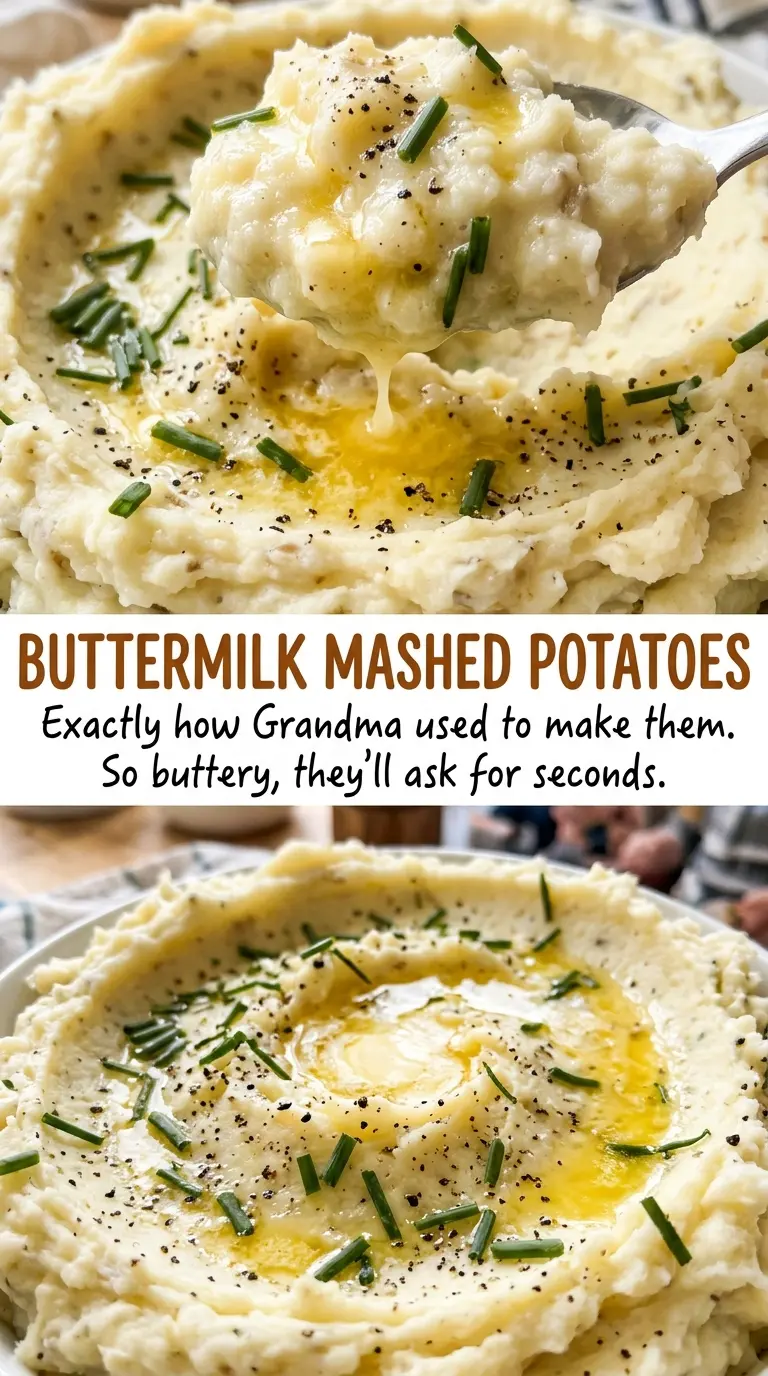
The first sign these potatoes are going to be creamy is the way the Yukon Gold chunks break easily when a fork slides into them. Buttermilk mashed potatoes have enough richness from butter to feel comforting, while the buttermilk gives each bite a gentle tang that keeps the mash from tasting heavy. I like this balance for a simple side that still feels carefully made.
Yukon Golds are a good fit here because they mash into a smooth, naturally buttery base. The buttermilk and butter get warmed together before they go into the potatoes, which helps them blend in without cooling the mash. Served warm, these potatoes are soft and creamy with just enough black pepper to bring the flavors into focus.

Kitchen Note
Bake, Serve, Wear the Vibe 👕
Editor-picked tees our Oven To Fork readers love.



We may earn from qualifying purchases at no extra cost to you.
Warm the butter and buttermilk gently, just until the butter melts. If the mixture boils, the buttermilk can look separated, so keep the saucepan over low heat and stay nearby.
Save these buttermilk mashed potatoes for a creamy, tangy side with a smooth Yukon Gold base.
Why the Salt Goes Into the Pot in Two Stages
Seasoning the cooking water and seasoning the finished mash do different jobs. The first teaspoon dissolves into the water around the potatoes while they cook, giving the chunks a chance to pick up seasoning before they’re mashed. Salt added only at the end tends to season the outside of the finished potatoes, so the flavor can seem uneven from bite to bite.
The remaining half teaspoon goes in after the warm buttermilk mixture is incorporated. At that point, you’re seasoning the whole bowl rather than the cooking water, and the pepper joins it for a balanced finish. Keeping that final addition separate also gives you a clear stopping point: stir it in, taste, and serve the potatoes warm rather than adding extra salt automatically.
Kosher salt is easy to measure and disperse in this method. If you use a different kind of salt, its crystal size can change how much fits in a spoon, so the finished seasoning may not land in quite the same place. For the most consistent result, use the kosher salt amount listed and save any personal adjustment for the table.
What Yukon Golds and Buttermilk Bring to the Mash
- Yukon Gold potatoes — Their naturally buttery taste and creamy texture make them a strong choice for a smooth mash. Choose firm potatoes without soft spots. Cutting them into even 1-inch chunks helps them cook at a similar rate; there isn’t a one-for-one swap that keeps the same texture and flavor.
- Buttermilk — This is where the gentle tang comes from, and it gives the potatoes a different finish than plain milk would. A standard grocery-store cultured buttermilk works well; a premium brand isn’t necessary. Regular milk isn’t a close replacement because it lacks buttermilk’s tang and body.
- Unsalted butter — Butter adds richness and rounds out the sharpness of the buttermilk. A basic store-brand unsalted butter is fine here; choosing unsalted also keeps the seasoning easier to control. I wouldn’t substitute salted butter without adjusting the salt.
- Black pepper — Pepper adds a little warmth without taking over the buttermilk’s mild tang. Use the measured amount for a gentle background note rather than a pepper-forward mash.
From Fork-Tender Potatoes to Creamy Buttermilk Mash
Simmer the Chunks Until a Fork Slides In
Put the peeled, 1-inch potato chunks in a 5-quart pot with 10 cups cold water, or enough to cover them by 1 inch. Stir in 1 teaspoon of the kosher salt and bring the pot to a boil over high heat. Reduce the heat and simmer for 15–20 minutes, until the potatoes are fork-tender. If a fork meets a firm center, give the chunks more time rather than trying to mash them early.
Warm the Butter and Buttermilk Together
While the potatoes cook, put the butter and buttermilk in a small saucepan over low heat. Stir for 2–3 minutes, until the butter melts and the mixture feels warm. Keep the heat low; don’t let it boil. A gentle warmth makes it easier for the mixture to blend into the potatoes without cooling them down.
Dry the Potatoes Before Mashing
Drain the potatoes well, then return them to the pot and set it over low heat for 1–2 minutes. Shake the pot occasionally as steam rises from the potatoes. This short, low-heat step helps excess moisture escape, so the finished mash doesn’t taste watery. Keep the pot moving gently and take it off the heat when the potatoes look drier rather than letting them catch on the bottom.
Mash Smoothly and Season at the Finish
Mash the potatoes until smooth, then gradually stir in the warm buttermilk mixture until the texture is creamy. Adding it gradually lets you see how the potatoes are taking up the liquid, instead of leaving a pool at the bottom of the pot. Stir in the remaining 1/2 teaspoon kosher salt and the 1/4 teaspoon black pepper. Serve the potatoes warm.
Two Texture Changes That Still Let the Buttermilk Shine
Use a Ricer for a Finer Mash
For an especially fine texture, press the cooked potatoes through a potato ricer in place of mashing them by hand, then gradually stir in the warm buttermilk mixture. The result is more uniform and delicate, with less chance of small lumps. Don’t use a food processor for this; it can make the potatoes gummy.
Leave a Little More Texture
For a more rustic bowl, use a hand masher and stop once the potatoes are mostly broken down rather than chasing a completely smooth finish. You’ll notice a little more texture in each bite, while the butter and buttermilk still bring the same richness and tang. This is a texture change, not a change to the ingredient amounts.
Storage and Reheating
- Refrigerator: Store in a covered container for 3–4 days. The mash will firm up as it chills.
- Freezer: Freeze in an airtight container for up to 1 month for the best quality. Thaw overnight in the refrigerator; the texture may be a little grainier after freezing.
- Reheating: Warm gently in a covered saucepan over low heat, stirring often, until the potatoes reach 165°F. High heat can make the dairy separate and the potatoes stick to the pan.
Questions That Come Up When Making Buttermilk Mashed Potatoes
Buttermilk Mashed Potatoes
Ingredients
Equipment
Method
- Put the potatoes and water in a 5-quart pot and stir in 1 teaspoon of the salt.
- Bring to a boil over high heat, then reduce the heat and simmer for 15–20 minutes, until the potatoes are fork-tender.
- While the potatoes cook, warm the butter and buttermilk in a small saucepan over low heat for 2–3 minutes, stirring until the butter melts; do not let the mixture boil.
- Drain the potatoes well and return them to the pot.
- Set the pot over low heat for 1–2 minutes, shaking it occasionally to steam off excess moisture.
- Mash the potatoes until smooth.
- Gradually stir in the warm buttermilk mixture until creamy.
- Stir in the remaining 1/2 teaspoon salt and the pepper, then serve warm.