Tender steak bites with a deep brown crust and a glossy garlic butter finish don’t need much help to disappear fast. This version leans into what makes the dish work: a hot skillet for real searing, a short ingredient list for the steak itself, and a cowboy butter sauce that clings to every piece instead of pooling at the bottom of the pan. The result is rich without feeling heavy, with lemon cutting through the butter and a little heat keeping each bite interesting.
The trick is keeping the steak dry and the pan hot enough that the meat sears instead of steams. Sirloin is the sweet spot here because it stays tender when it’s cut small and cooked quickly, but the seasoning still gets a chance to build a proper crust. The butter sauce comes together in the same skillet after the steak comes out, which means those browned bits melt right into the garlic, mustard, herbs, and lemon.
Below, you’ll find the timing that keeps the steak juicy, the ingredient swaps that still give you a good result, and the small finish that makes this taste like more than just buttered steak.
Bake, Serve, Wear the Vibe 👕
Editor-picked tees our Oven To Fork readers love.



We may earn from qualifying purchases at no extra cost to you.
The steak got a great crust in the cast iron and the butter sauce coated every bite without turning greasy. I served it with potatoes, and my husband said the lemon and garlic made it taste like restaurant food.
Save these garlic cowboy butter steak bites for the night you want a fast seared steak with a lemony butter sauce.
The Sear Is the Whole Game Here
Steak bites live or die by contact with the pan. If the pieces are crowded, they dump out moisture and start simmering in their own juices, which leaves you with gray meat and no crust. A cast-iron skillet helps hold steady heat, but the real work happens when the steak goes in in a single layer and stays put long enough to brown.
Sirloin gives you the best balance of tenderness and price for this style of recipe, but it still needs to be cut evenly. Smaller pieces cook fast, and if some are much larger than others, you’ll end up chasing doneness. The seasoning matters too: paprika and garlic powder build a savory base on the meat before the butter sauce comes in, so the finished dish tastes layered instead of just rich.
What the Butter Sauce Is Doing Besides Being Delicious
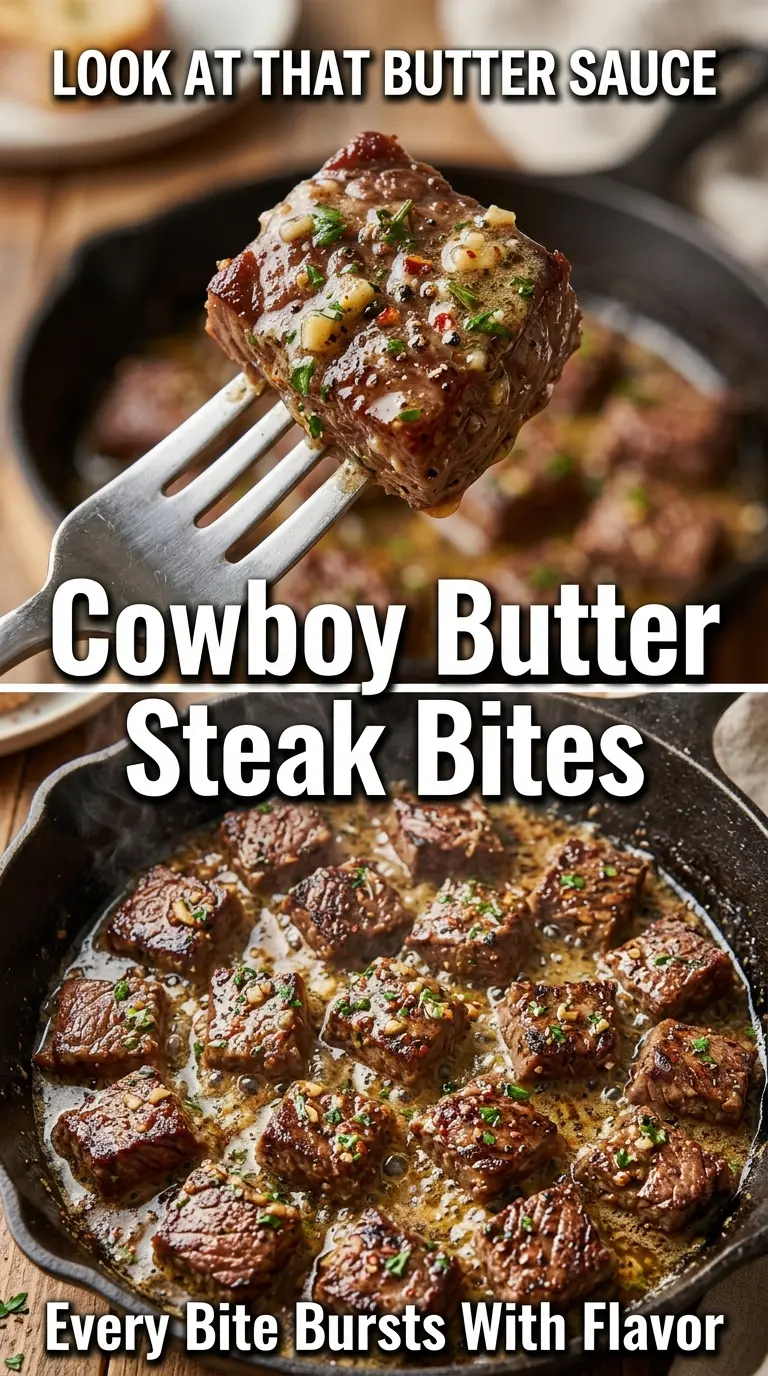
- Sirloin steak — This cut stays tender when it’s cooked hot and fast. Strip steak or ribeye also works if that’s what you have, but use the same bite-size pieces and keep the sear brief so the steak doesn’t go from browned to chewy.
- Unsalted butter — Butter is the body of the sauce, and unsalted gives you control. Salted butter can work in a pinch, but taste at the end before adding anything else, since the cheese-like richness here can hide extra salt until it’s too late.
- Dijon mustard — This is the quiet ingredient that keeps the sauce from tasting flat. It doesn’t make the sauce taste like mustard; it adds sharpness and helps the butter cling to the steak instead of sliding off.
- Lemon juice and zest — The juice wakes up the butter, and the zest carries the citrus aroma. Fresh lemon matters here because bottled juice tastes dull in a sauce this simple. Add the juice off the heat or over low heat so the butter stays smooth.
- Fresh parsley and thyme — Dried herbs won’t ruin the dish, but fresh herbs give the sauce that cowboy-butter finish. If you need to substitute, use one-third the amount of dried herbs and crush them between your fingers before adding them so they bloom faster in the hot butter.
- Red pepper flakes and smoked paprika — These are what make the sauce taste bold instead of just buttery. The red pepper flakes bring heat, while smoked paprika gives you that campfire-style depth that fits the name of the dish.
Getting the Steak Bites Brown Before the Butter Goes In
Dry the Steak and Season It First
Pat the steak pieces dry before anything else. Moisture on the surface is the enemy of browning, and if you season wet meat, the spices dissolve before they can help form a crust. Toss the pieces with the salt, pepper, paprika, and garlic powder so every side gets coated before the pan heats up.
Work in Batches for a Real Sear
Heat the oil until it shimmers, then add the steak in a single layer without crowding. You want a hard sizzle the moment the meat hits the pan. If the pieces start to steam or release a lot of liquid, the skillet is too full or not hot enough, and the steak will gray before it browns. Let each side go 2 to 3 minutes until a deep crust forms, then pull the steak out before it overcooks.
Build the Cowboy Butter in the Same Pan
Lower the heat before adding the butter so the garlic doesn’t scorch. Once the butter melts, stir in the garlic and let it cook just until fragrant, about 30 seconds. Add the mustard, lemon, zest, pepper flakes, parsley, thyme, and smoked paprika, and stir while the browned bits from the steak loosen into the sauce. If the pan is too hot here, the garlic turns bitter and the butter can separate.
Toss and Serve Right Away
Slide the steak back into the skillet and coat each piece in the sauce for just a minute. That last toss warms the meat through without pushing it past tender. Serve immediately while the butter is glossy and the edges of the steak still hold their crust, because this dish loses its best texture as it sits.
Three Ways to Change the Dish Without Losing What Makes It Good
Make It Dairy-Free
Use a good plant-based butter that melts smoothly and has a neutral flavor. You’ll still get the garlic-herb finish and the lemon brightness, but the sauce will be a little less rich and slightly softer on the palate. Choose one that doesn’t separate when heated so it coats the steak cleanly.
Swap the Steak Cut
Ribeye gives you more marbling and a richer bite, while strip steak lands somewhere in the middle with a firmer chew. If you use a leaner cut like top round, keep the pieces slightly larger and shorten the sear so they don’t turn dry. The sauce helps, but it can’t undo overcooked beef.
Dial Back the Heat
Cut the red pepper flakes in half or leave them out completely if you want the garlic and lemon to lead. The sauce will still taste bold because of the mustard and smoked paprika, just without the lingering heat on the back end. This is the easiest adjustment if you’re serving kids or anyone who prefers a milder finish.
Storage and Reheating
- Refrigerator: Store leftovers in an airtight container for up to 3 days. The steak stays usable, but the crust softens as it sits in the butter.
- Freezer: It freezes, but the texture changes enough that I don’t recommend it for the best result. If you do freeze it, cool completely first and thaw overnight in the fridge.
- Reheating: Warm gently in a skillet over low heat with a small splash of water or extra butter. High heat dries the steak out fast and can make the garlic taste harsh.
Answers to the Questions Worth Asking
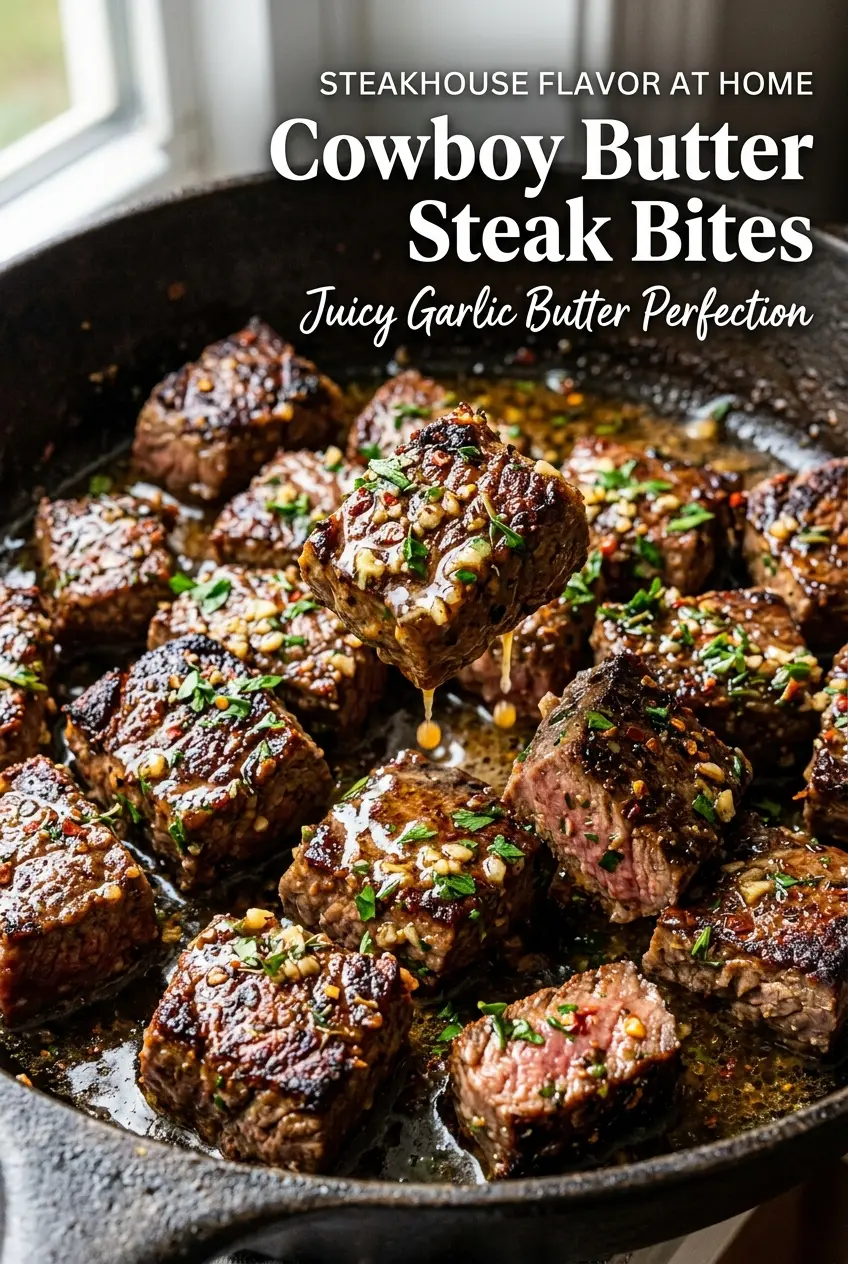
Garlic Cowboy Butter Steak Bites
Ingredients
Equipment
Method
- Pat the sirloin steak dry with paper towels so it browns instead of steaming.
- Season the steak bites with kosher salt, black pepper, paprika, and garlic powder until evenly coated.
- Heat olive oil in a large cast-iron skillet over medium-high heat until shimmering.
- Add the steak bites in a single layer and let them sear for 2–3 minutes per side until browned.
- Remove the steak bites to a plate and set aside while you finish the sauce.
- Reduce heat to medium and melt unsalted butter in the skillet.
- Add garlic cloves and cook for 30 seconds until fragrant, not browned.
- Stir in Dijon mustard, lemon juice, lemon zest, red pepper flakes, fresh parsley, fresh thyme leaves, and smoked paprika to form a thick, glossy cowboy butter.
- Return the steak bites to the skillet and toss to fully coat in the butter sauce.
- Cook for 1 minute more on medium so the steak is warmed through and the sauce clings.
- Serve immediately with potatoes, vegetables, or crusty bread while the garlic cowboy butter is hot.