Juicy picanha sliced thin and tucked into a toasted roll is already a strong sandwich. Add a sharp, garlicky chimichurri and it turns into something with balance: rich beef, crisp bread, and enough herb brightness to keep every bite from feeling heavy. The fat cap on picanha matters here. It bastes the meat as it cooks and gives you those caramelized edges that taste like you worked much harder than you did.
What makes this version work is the contrast. Picanha likes high heat and a short rest, which keeps the center pink and the slices tender. Chimichurri gets mixed while the steak rests, so the garlic stays punchy and the herbs stay fresh instead of dulled by too much sitting around. The roll matters too. A sturdy ciabatta or hoagie bun holds up to the juices without collapsing before the last bite.
Bake, Serve, Wear the Vibe 👕
Editor-picked tees our Oven To Fork readers love.



We may earn from qualifying purchases at no extra cost to you.
The chimichurri was the part I was worried about, but it balanced the steak perfectly and didn’t make the sandwich soggy. I sliced the picanha thin after resting and the roll held up all the way through dinner.
Grilled Picanha Sandwich with Chimichurri brings together juicy steak, toasted bread, and a bright herb sauce that keeps every bite balanced.
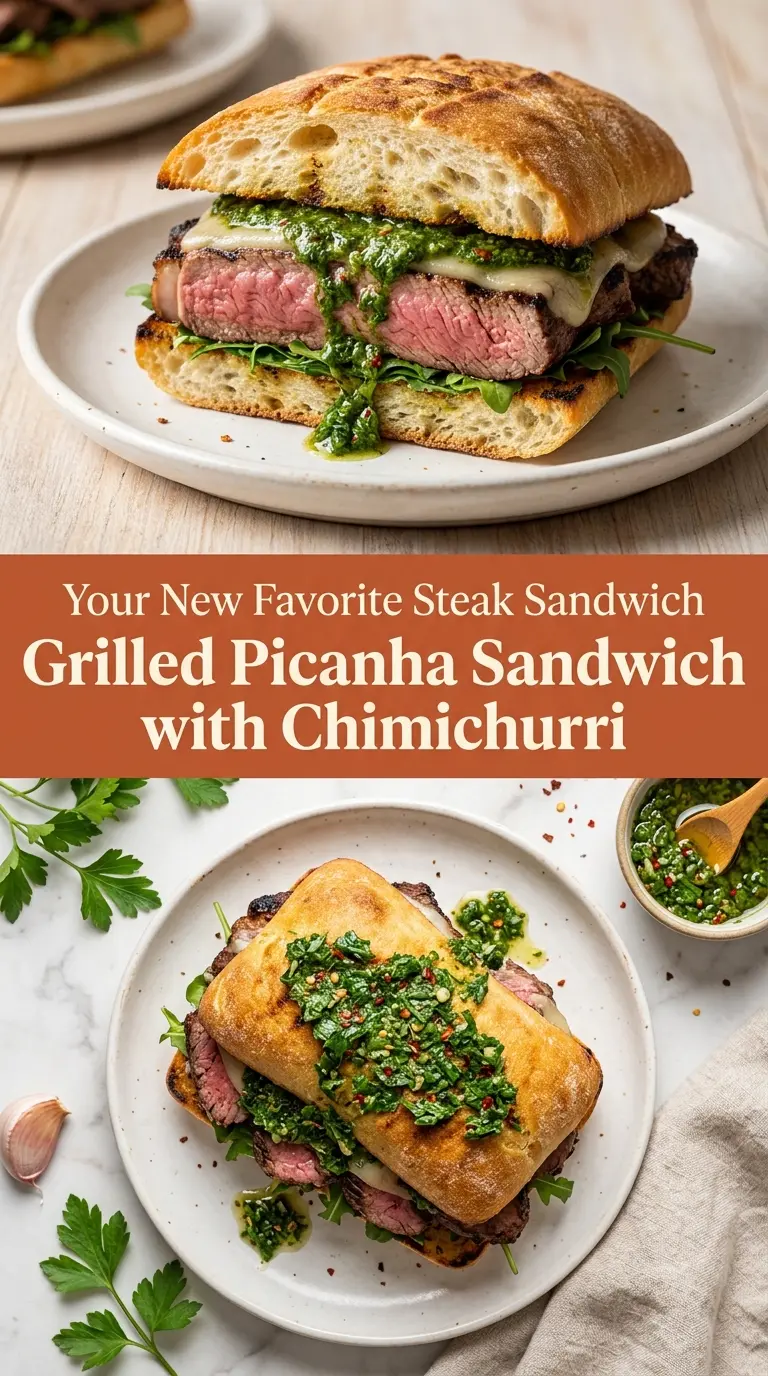
The Trick to Slicing Picanha So the Sandwich Stays Tender
Picanha has a clear grain, and that grain changes direction more than people expect. If you slice it the wrong way, even a perfectly cooked steak can eat chewy. The fix is simple: rest it first, then cut thin slices against the grain so each bite stays tender and easy to pull apart in the sandwich.
The fat cap is doing real work here, but only if you start it fat-side down on the grill. That renders the fat and gives you a crisp, flavorful surface before the rest of the steak finishes over direct heat. If the fire is too low, the fat stays soft and the sandwich loses the deep beefy edge that makes picanha worth buying.
- Picanha steak — This cut is the backbone of the sandwich. The fat cap keeps it juicy and adds flavor as it renders, so don’t trim it off before cooking.
- Coarse sea salt — Coarse salt seasons the outside without disappearing into the meat too quickly. Fine salt works in a pinch, but use a little less because it’s denser.
- Olive oil — A light coating helps the seasoning cling and promotes browning on the grill. You don’t need much; the fat cap already brings plenty of richness.
- Parsley — Flat-leaf parsley gives chimichurri its clean, grassy bite. Curly parsley works if that’s what you have, but the flavor is slightly milder and the texture is less silky.
- Red wine vinegar — This is what cuts through the beef. If you swap in lemon juice, the sauce gets sharper and brighter, which still works, but it won’t have the same rounded tang.
- Ciabatta rolls — Use a sturdy roll that can handle juices and sauce without falling apart. Softer buns taste fine, but they’ll go soggy faster.
How to Build the Grill, Rest, and Slice in the Right Order
Seasoning the Steak
Pull the picanha from the fridge about 30 minutes before it hits the grill so the chill comes off the center. Pat it dry, then season all over with salt, pepper, garlic powder, and a light coat of olive oil. Score the fat cap in a shallow crosshatch if you want it to render a little faster, but keep the cuts shallow so you don’t reach the meat underneath.
Getting the Fat Cap Going First
Start the steak fat-side down over high heat. You want the fat to sizzle and turn golden, not just warm up, so keep it there long enough to render and brown. If the grill isn’t hot enough, the fat turns rubbery instead of crisp, and that’s where the flavor starts to flatten out.
Finishing to Medium-Rare
Flip the steak and cook until the internal temperature lands around 130–135°F for medium-rare. Picanha can overcook fast because the cut isn’t very forgiving once it passes that point, so use a thermometer instead of guessing. Pull it from the heat as soon as it reaches temperature and let it rest for 10 minutes so the juices stay in the meat instead of running onto the cutting board.
Mixing the Chimichurri
Stir the parsley, garlic, red pepper flakes, oregano, vinegar, olive oil, and salt together while the steak rests. The sauce should look loose and glossy, not thick like pesto. Taste it after it sits a minute; if it tastes flat, it usually needs a touch more vinegar or salt to wake up the herbs.
Assembling the Sandwich
Toast the rolls cut-side down with butter until they’re golden and just crisp at the edges. Slice the steak thinly against the grain, layer it onto the bottom roll, then add arugula, cheese if you’re using it, and a generous spoonful of chimichurri. The order matters because the bread catches the juices, the greens keep the heat from wilting everything at once, and the sauce should land on the beef where it can do the most work.
How to Adapt This for Different Diets and Dinner Plans
Dairy-Free Sandwich
Skip the provolone and use the chimichurri as the main finishing element. The sandwich loses a little creaminess, but the vinegar, garlic, and herbs sharpen the beef in a way that doesn’t need cheese to feel complete.
Gluten-Free Version
Use a sturdy gluten-free roll or serve the sliced picanha over greens with the chimichurri spooned on top. The steak and sauce already carry most of the flavor, so this swap keeps the dish satisfying without changing the core method.
Make It Hotter
Increase the red pepper flakes in the chimichurri or add a minced fresh chile. That gives the sauce more bite without overpowering the beef, and the heat stays cleaner than if you try to season the steak heavily with spice.
Storage and Reheating
- Refrigerator: Store the sliced steak and chimichurri separately for up to 3 days. The bread softens fast, so keep the rolls unassembled until serving.
- Freezer: The cooked steak freezes well for up to 2 months if wrapped tightly, but the chimichurri doesn’t freeze as cleanly because the herbs lose their fresh texture. Freeze the meat alone and make a fresh sauce later.
- Reheating: Warm the steak gently in a skillet over low heat or in short bursts in the microwave with a damp paper towel. High heat dries out the thin slices fast, which is the most common mistake with leftovers.
Questions I Get Asked About This Recipe
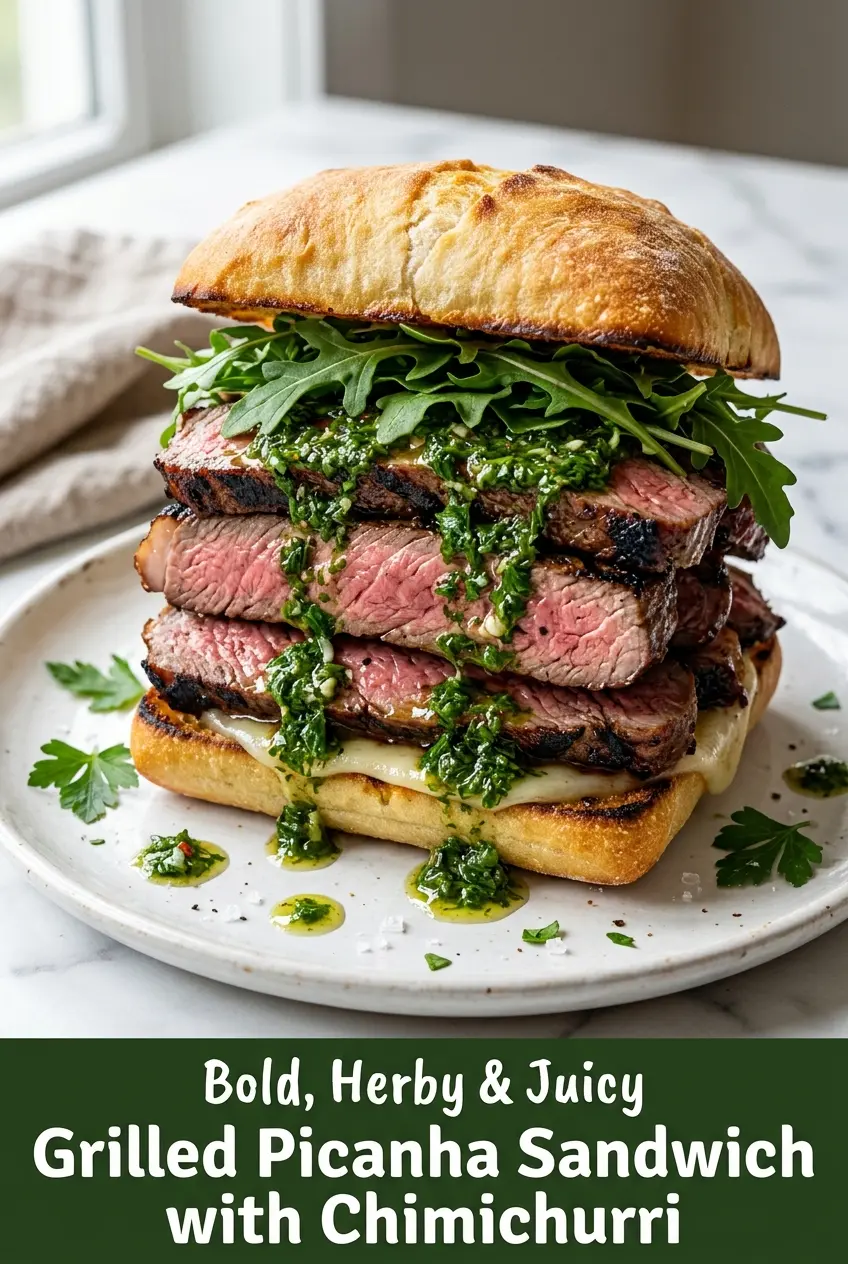
Grilled Picanha Sandwich with Chimichurri
Ingredients
Equipment
Method
- Remove the picanha from the fridge and let it sit at room temperature for 30 minutes. Pat it dry with paper towels so the fat renders evenly on the grill.
- Score the fat cap lightly in a crosshatch pattern. Rub all sides with olive oil, coarse sea salt, black pepper, and garlic powder to coat thoroughly.
- Preheat the grill to high heat, 450–500°F. Place the picanha fat-side down first and grill for 4–5 minutes until the fat is rendered and golden.
- Flip the steak and grill 4–5 minutes for medium-rare. Cook until the internal temperature reads 130–135°F, then remove to a plate.
- Rest the picanha for 10 minutes. This helps the juices redistribute before slicing for tender, juicy bites.
- In a bowl, combine the fresh flat-leaf parsley, minced garlic cloves, red pepper flakes, dried oregano, red wine vinegar, olive oil, and salt. Mix until cohesive, then taste and adjust salt or vinegar.
- Set the chimichurri aside while you toast the buns. Keep it ready so it’s fresh and vibrant for assembly.
- Slice the ciabatta rolls in half and butter the cut sides. Toast on the grill or a skillet for 2–3 minutes until golden.
- Slice the picanha thinly against the grain. Layer the slices onto the bottom buns with arugula or baby greens, provolone cheese (if using), and generous chimichurri spooned over top.
- Cap with the top bun and serve immediately. Assemble right away so the bread stays crisp and the sauce soaks in without getting soggy.