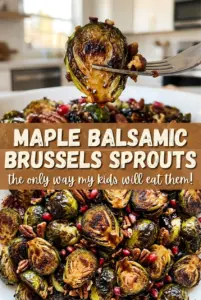
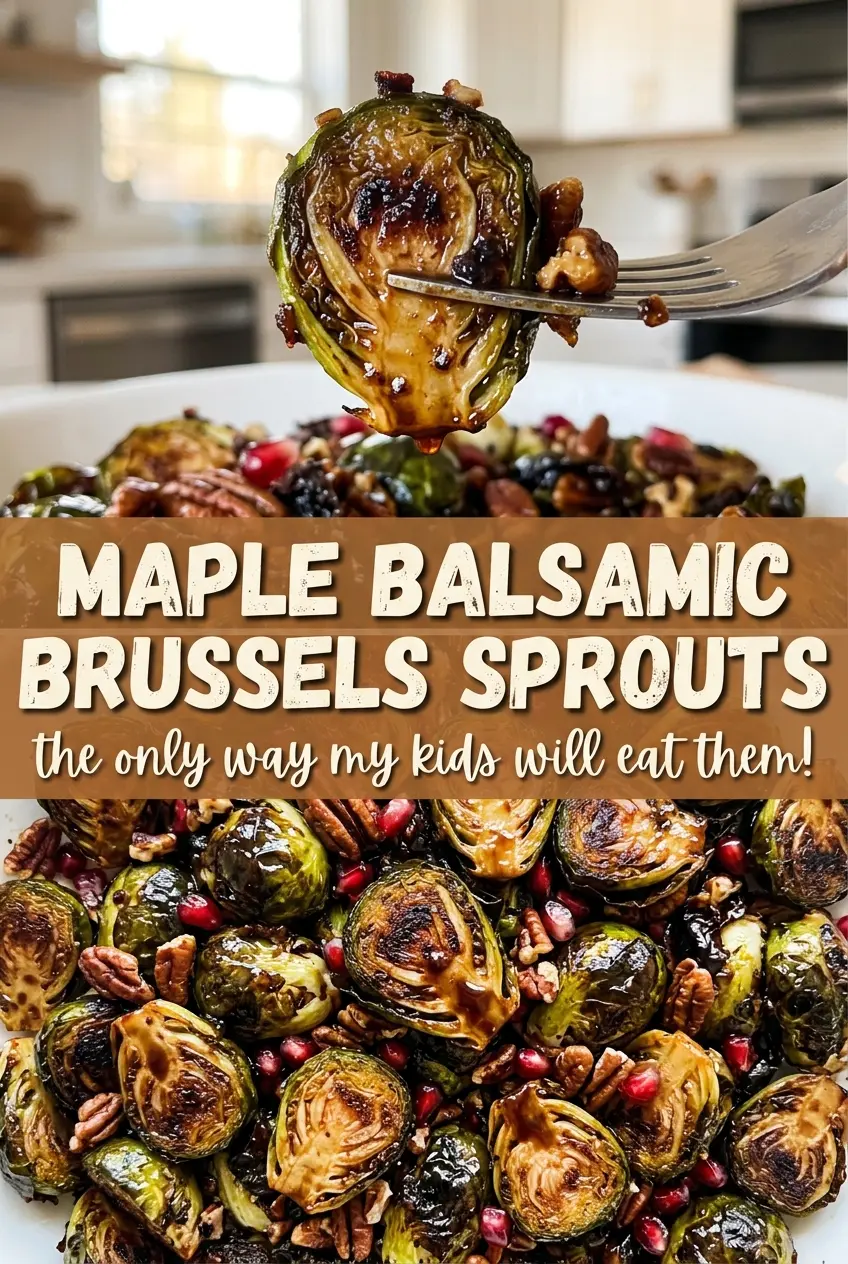
When the baking sheet comes out, the flat sides of the sprouts should be dark brown, not just lightly toasted. That color is where the sweet, nutty edge comes from, and it gives the maple balsamic Brussels sprouts enough character to stand up to their glossy finish. I used to pull them as soon as they looked tender; waiting until the cut sides were deeply browned made the difference.
The glaze takes only a few minutes on the stove, but it needs to simmer until it thickens slightly so it clings instead of pooling at the bottom of the bowl. Maple syrup rounds out the vinegar’s sharpness without hiding it. Toss the hot sprouts with the glaze just before serving, and each tender center gets a bright, sweet-tart coating.
These are a simple side dish with a bold contrast: browned edges, soft centers, and a tangy maple finish. The sprouts go straight from the oven to the bowl, where that warm balsamic glaze settles into every crease.
Kitchen Note
Bake, Serve, Wear the Vibe 👕
Editor-picked tees our Oven To Fork readers love.



We may earn from qualifying purchases at no extra cost to you.
Take the glaze off the heat when it’s slightly thickened, not when it looks like a heavy syrup. It thickens more as it cools, and leaving it on the burner too long can make the finish overly sticky.
Save these maple balsamic Brussels sprouts for a side with deeply browned edges and a bright, sweet-tart glaze.
Why the Cut-Side-Down Roast Makes These Sprouts Taste Sweeter
Brussels sprouts have a natural bitterness, and a pale roast doesn’t give it much competition. Setting each half cut-side down gives that broad, flat surface direct contact with the hot pan. As it roasts, the surface turns deeply brown and develops a savory sweetness that balances the vinegar in the glaze.
Keep the halves in a single layer rather than piling them up. If they overlap, they won’t brown as evenly, and you’ll miss the contrast between the caramelized outside and the tender middle. Use a rimmed baking sheet lined with parchment, and turn the halves so their cut faces rest against it. The parchment makes transferring the finished sprouts easier, too.
Size matters more than perfect uniformity. Halve small sprouts and larger ones, but aim for pieces that are reasonably close in size so they become tender in the same 20-to-25-minute roasting window. Watch for color as well as tenderness; deeply browned cut sides are the cue that brings the dish into balance with its maple balsamic glaze.
Why Fresh Sprouts and Real Maple Syrup Matter Most
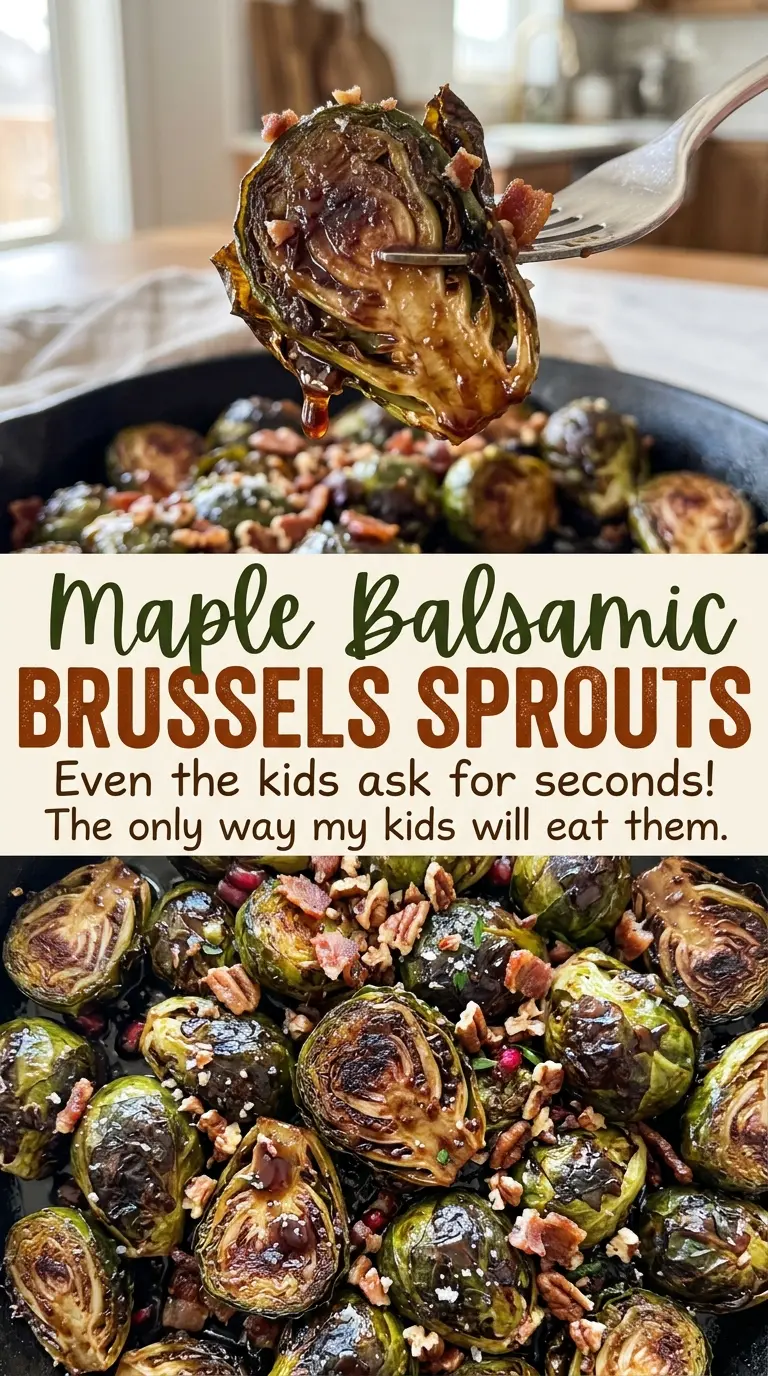
- Brussels sprouts — Choose firm sprouts with compact leaves; loose or yellowing leaves are more likely to taste tired. Fresh sprouts are important here because the oven needs to brown their cut sides while the centers turn tender. Trim the stem ends and halve the sprouts before seasoning. There isn’t a direct vegetable swap that gives the same browned, slightly bitter flavor and sturdy texture.
- Olive oil — The oil coats the sprouts so the salt and pepper cling and the cut surfaces roast well. A basic olive oil is fine; a delicate, expensive finishing oil won’t bring much extra once it has been roasted. A neutral oil works in the same amount if that’s what you have, though it won’t add olive oil’s faint fruitiness.
- Balsamic vinegar — This supplies the glaze’s acidity and deep, sweet-tart flavor. A standard grocery-store balsamic works; save a costly aged bottle for a use where its nuanced flavor won’t be simmered. There isn’t a simple one-for-one vinegar swap that tastes quite the same, so keep balsamic if you want the defining finish.
- Pure maple syrup — Use real maple syrup rather than pancake syrup, which has a different sweetness and can make the glaze taste less clean. A similar amount of honey can replace it, but the flavor will be more floral and the dish won’t be vegan. The maple version has the clearest match for the balsamic’s dark, tangy notes.
- Kosher salt and black pepper — They season the sprouts before roasting, so the flavor reaches beyond the glaze. Freshly ground pepper gives a more noticeable peppery aroma, but pre-ground pepper works perfectly well.
Roast the Sprouts First, Then Simmer the Glaze
Season and Arrange the Halves
Heat the oven to 425°F with a rack in the center, and line a rimmed baking sheet with parchment paper. Toss the trimmed, halved sprouts with the olive oil, kosher salt, and black pepper until the surfaces look lightly coated. Arrange them cut-side down in one layer. If a few halves tip over, turn them back before the pan goes into the oven so their flat sides make contact.
Roast Until the Cut Faces Are Deeply Browned
Roast for 20 to 25 minutes, until the sprouts are tender and deeply browned on their cut sides. The exact timing depends on their size, so start checking at the earlier end of the range. The cut surfaces should look richly browned rather than blond, while the centers should yield easily when pierced. If they’re tender but still pale, give them the remaining roasting time instead of taking them out early.
Simmer and Toss With the Maple Balsamic Glaze
While the sprouts roast, combine the balsamic vinegar and maple syrup in a small saucepan and bring the mixture to a simmer over medium heat. Stir occasionally as it simmers for 4 to 6 minutes, until it looks slightly thickened. Remove the pan from the heat, then transfer the roasted sprouts to a serving bowl. Pour the glaze over them and toss until the browned surfaces are coated.
Easy Changes for a Sweeter or More Savory Batch
Make the Glaze Less Sweet
Use 1 tablespoon of maple syrup instead of 2. The glaze will taste sharper and less rounded, with the balsamic more prominent; this is a useful adjustment if you prefer a less-sweet finish.
Swap in Honey
Replace the maple syrup with the same amount of honey for a softer, floral sweetness. It works in the simmered glaze, though it changes the character of the dish and makes it unsuitable for a vegan meal.
Give the Glaze a Peppery Edge
Add a pinch of red pepper flakes to the balsamic and maple mixture as it simmers. The gentle heat cuts through the sweetness without changing the roasting method; start with a small pinch so it doesn’t overpower the sprouts.
Storage and Reheating
- Refrigerator: Store leftovers in an airtight container for up to 4 days. The sprouts soften as they sit, and the glaze becomes less glossy.
- Freezer: They can be frozen in an airtight container for up to 2 months, but thawed sprouts will be softer and won’t regain their original roasted texture.
- Reheating: Warm them in a 350°F oven until hot, spreading them in a single layer on a baking sheet. Avoid microwaving for a long stretch; it softens the sprouts further and can make the glaze unevenly hot.
Questions That Come Up While Making Maple Balsamic Brussels Sprouts
Maple Balsamic Brussels Sprouts
Ingredients
Equipment
Method
- Heat the oven to 425°F.
- Arrange a rack in the center and line a rimmed baking sheet with parchment paper.
- Toss the Brussels sprouts with the olive oil, kosher salt, and black pepper.
- Arrange the sprouts cut-side down in a single layer on the baking sheet.
- Roast for 20 to 25 minutes, until tender and deeply browned on the cut sides.
- While the sprouts roast, combine the balsamic vinegar and maple syrup in a small saucepan and bring to a simmer over medium heat.
- Simmer for 4 to 6 minutes, stirring occasionally, until slightly thickened.
- Remove the pan from the heat.
- Transfer the roasted Brussels sprouts to a serving bowl, pour the glaze over them, and toss to coat.