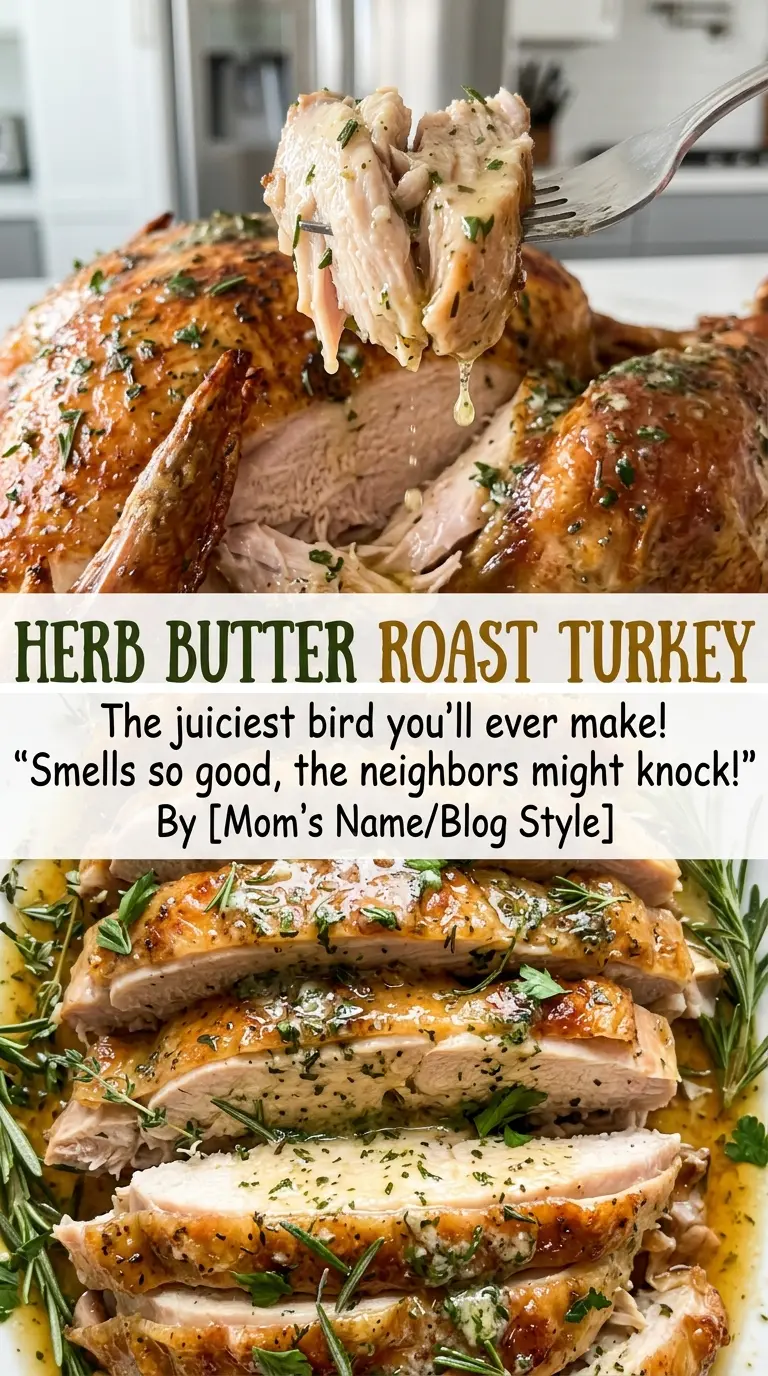
When the herb butter hits the warm oven, the rosemary and garlic start to perfume the kitchen before the turkey has even begun to brown. I learned that spreading it only over the skin leaves the breast without much of that seasoning, so I work some underneath as well. This Herb Butter Roast Turkey keeps the flavors familiar and lets the fresh herbs do their work right where the meat needs them.
The butter needs to be soft enough to spread without pulling at the skin, but not melted and running off the bird. I also tuck onion and lemon loosely into the cavity, where they add a gentle aroma without crowding the turkey. With a thermometer to guide the roast and a little patience before carving, the result is a beautifully browned bird with savory herb butter in every slice.

Kitchen Note
Bake, Serve, Wear the Vibe 👕
Editor-picked tees our Oven To Fork readers love.



We may earn from qualifying purchases at no extra cost to you.
Don’t rush the carving. I let the turkey rest, tented loosely, for the full 30 minutes; the meat settles, and the foil stays loose enough that steam doesn’t gather against the skin.
Save this Herb Butter Roast Turkey for a centerpiece with fragrant rosemary, thyme, and sage beneath the skin.
Why the Herb Butter Has to Reach the Breast Meat
A layer of butter on the outside flavors the skin, but it doesn’t do much to season the meat beneath it. Loosening the skin over the breast creates a pocket for the herb butter, so the garlic and chopped herbs sit directly against the turkey instead of staying on the surface. Take your time here and use your fingers gently; a small opening is enough to work through without tearing the skin.
Some of the butter will still be spread over the outside, where it helps carry the herbs across the skin as the turkey roasts. That outside layer browns along with the bird, which is why the color matters as much as the clock: if the skin gets dark before the turkey is ready, a loose foil tent slows the browning. You end up with seasoned breast meat and a fragrant, browned exterior, rather than all the herb butter concentrated on top.
Fresh Herbs and Butter: What Makes This Blend Work
- Unsalted butter — It gives the chopped herbs a rich base, while unsalted butter lets the kosher salt in the blend provide the seasoning. Use it softened so it spreads smoothly; melted butter slides away instead of staying in place. A standard grocery-store butter works well here.
- Fresh rosemary, thyme, and sage — The three herbs bring different notes: rosemary is piney, thyme is gentle and earthy, and sage gives the mixture its savory edge. Fresh herbs keep the flavor bright and fleck the butter evenly. If you don’t have one of the three, leave it out rather than swapping in dried herbs by the same volume; the mixture will simply lean toward the herbs you do have.
- Garlic — Fresh minced garlic gives the butter its sharp, savory base. Mince it finely so it spreads throughout the mixture instead of forming large pockets. Jarred minced garlic can work in a pinch, though freshly minced cloves taste brighter.
- Yellow onion and lemon — These go loosely into the cavity for a mild aromatic note as the turkey roasts. An ordinary onion and lemon are fine; their job here is fragrance, not a concentrated seasoning paste. Keep them in large pieces as listed so they remain easy to remove after roasting.
- The turkey — Start with a thawed bird with the neck and giblets removed. A 12- to 14-pound turkey fits the cooking window for this recipe; a much larger bird won’t follow the same timing reliably.
Building the Herb Butter and Roasting the Turkey
Stir the Herbs Into Softened Butter
Put the softened butter in a bowl with the minced garlic, chopped rosemary, thyme, and sage, plus the salt and pepper. Stir until the mixture looks even, with herbs and garlic distributed through the butter rather than gathered in one spot. If the butter is too firm, it will be hard to spread without tugging at the skin. Keep it soft and cohesive, not liquid.
Prepare the Bird and Fill the Cavity Loosely
Heat the oven to 325°F and set a rack in a large roasting pan. Pat the thawed turkey dry, tuck the wing tips underneath, and place the quartered onion and halved lemon loosely in the cavity. Don’t pack the cavity tightly; the aromatics should sit inside without being pressed together. Dry skin also gives the butter a better surface to cling to.
Work Butter Under the Skin, Then Roast
Gently loosen the skin over the breast with your fingers, taking care not to tear it. Spread the herb butter beneath the skin and over the outside, then set the turkey breast-side up on the rack. Roast uncovered for 3 to 3 3/4 hours, tenting loosely with foil if the skin browns too quickly. Check the thickest part of the breast and the innermost part of the thigh with a thermometer, keeping it clear of bone; both spots should read 165°F.
Rest Before You Carve
Transfer the turkey to a carving board and tent it loosely with foil. Let it rest for 30 minutes before carving. Don’t seal the foil tightly over the bird; a loose cover protects it while avoiding a steamy wrap around the browned skin. Once rested, carve and serve the meat while the herb-scented skin is still at its best.
Small Changes for a Different Herb Butter
Make Rosemary the Lead Herb
Let rosemary stand out more than thyme and sage in the butter. The roast will taste woodsy and aromatic, with less of sage’s earthy finish; keep the herbs finely chopped so the butter still spreads evenly.
Go Lighter on the Sage
Reduce the sage and let thyme and rosemary carry more of the blend. This makes the herb butter taste brighter and less earthy without changing how you spread it under the skin or roast the turkey.
Leave Out the Garlic
Skip the garlic for a milder, more herb-forward butter. The rosemary, thyme, and sage still season the turkey; expect a gentler savory note rather than the sharper edge garlic brings.
Storage and Reheating
- Refrigerator: Refrigerate leftover turkey within 2 hours and use it within 3 to 4 days. The skin softens in storage, though the sliced meat stays suitable for leftovers.
- Freezer: Freeze carved meat in airtight portions for 2 to 6 months for best quality. Thaw it in the refrigerator before reheating.
- Reheating: Warm portions covered until they reach 165°F throughout; a little trapped moisture helps keep the meat from drying out. Don’t rely on a hot surface with a cool center.
Questions That Come Up Before the Turkey Goes in the Oven
Herb Butter Roast Turkey
Ingredients
Equipment
Method
- Stir the butter, garlic, rosemary, thyme, sage, salt, and pepper together in a bowl until evenly combined.
- Preheat the oven to 325°F.
- Set a rack in a large roasting pan.
- Pat the turkey dry.
- Tuck the wing tips underneath.
- Place the onion and lemon loosely in the cavity.
- Loosen the skin over the breast with your fingers.
- Spread the herb butter under the skin and over the outside of the turkey.
- Set the turkey breast-side up on the rack.
- Roast uncovered for 3 to 3 3/4 hours, tenting loosely with foil if the skin browns too quickly, until a thermometer reads 165°F in the thickest part of the breast and the innermost part of the thigh without touching bone.
- Transfer the turkey to a carving board and tent loosely with foil.
- Rest for 30 minutes before carving.