The bread cubes should feel dry and crisp before they meet the broth; soft cubes can turn a pan of stuffing heavy instead of tender. I learned to give them their own time in the oven, even when the loaf is already a day old. That extra drying is what lets Best Sausage Stuffing soak up the savory broth without losing its shape.
Once the bread is ready, the rest comes together in one skillet and a big bowl. The sausage browns first, then onion and celery soften in butter with sage and thyme. I like how the covered bake keeps the middle moist before the foil comes off and the top turns golden. You get crisp edges, a soft center, and sausage in every scoop.

Kitchen Note
Bake, Serve, Wear the Vibe 👕
Editor-picked tees our Oven To Fork readers love.



We may earn from qualifying purchases at no extra cost to you.
I drain the skillet after browning the sausage, before melting the butter. Leaving the rendered fat behind can make the onion and celery heavier than intended, so I let the butter be the cooking fat for the vegetables.
Save Best Sausage Stuffing for a holiday table or a cozy dinner, with browned sausage, savory herbs, and a crisp golden top.
Why Day-Old Bread Still Needs a Turn in the Oven
Day-old bread has had time to lose some moisture, but that doesn’t always leave the center of every cube dry enough for stuffing. A sturdy loaf helps, yet the oven-drying step is what makes the cubes ready to take on broth without collapsing. Think of it as setting the texture before adding any liquid.
Dry cubes absorb the broth and egg mixture more evenly than bread that’s only a little stale. If the bread still bends or feels soft after drying, it hasn’t reached the crisp stage this dish needs. The cubes should be dry all the way through, not browned like toast. Once they reach that point, they can take on the butter, vegetables, and broth while holding their shape through the bake.
This also explains why the bread gets spread across two rimmed baking sheets instead of piled into one deep layer. Air can move around the cubes, and stirring halfway through helps them dry evenly. It’s a small bit of patience up front that makes the finished pan feel tender rather than soggy.
What the Bread, Sausage, and Broth Each Bring
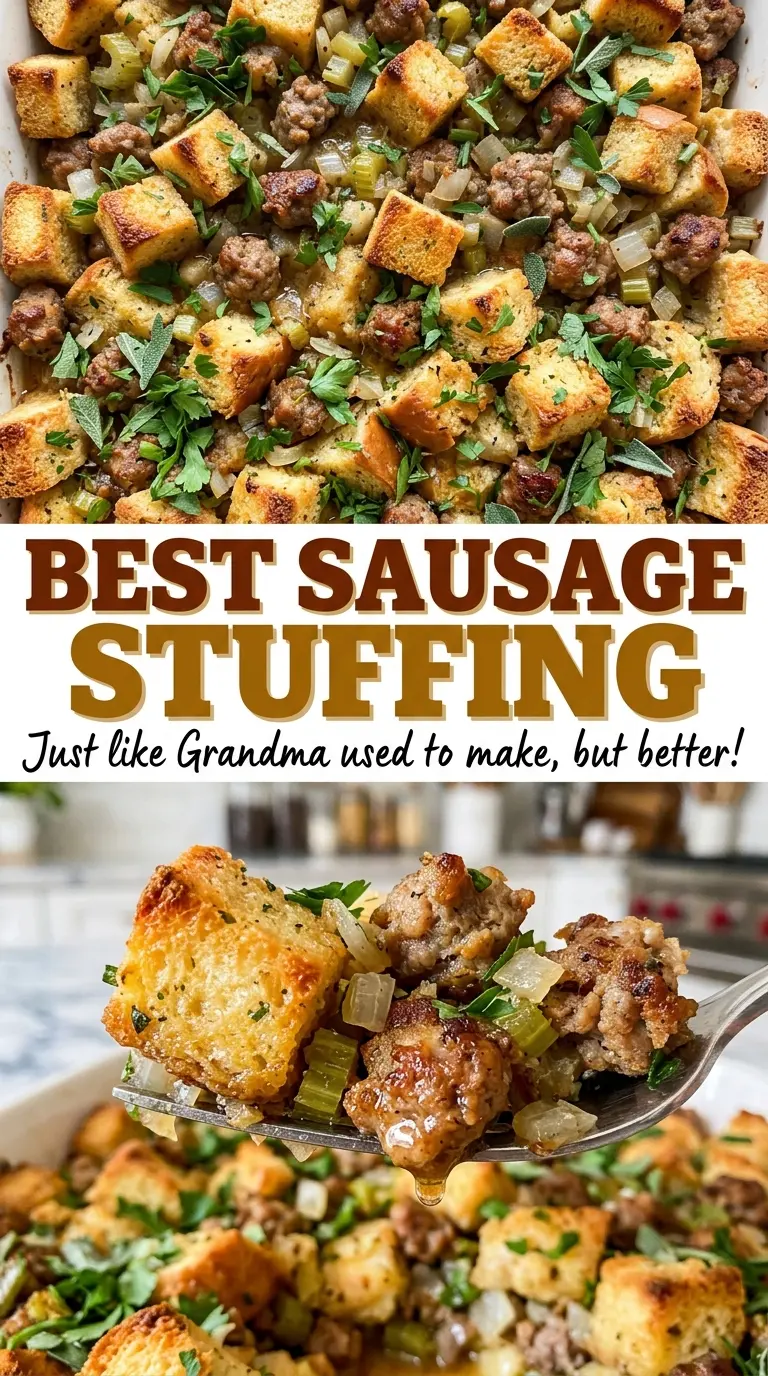
- Sturdy white bread — A loaf with a firm crumb holds up better than delicate sandwich bread once the broth goes in. Cut the cubes evenly so they dry at about the same pace; the day-old loaf still needs to become dry and crisp in the oven.
- Bulk pork sausage — Bulk sausage breaks into little browned crumbles that distribute through the bread. Choose a fresh sausage you like eating on its own; the seasoning in it carries through the whole pan. Link sausage works too if you remove the casings and crumble the meat.
- Unsalted butter — Butter gives the softened onion and celery a rich base without adding more salt than intended. Unsalted is useful here because the sausage and broth already bring seasoning.
- Onion, celery, sage, and thyme — Finely diced vegetables soften in the skillet and tuck into the bread instead of leaving large crunchy pieces. Dried rubbed sage and dried thyme bring the familiar savory flavor; stirring them into the hot vegetables briefly helps distribute them through the mixture.
- Low-sodium chicken broth and eggs — The broth moistens the bread, while lightly beaten eggs help the baked mixture hold together. Whisk them together before pouring so the egg doesn’t land in one spot and set in a patch.
Dry the Bread, Build the Savory Base, Then Bake
Dry the cubes until crisp
Heat the oven to 300°F and grease a 9×13-inch baking dish with 1 tablespoon of butter. Spread the bread cubes in a single layer across two rimmed baking sheets. Bake for 35–45 minutes, stirring once halfway through, until the cubes are dry and crisp rather than soft in the middle. Raise the oven temperature to 350°F for the bake.
Brown the sausage and drain the skillet
Cook the bulk pork sausage in a 12-inch skillet over medium heat for 8–10 minutes, breaking it into small crumbles as it cooks. Look for browned pieces throughout, not one large cooked slab. The sausage should reach 160°F. Transfer it to an extra-large bowl, then drain the skillet before moving on.
Soften the vegetables in butter
Melt the remaining 8 tablespoons of butter in the skillet. Add the finely diced onion and celery and cook for 8–10 minutes, stirring now and then, until softened. They should look glossy and tender, not browned at the edges. Stir in the sage, thyme, salt, and black pepper and cook for 30 seconds, just until fragrant.
Moisten evenly and bake covered, then uncovered
Add the dried bread cubes and softened vegetables to the bowl with the sausage, then toss to combine. Whisk the broth and eggs in a medium bowl, pour them over the bread mixture, and toss until everything is evenly moistened. Transfer it to the prepared baking dish, cover tightly with foil, and bake at 350°F for 30 minutes. Uncover and bake for 20–25 minutes more, until the top is golden and the center reaches at least 160°F. Rest the stuffing for 10 minutes before serving.
Two Ways to Adapt the Sausage and Bread
Make it gluten-free with sturdy gluten-free bread
Replace the white loaf with 16 ounces of sturdy gluten-free white bread, cut into the same 3/4-inch cubes. Dry the cubes until crisp before adding the other ingredients; gluten-free loaves can vary in how quickly they dry, and the finished stuffing may have a more delicate crumb.
Turn up the heat with hot bulk pork sausage
Use hot bulk pork sausage in place of a milder bulk pork sausage for a spicier, more pepper-forward pan. Keep the same amount and cook it until browned and cooked through; the stronger sausage seasoning will be the main change, so the dish stays familiar in texture.
Storage and Reheating
- Refrigerator: Store cooled leftovers covered for 3–4 days. The crisp top softens as it sits, but the center stays moist.
- Freezer: Freeze cooked stuffing in an airtight container for up to 1 month for the best texture. Thaw it in the refrigerator before reheating.
- Reheating: Cover the dish with foil and warm it in a 350°F oven until steaming hot throughout. Uncover near the end if you’d like to bring back some crispness; reheating uncovered the whole time can dry the edges.
Questions That Come Up While Making Sausage Stuffing
Best Sausage Stuffing
Ingredients
Equipment
Method
- Heat the oven to 300°F.
- Grease a 9x13-inch baking dish with 1 tablespoon of the butter.
- Spread the bread cubes in a single layer on 2 rimmed baking sheets and bake for 35–45 minutes, stirring once halfway through, until dry and crisp.
- Raise the oven temperature to 350°F.
- Cook the sausage in a 12-inch skillet over medium heat for 8–10 minutes, breaking it into small crumbles, until browned and cooked to 160°F.
- Transfer the sausage to an extra-large bowl and drain the skillet.
- Add the dried bread cubes to the bowl with the sausage.
- Melt the remaining 8 tablespoons butter in the skillet, add the onion and celery, and cook for 8–10 minutes until softened.
- Stir in the sage, thyme, salt, and pepper and cook for 30 seconds.
- Add the vegetables to the bowl and toss to combine.
- Whisk the broth and eggs in a medium bowl, pour over the bread mixture, and toss until evenly moistened.
- Transfer the mixture to the prepared baking dish, cover tightly with foil, and bake at 350°F for 30 minutes.
- Uncover and bake for 20–25 minutes more, until golden on top and at least 160°F in the center.
- Rest the stuffing for 10 minutes before serving.