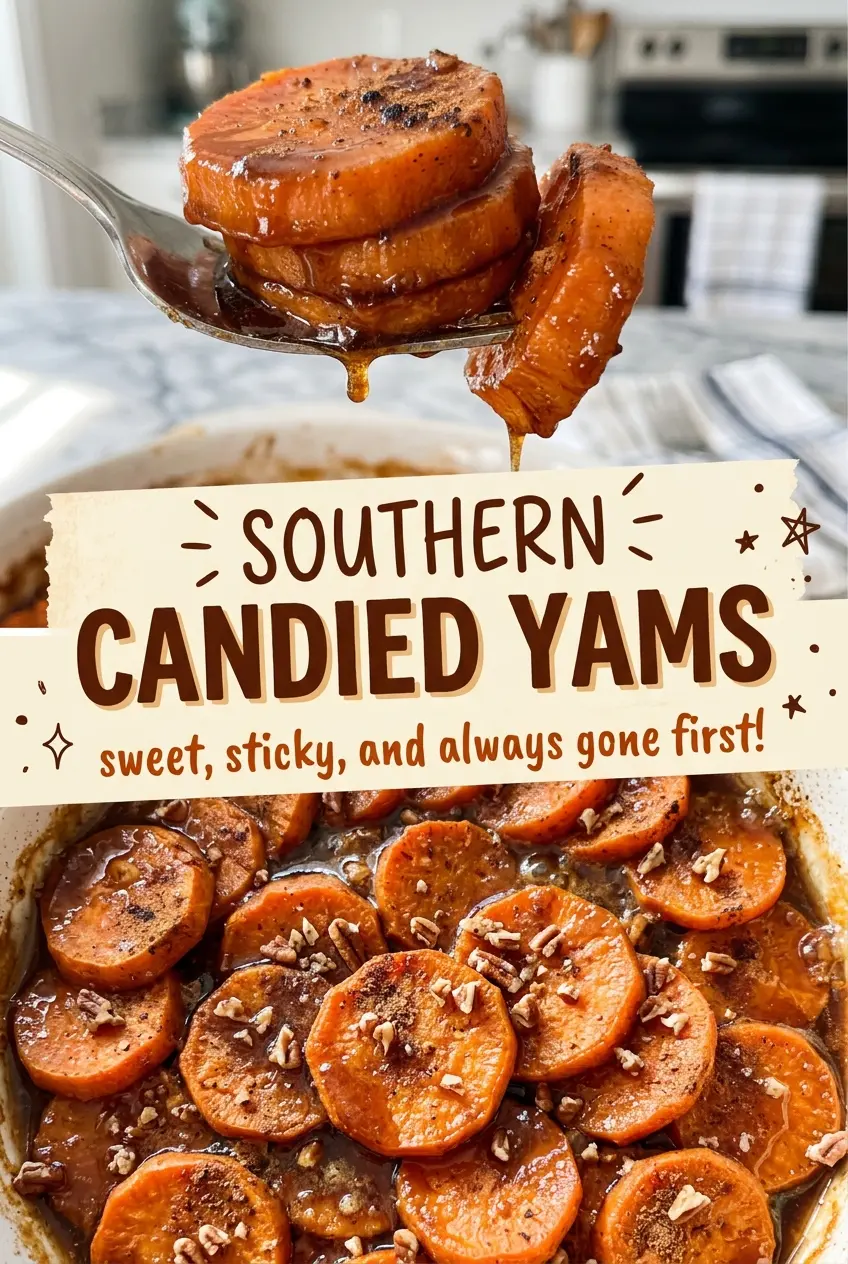
The butter and sugar look like a lot of syrup for a dish of sweet potatoes, but the rounds drink it in as they bake. The sauce starts out loose, then turns glossy and clings to the edges as the potatoes soften. That change is what makes Southern candied yams different from simply roasted sweet potatoes: each bite gets a little buttery sweetness without losing the potato’s own flavor.
I arrange the rounds in a 9×13-inch dish, pour the spiced butter mixture over them, and let the oven do the slow work. The covered time softens the potatoes; the uncovered time gives the syrup room to bubble and thicken. Keep the cuts even and baste gently, and you’ll have tender rounds with a rich, spoonable glaze.
Kitchen Note
Bake, Serve, Wear the Vibe 👕
Editor-picked tees our Oven To Fork readers love.


We may earn from qualifying purchases at no extra cost to you.
Cut the sweet potatoes into rounds that are as close to 1/2 inch thick as you can manage. Thin pieces soften sooner than thick ones, so uneven cuts can leave you with a mix of tender and firm bites.
Save these Southern candied yams for their tender sweet potato rounds and buttery, cinnamon-spiced syrup.
Why the Syrup Needs Two Different Oven Stages
Keeping the dish covered for the first part of baking gives the sweet potatoes time to soften in the moisture trapped beneath the foil. If the dish stayed covered the whole time, the syrup wouldn’t have the same chance to reduce and turn glossy. Taking the foil off isn’t just a finishing flourish; it changes what the oven is doing.
Once uncovered, the liquid bubbles around the rounds and thickens as it cooks. Basting moves that syrup back over the tops, which can dry out a little while exposed to the oven’s heat. The two stages work together: first, tender potatoes; then, a more concentrated glaze. Don’t judge the sauce while it’s still piping hot in the dish. The 10-minute rest gives the bubbling syrup a little time to settle before serving.
This balance also explains why the sugar and water aren’t stirred into a separate stovetop caramel. The ingredients mix in one bowl, then cook with the sweet potatoes in the baking dish. You get a spoonable syrup that carries cinnamon, nutmeg, and vanilla through the pan without a separate caramel-making step.
How the Sweet Potatoes, Sugars, and Spices Shape the Syrup
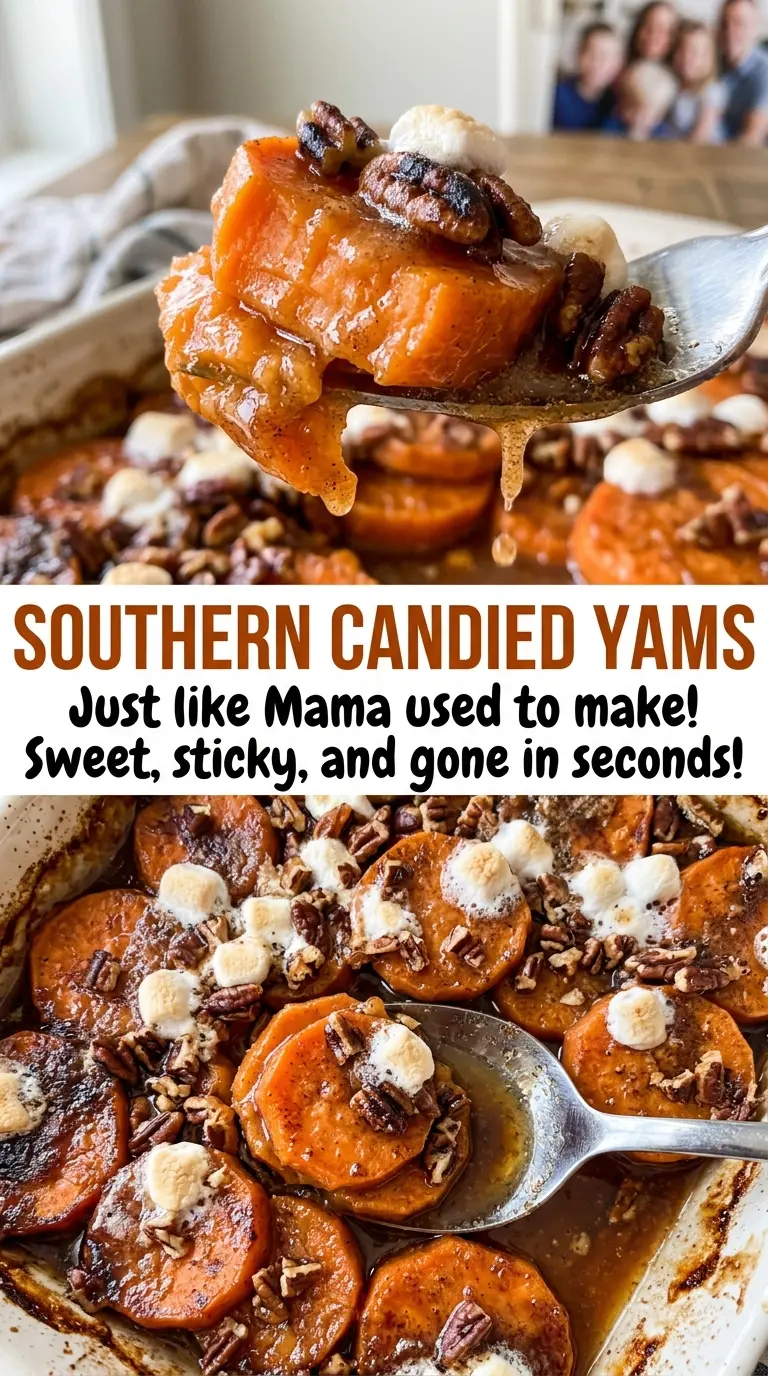
- Sweet potatoes — Choose firm potatoes without soft spots so the rounds hold their shape through both oven stages. The cut matters more here than finding oversized potatoes; medium ones are easy to slice into even rounds.
- Brown sugar and granulated sugar — Packed light brown sugar brings a deeper molasses note, while granulated sugar keeps the sweetness cleaner. Together they make a fuller syrup than either one would alone. Brown sugar should be soft and free of hard clumps so it stirs evenly into the butter and water.
- Unsalted butter — Butter gives the syrup its rounded, rich texture and lets the kosher salt stay measured separately. Melt it before stirring so it combines evenly with the sugars; browned or strongly flavored butter would change the taste of the dish.
- Cinnamon and nutmeg — Cinnamon gives the syrup its familiar warm spice, and nutmeg adds a quieter, earthy note behind it. Freshly opened ground spices smell more pronounced, but ordinary ground spices work well here.
- Vanilla extract — Vanilla softens the edges of the brown sugar and spice. Use extract rather than imitation vanilla if you want its flavor to come through clearly, though the syrup will still cook properly with either.
- Water — Water loosens the butter-and-sugar mixture so it can spread around the potatoes before the dish goes into the oven. It becomes part of the syrup as the potatoes bake.
- Kosher salt — A little salt balances the sweetness and keeps the syrup from tasting one-note. Since the butter is unsalted, the salt level remains easier to control.
From Even Rounds to a Thick, Bubbling Glaze
Prepare the Dish and Slice the Potatoes
Heat the oven to 375°F and lightly grease a 9×13-inch baking dish. Peel the sweet potatoes and cut them into 1/2-inch rounds, keeping the thickness as consistent as possible. Arrange the slices in the dish so they sit in an even layer. If you stack too many on top of each other, the syrup won’t coat them as evenly.
Stir Together the Butter and Spices
In a bowl, stir the melted butter with the brown sugar, granulated sugar, water, cinnamon, nutmeg, salt, and vanilla. Keep stirring until the spices and sugar are distributed through the butter rather than sitting in separate patches. The mixture may look loose; that’s expected before baking. Pour it evenly over the sweet potato rounds so the syrup reaches across the dish.
Soften the Rounds Under Foil
Cover the baking dish tightly with foil and bake for 45 minutes. The potatoes are beginning to soften at this point, rather than fully tender. A tight cover traps moisture and helps the rounds cook through before the sauce reduces. If the foil is loose, steam escapes, so crimp it around the dish instead of leaving gaps.
Baste and Let the Syrup Thicken
Carefully remove the foil; hot steam will rush out as you lift it. Spoon the syrup from the dish over the potatoes, then return the pan to the oven uncovered for 25 to 35 minutes. Baste once more during this uncovered bake. The rounds should be fork-tender, and the syrup should be bubbling and visibly thicker; if the potatoes need more time, use the longer end of the range.
Rest Before Serving
Take the dish from the oven and let the yams rest for 10 minutes. The syrup will still be hot and fluid when it first comes out, then settle as it rests. Use a spoon to serve the rounds with some of the syrup from the bottom of the dish. Lifting them gently helps keep the softened slices intact.
Two Small Changes That Shift the Spice and Sweetness
A Cinnamon-Forward Pan
Leave out the nutmeg and keep the cinnamon. The syrup will taste more directly cinnamon-spiced, without nutmeg’s earthy background. This is a simple option if nutmeg isn’t in your pantry or its flavor isn’t your preference.
A Less-Sweet Version
Omit the granulated sugar and keep the brown sugar. The glaze will taste less sweet and have a slightly less rounded sugary finish, while the brown sugar still gives it depth. The dish will no longer have the exact sweetness of the classic version, but the sweet potatoes and spices remain the focus.
Storage and Reheating
- Refrigerator: Store leftovers covered in the refrigerator for up to 4 days. The syrup will firm up when cold and loosen again as it warms.
- Freezer: Freeze cooled yams with their syrup in an airtight freezer-safe container for up to 2 months. The rounds may be softer after thawing, but the syrup helps keep them from drying out.
- Reheating: Warm a portion in the microwave in short intervals, spooning syrup over the potatoes between intervals. Avoid heating for a long stretch at once, which can make the edges of the rounds break down before the center is warm.
Questions That Come Up With Southern Candied Yams
Southern Candied Yams
Ingredients
Equipment
Method
- Heat the oven to 375°F and lightly grease a 9x13-inch baking dish.
- Arrange the sweet potato rounds in the prepared dish. In a bowl, stir together the melted butter, brown sugar, granulated sugar, water, cinnamon, nutmeg, salt, and vanilla, then pour the mixture evenly over the potatoes.
- Cover the dish tightly with foil and bake for 45 minutes, until the potatoes are beginning to soften.
- Remove the foil and carefully baste the potatoes with the syrup in the dish. Bake uncovered for 25 to 35 minutes, basting once more, until the potatoes are fork-tender and the syrup is bubbling and thickened.
- Let the yams rest for 10 minutes before serving.