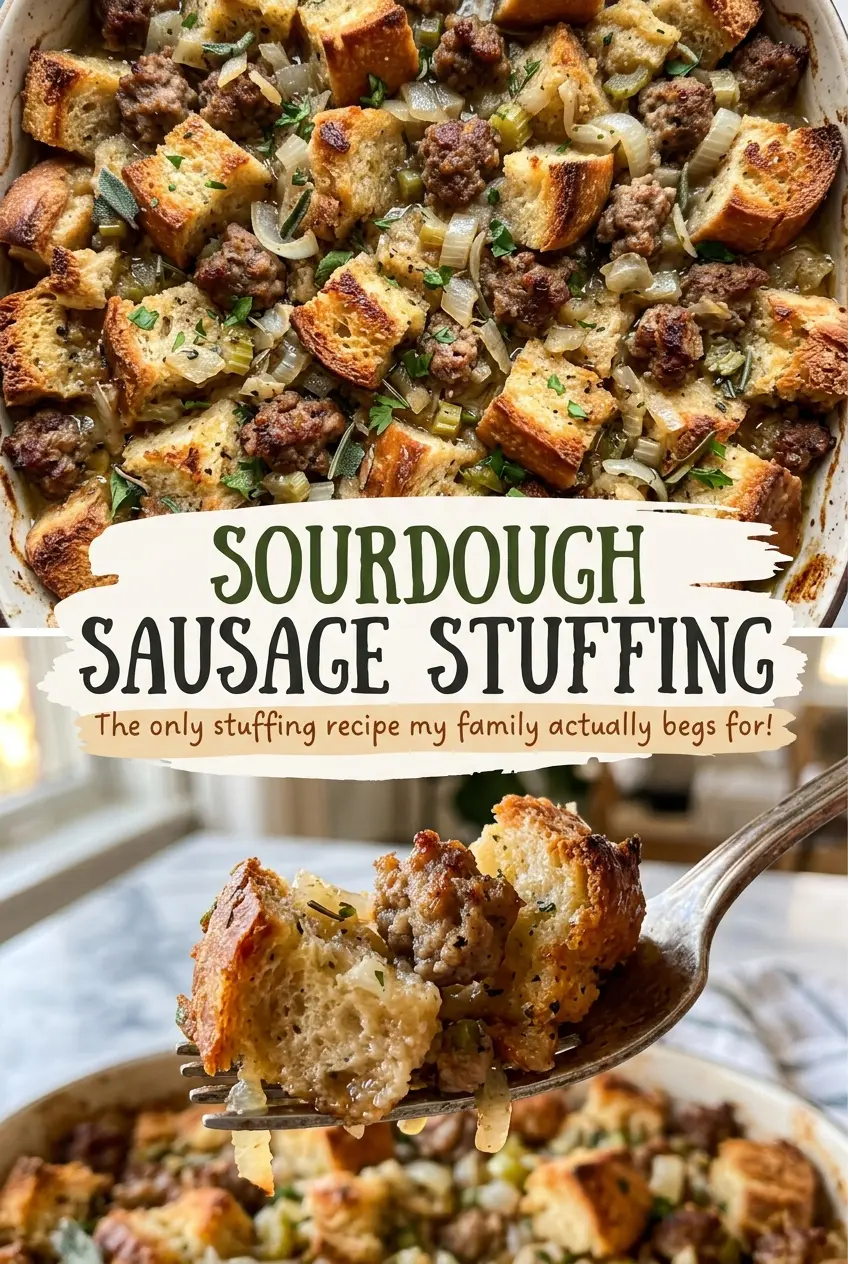
When the foil comes off, the top should look golden while the bread underneath is still tender, not dried into hard cubes. That contrast is what I look for in this sourdough sausage stuffing: crisp edges, a soft center, and enough browned pork sausage in every scoop. It’s hearty without turning heavy, and the sourdough gives it a gentle tang that stands up to the savory sausage and herbs.
I cook the onion and celery in the same skillet used for the sausage, so the vegetables pick up those savory browned bits as they soften in butter. Dried sage and thyme go in at the end, just long enough to warm and smell fragrant. Once the broth, eggs, and parsley are tossed through the bread, a short rest helps the cubes take on the liquid evenly. The finished stuffing comes out golden on top, tender in the middle, and easy to serve by the spoonful.
Kitchen Note
Bake, Serve, Wear the Vibe 👕
Editor-picked tees our Oven To Fork readers love.



We may earn from qualifying purchases at no extra cost to you.
Give the baked stuffing its full 10-minute rest before serving. It settles enough to hold together when spooned, but the top still has a lovely crisp edge.
Save this sourdough sausage stuffing for its crisp golden top, tender center, and savory pork sausage in every serving.
Why Drying the Sourdough Keeps the Middle Tender, Not Gummy
Fresh bread already holds moisture, and it has little room left to absorb the broth and egg mixture. Once baked, that can leave you with a wet, dense center even when the top looks browned. Drying the cubes first gives the bread a chance to soak up the savory liquid without collapsing into a paste.
Spread the cubes in a single layer on the rimmed baking sheet and stir them once as they dry. The goal is dry and crisp, not toasted dark brown. Sourdough has a sturdy crumb that holds its shape well, but it still needs that time in the oven before it meets the broth. If a cube feels soft in the middle when you bite it, let the tray keep going; a little extra drying now is easier than trying to fix a soggy casserole later.
The bread also gives the dish its structure. Cubes that are too small disappear into the mixture, while large pieces moisten unevenly. Cutting them to a consistent size helps the broth and eggs coat everything instead of pooling at the bottom of the bowl.
What Sourdough, Sausage, and Eggs Each Bring to the Pan

- Sourdough bread — Choose a loaf with a firm, chewy crumb rather than very soft sandwich-style bread. It stays distinct after soaking and gives the stuffing its mild tang. A bakery loaf is nice, but the drying step matters more than buying an expensive one.
- Bulk pork sausage — Bulk sausage breaks into small pieces as it browns, so it distributes through the bread instead of leaving large slices. Use a fresh package from the refrigerated section; sausage that’s already cooked won’t develop the same browned bits in the skillet.
- Low-sodium chicken broth and eggs — The broth moistens the bread, while the eggs help the baked mixture hold together. Low-sodium broth lets the sausage and the measured kosher salt season the dish without making it overly salty. Whisk the eggs thoroughly into the broth so they don’t collect in one patch of bread.
- Onion, celery, and herbs — These build the familiar savory base. Dried sage and thyme are convenient and bloom quickly in the warm butter; use parsley fresh and chop it just before mixing for a clean, bright finish.
The Stages That Give This Stuffing Its Crisp Top and Soft Center
Dry the Bread Before It Meets the Broth
Heat the oven to 300°F and spread the 3/4-inch bread cubes across an 18×13-inch rimmed baking sheet. Bake for 30–40 minutes, stirring once, until the cubes are dry and crisp. Keep an eye on the edges near the end; they should feel firm, not deeply browned. If the cubes still bend or feel soft inside, give them more time in the oven.
Brown the Sausage in Small Pieces
Cook the bulk pork sausage in a 12-inch skillet over medium heat for 8–10 minutes, breaking it into small pieces as it cooks. Let the pieces brown rather than constantly moving them around the pan. The sausage is ready when browned and it reaches 160°F. Transfer it to an 8-quart mixing bowl with the dried bread.
Soften the Vegetables in the Same Skillet
Heat the oven to 350°F and grease a 9×13-inch baking dish with 1 tablespoon of the butter. Melt the remaining 3 tablespoons in the skillet, then add the diced onion and celery. Cook for 6–8 minutes, stirring now and then, until softened; if they start to brown before they soften, lower the heat slightly. Stir in the sage, thyme, salt, and pepper for 30 seconds, then scrape the vegetables into the mixing bowl.
Moisten, Cover, Then Brown the Top
Whisk the broth, eggs, and chopped parsley in a medium bowl, pour it over the bread mixture, and toss until evenly moistened. Let it stand for 5 minutes, then transfer it to the prepared baking dish. Cover with foil and bake at 350°F for 30 minutes; uncover and bake for 20–25 minutes more, until the top is golden and the center reaches 165°F. Rest for 10 minutes before serving.
Three Ways to Adapt Sourdough Sausage Stuffing
Make It Vegetarian with Vegetable Broth
Leave out the pork sausage and use the same amount of low-sodium vegetable broth in place of the chicken broth. The result is a lighter, herb-forward stuffing with less richness, but the eggs still help it set. This version is vegetarian, though it still contains eggs and butter.
Use Gluten-Free Bread
Replace the sourdough with gluten-free bread cut into the same-size cubes, using about 12 cups. Dry the cubes until crisp before mixing; gluten-free loaves vary in density, so judge them by texture rather than by the clock alone. The finished stuffing may be a little more compact, but it will still have a tender center.
Bring in More Heat with Hot Sausage
Swap in 1 pound of hot bulk pork sausage for a spicier, peppery stuffing. Keep the rest of the ingredients and method the same. Since hot sausage brings its own seasoning, taste a browned piece before adding the measured salt to the vegetables.
Storage and Reheating
- Refrigerator: Store leftovers covered for 3–4 days. The bread softens as it sits, so the top won’t stay as crisp.
- Freezer: Freeze cooled portions in an airtight container for up to 2 months. Thaw overnight in the refrigerator for the most even reheating.
- Reheating: Cover and warm in a 325°F oven until hot throughout, uncovering near the end to refresh the top. Avoid reheating uncovered the whole time; the edges can dry before the center warms.
Questions That Come Up When Making This Stuffing
Sourdough Sausage Stuffing
Ingredients
Equipment
Method
- Heat the oven to 300°F.
- Spread the bread cubes on an 18x13-inch rimmed baking sheet and bake for 30–40 minutes, stirring once, until dry and crisp.
- Cook the sausage in a 12-inch skillet over medium heat for 8–10 minutes, breaking it into small pieces, until browned and it reaches 160°F.
- Transfer the sausage to an 8-quart mixing bowl with the dried bread.
- Heat the oven to 350°F.
- Grease a 9x13-inch baking dish with 1 tablespoon of the butter.
- Melt the remaining 3 tablespoons butter in the skillet.
- Add the onion and celery and cook for 6–8 minutes until softened.
- Stir in the sage, thyme, salt, and pepper for 30 seconds.
- Add the onion mixture to the bowl.
- Whisk the broth, eggs, and parsley in a medium bowl.
- Pour the broth mixture over the bread mixture and toss until evenly moistened.
- Let the mixture stand for 5 minutes.
- Transfer the mixture to the prepared baking dish.
- Cover the dish with foil and bake at 350°F for 30 minutes.
- Uncover and bake for 20–25 minutes until golden on top and 165°F in the center.
- Rest the stuffing for 10 minutes before serving.