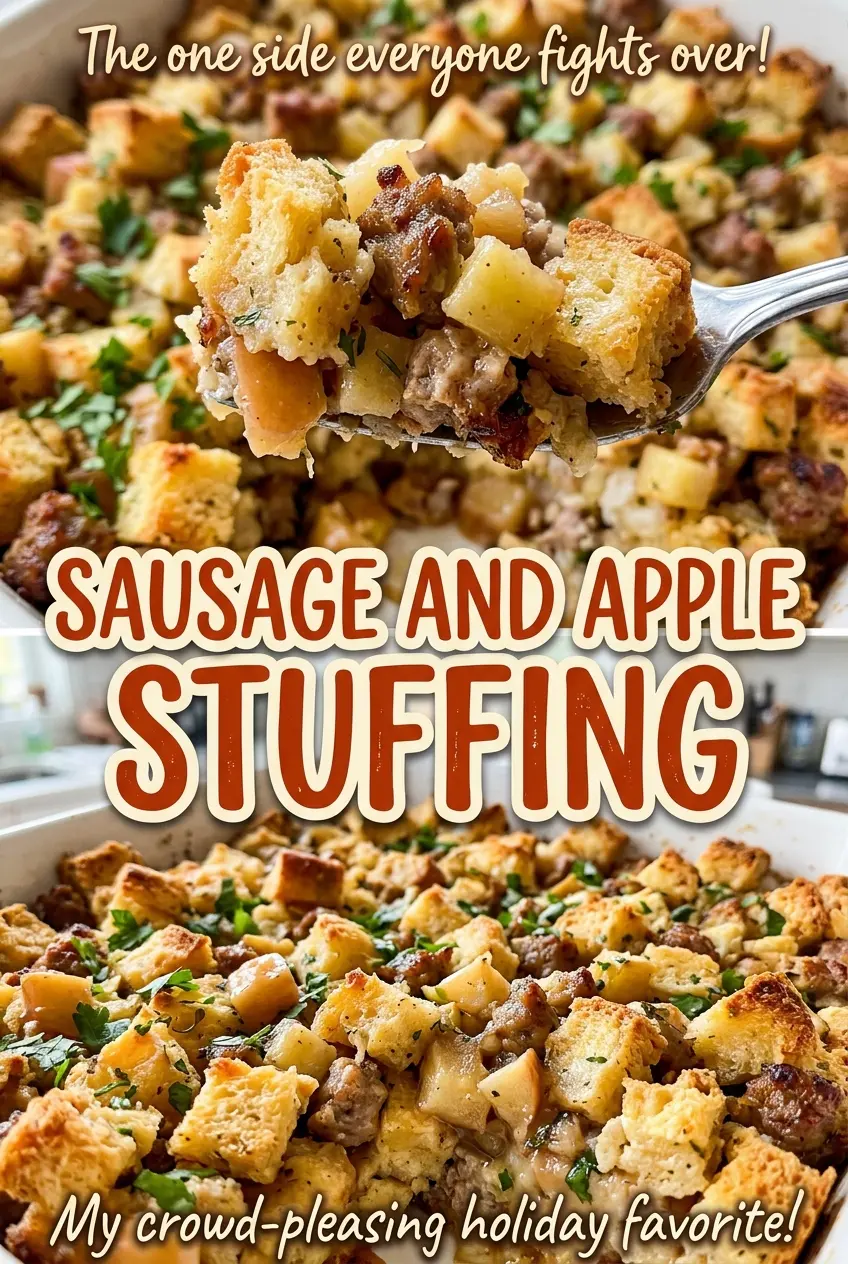
When the sausage starts browning, it leaves little savory bits in the skillet that make the apples and vegetables smell especially good as they soften. I keep everything in that same pan, then fold it through dried bread cubes for a stuffing that tastes rich without turning sweet.
The bread needs to be dry before the broth goes in. Dried cubes soak up the egg-and-broth mixture while holding their shape, so the middle stays tender rather than collapsing into a heavy, damp mass. Baking it covered first gives the center time to cook; uncovering it at the end brings back the golden top.
There’s enough pork sausage and sage to keep each bite firmly savory, with soft apple tucked between the bread and celery. This sausage and apple stuffing is the kind of casserole I want on the table: crisp on top, moist underneath, and easy to scoop.
Kitchen Note
Bake, Serve, Wear the Vibe 👕
Editor-picked tees our Oven To Fork readers love.


We may earn from qualifying purchases at no extra cost to you.
I set aside the tablespoon of butter for greasing the baking dish before I start cooking. With the skillet going and the bowl full of bread, it’s easy to lose track of which butter is meant for the pan.
Save this sausage and apple stuffing for its savory sausage, tender apples, and golden top—an easy casserole-style stuffing for a holiday table or Sunday dinner.
Why the Apples Keep This Savory, Not Sweet
Apples bring a gentle sweetness to this stuffing, but they don’t take it in a dessert-like direction. They’re cooked with onion and celery, then folded into a much larger base of bread and pork sausage. Sage and thyme keep the flavor in familiar savory territory, while the apples add a little contrast in each bite.
That balance is why I don’t add sugar or sweet spices here. The apples are there to round out the sausage, not compete with it. If you prefer a sharper edge, choose a tart apple; for a softer, sweeter note, choose a mild eating apple. Either way, core and dice it so it softens along with the vegetables in the skillet.
There’s also a useful texture contrast: the apple becomes tender in the pan, while the bread keeps the dish hearty and the top gets crisp in the oven. You get little pockets of fruit without a loose, sugary filling. It’s a small addition that makes the pork and herbs taste more layered.
What the Bread, Sausage, and Binder Each Bring
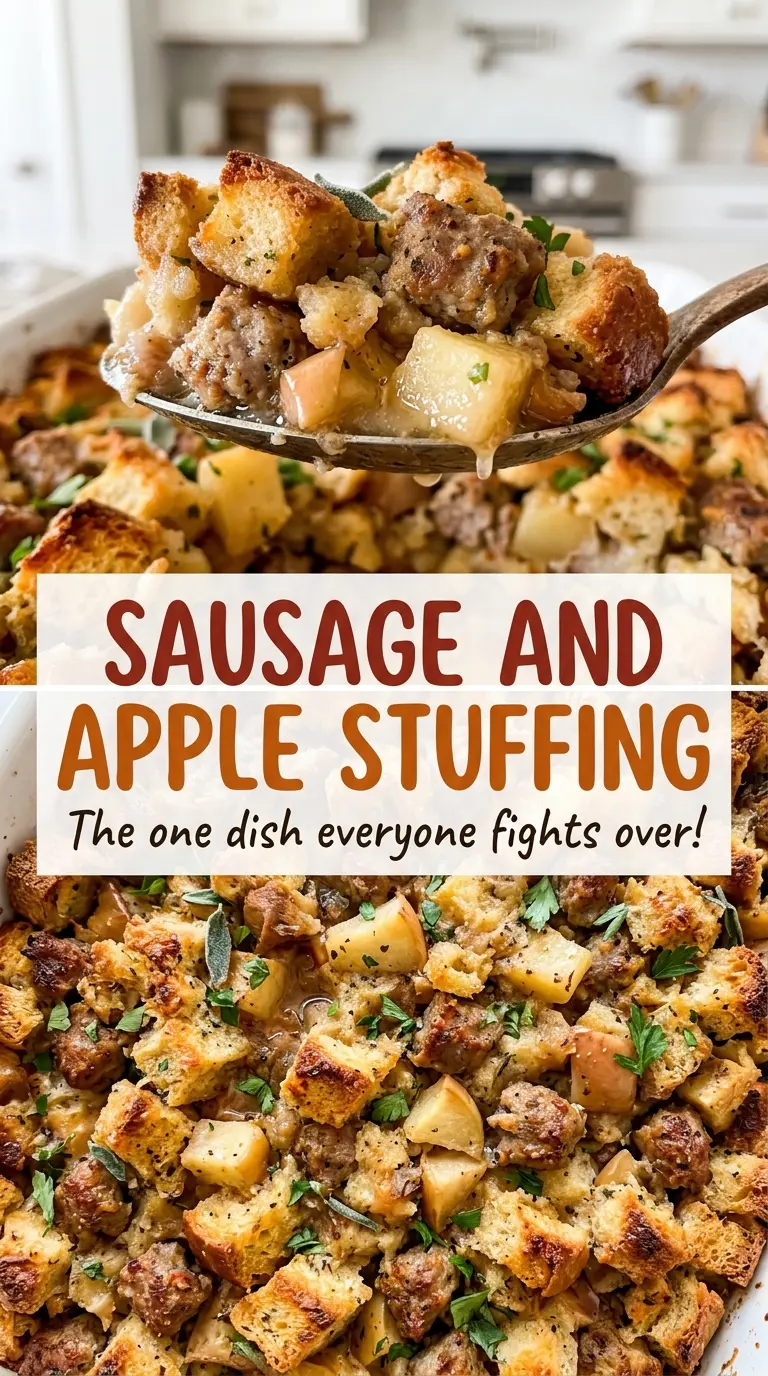
- Dried, unseasoned bread cubes — These are the structure of the dish. Their dry surface absorbs the broth without falling apart, and the unseasoned bread lets the sausage and herbs supply the flavor. For a gluten-free version, use dried, unseasoned gluten-free bread cubes in the same volume; expect a slightly more delicate texture.
- Bulk pork sausage — Sausage contributes seasoning, richness, and small browned pieces throughout the casserole. Regular grocery-store bulk sausage works well; there’s no need for specialty links or a premium brand. For a different level of heat, choose hot bulk pork sausage rather than a mild one.
- Apples — Choose apples that hold their shape reasonably well as they soften. A tart apple brings a brighter contrast, while a sweeter variety gives a mellow note. Core and dice them before they go into the skillet so the pieces cook evenly with the onion and celery.
- Yellow onion and celery — Together they make a savory, aromatic base and add softness against the bread. Fresh, firm vegetables are best here; dice them so they soften in the same skillet window rather than leaving large, crunchy pieces.
- Unsalted butter — Butter carries the vegetables and herbs through their brief skillet cook and helps grease the baking dish. Unsalted butter gives you more control over the seasoning alongside the sausage and broth. Salted butter will work, but the finished stuffing will taste saltier.
- Low-sodium chicken broth and eggs — The broth moistens the cubes, and the beaten eggs help the mixture hold together as it bakes. Low-sodium broth keeps the sausage from making the overall seasoning too salty. If using homemade broth, choose a lightly salted one.
- Dried sage and thyme — These give the stuffing its classic herbal character without adding extra moisture to the bread. Keep the herbs dried for this method; fresh herbs don’t have the same concentration, so swapping them one-for-one would change the balance.
Build the Stuffing in the Same Skillet
Brown the sausage in small pieces
Heat the oven to 350°F and grease a 9×13-inch baking dish with 1 tablespoon of butter. Put the dried bread cubes in a large bowl. Cook the sausage in a large skillet over medium heat for 8 to 10 minutes, breaking it into small pieces as it browns, until it reaches 160°F. Transfer the sausage to the bowl; leaving the browned bits in the skillet gives the vegetables a savory base.
Soften the vegetables and bloom the herbs
Melt the remaining butter in the skillet, then add the diced onion, celery, and apples. Cook for 7 to 9 minutes, stirring occasionally, until the vegetables and apples have softened. If the pan looks dry, keep stirring so the pieces don’t catch on the bottom. Add the sage, thyme, salt, and pepper and cook for 30 seconds, just until the herbs smell fragrant.
Moisten the bread without crushing it
Add the skillet mixture to the bread and sausage. Whisk the broth and lightly beaten eggs together, pour them over the bowl, then fold until the cubes are evenly moistened. Reach down to the bottom as you fold; dry cubes can settle beneath the heavier sausage and vegetables. Transfer the mixture to the prepared baking dish once the liquid is spread throughout.
Bake covered, then uncover for the golden top
Cover the dish with foil and bake for 30 minutes. Remove the foil and continue baking for 15 to 20 minutes, until the center reaches 165°F and the top is golden. If the surface is golden before the center is ready, loosely cover it again while it finishes baking. Let the stuffing rest for 10 minutes before serving so it’s easier to scoop.
Easy Ways to Adapt This Stuffing
Make it gluten-free
Replace the dried unseasoned bread cubes with an equal volume of dried, unseasoned gluten-free bread cubes. Keep the rest of the ingredients and method the same; the finished stuffing may be a little more delicate when scooped.
Turn up the heat with spicy sausage
Use hot bulk pork sausage in place of mild bulk pork sausage. It adds a peppery kick through the whole dish, so the herbs and apples taste less gentle and the stuffing has a more assertive finish.
Choose a tarter apple
Swap in a firm, tart apple for a sweeter variety. It sharpens the contrast with the pork sausage and herbs while keeping the same soft texture after cooking in the skillet.
Storage and Reheating
- Refrigerator: Cool promptly, cover, and refrigerate within 2 hours. Keep leftovers for 3 to 4 days; the top will soften in storage.
- Freezer: Freeze cooled portions in airtight containers for up to 3 months for the best texture. Thaw in the refrigerator overnight before reheating.
- Reheating: Cover and warm in a 350°F oven until steaming hot throughout. Add a small splash of chicken broth if the bread seems dry, then uncover briefly to crisp the top; reheating uncovered the whole time can dry out the edges.
Questions That Come Up Before Baking
Sausage and Apple Stuffing
Ingredients
Equipment
Method
- Heat the oven to 350°F.
- Grease a 9x13-inch baking dish with 1 tablespoon of the butter.
- Put the bread cubes in a large bowl.
- Cook the sausage in a large skillet over medium heat for 8 to 10 minutes, breaking it into small pieces, until browned and cooked to 160°F.
- Transfer the sausage to the bowl with the bread.
- Melt the remaining 5 tablespoons butter in the skillet.
- Add the onion, celery, and apples and cook for 7 to 9 minutes, stirring occasionally, until softened.
- Stir in the sage, thyme, salt, and pepper and cook for 30 seconds.
- Add the vegetable mixture to the bread and sausage.
- Whisk together the broth and eggs.
- Pour the broth and eggs over the bread.
- Fold until evenly moistened.
- Transfer the mixture to the prepared baking dish.
- Cover the dish with foil and bake for 30 minutes.
- Uncover and bake for 15 to 20 minutes, until the center reaches 165°F and the top is golden.
- Let the stuffing rest for 10 minutes before serving.