Cinnamon Roll Pumpkin Bread is the kind of loaf that disappears while it’s still warm on the counter. The crumb stays soft and moist for days, the cinnamon swirl bakes into sweet little ribbons instead of sinking into a heavy layer, and the cream cheese glaze gives each slice that bakery-style finish people always hope for but don’t always get at home.
What makes this version work is the balance. Pumpkin puree brings moisture and that earthy, mellow sweetness, while sour cream keeps the crumb tender without making it greasy. The cinnamon swirl is thick enough to stay defined, but not so thick that it turns into a candy layer on top. That matters, because a lot of pumpkin breads with swirls end up dense in the middle or unevenly baked around the sugar pockets.
Below, I’ll walk you through the small details that keep the loaf from turning gummy, how to get a clean swirl, and the one thing that makes the glaze drizzle instead of clump.
Bake, Serve, Wear the Vibe 👕
Editor-picked tees our Oven To Fork readers love.


We may earn from qualifying purchases at no extra cost to you.
The cinnamon swirl stayed layered instead of disappearing into the batter, and the loaf baked up with a super moist crumb. I let it cool before glazing and the slices held together perfectly.
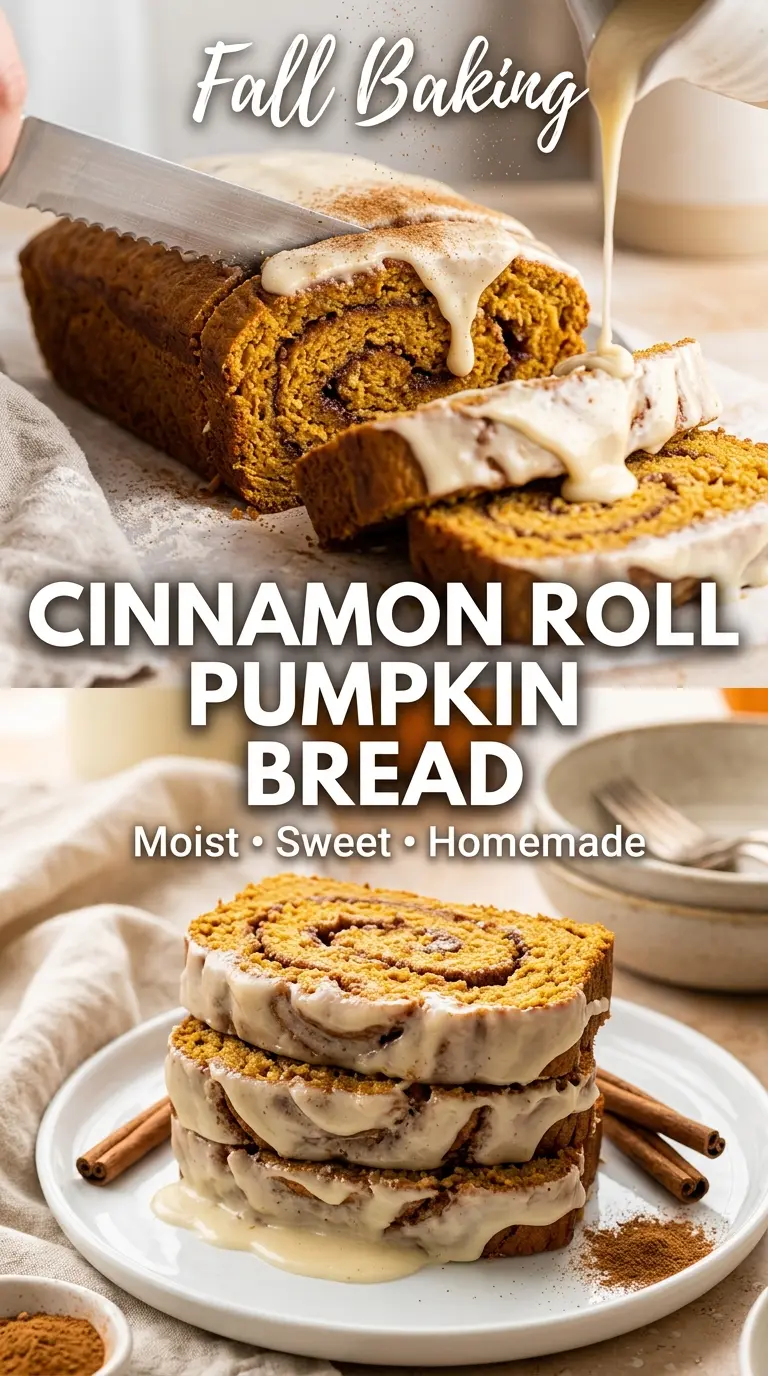
Save this Cinnamon Roll Pumpkin Bread for the days when you want pumpkin spice, a cinnamon swirl, and cream cheese glaze in one soft loaf.
The Swirl That Stays Defined Instead of Melting Away
The biggest mistake with cinnamon swirl breads is using a filling that’s too dry or too loose. Too dry, and it clumps in hard streaks. Too loose, and it disappears into the batter before the loaf even hits the oven. This recipe lands in the middle: melted butter binds the brown sugar and cinnamon into a thick paste that ribbons through the loaf instead of dissolving.
There’s another detail that matters. The batter goes in two layers, and the swirl goes on top of each one in a thin layer rather than all at once. That gives you visible cinnamon roll lines from top to bottom, and it keeps the loaf from collapsing around one heavy pocket of sugar.
- Pumpkin puree — Use plain pumpkin puree, not pumpkin pie filling. Pie filling is already sweetened and spiced, which throws off the balance and can make the loaf taste muddy.
- Sour cream — This adds tenderness and a little tang that keeps the bread from tasting flat. Plain Greek yogurt works in a pinch, but the crumb can be slightly tighter.
- Light brown sugar — Brown sugar deepens the cinnamon flavor and helps the swirl stay soft. Dark brown sugar works too, but it pushes the loaf a little richer and more molasses-heavy.
- Cream cheese — Soften it fully before mixing the glaze, or you’ll end up with little lumps that never whisk out. A block-style cream cheese gives the smoothest finish.
Getting the Batter, Swirl, and Glaze to Work Together
Mix the Dry Ingredients First
Whisk the flour, baking soda, baking powder, salt, pumpkin pie spice, and cinnamon together before anything else. That step keeps the leaveners from clumping and helps the spices spread evenly through the loaf. If you skip it, the first few slices can taste oddly spiced while the middle tastes plain.
Build the Pumpkin Batter Gently
Beat the pumpkin puree, sugars, eggs, oil, sour cream, and vanilla until smooth, then fold in the dry ingredients just until the flour disappears. Stop there. Overmixing makes pumpkin bread dense and gummy, and it’s the fastest way to lose that soft, sliceable crumb everyone wants from a loaf like this.
Layer the Cinnamon Like a Filling, Not a Topping
Spoon in half the batter, then add half the cinnamon mixture and swirl lightly with a knife. Repeat with the rest of the batter and filling. The key is a gentle swirl, not a full mix; if you drag the knife too much, the pattern disappears and the loaf bakes up patchy instead of marbled.
Bake Until the Center Is Set, Not Dry
Start checking around the 55-minute mark. The loaf is done when a toothpick comes out with a few moist crumbs, not wet batter, and the top springs back lightly when touched. If the top is browning before the center is done, tent it loosely with foil for the last stretch of baking.
Glaze After the Loaf Cools
Let the bread cool at least 15 minutes in the pan, then move it to a rack and wait until it’s just warm or fully cool before glazing. Warm bread will melt the glaze and send it sliding off the sides. The glaze should drip in thick ribbons and set softly on top, not soak straight into the loaf.
Three Ways to Make This Loaf Fit What You Need
Dairy-Free Version
Swap the sour cream for an unsweetened dairy-free yogurt and use a dairy-free cream cheese for the glaze. The loaf still stays moist, though the glaze will taste a little less tangy depending on the brand you choose.
Gluten-Free Adaptation
Use a 1:1 gluten-free baking flour that includes xanthan gum. The texture comes out a touch more delicate, so let the loaf cool fully before slicing or it can crumble at the center.
Extra Cinnamon Swirl
If you want a stronger cinnamon roll look, add a little extra cinnamon and brown sugar to the swirl, but keep the butter amount the same. Too much butter makes the center sink and leaves a greasy line through the loaf.
Storage and Reheating
- Refrigerator: Store the loaf covered for up to 5 days. The crumb stays moist, and the glaze firms up a bit on top.
- Freezer: Freeze slices or the whole loaf tightly wrapped for up to 2 months. For the cleanest texture, freeze without glaze and add it after thawing.
- Reheating: Warm individual slices in the microwave for 10 to 15 seconds or in a low oven. Too much heat dries out the edges and makes the glaze separate.
Answers to the Questions Worth Asking
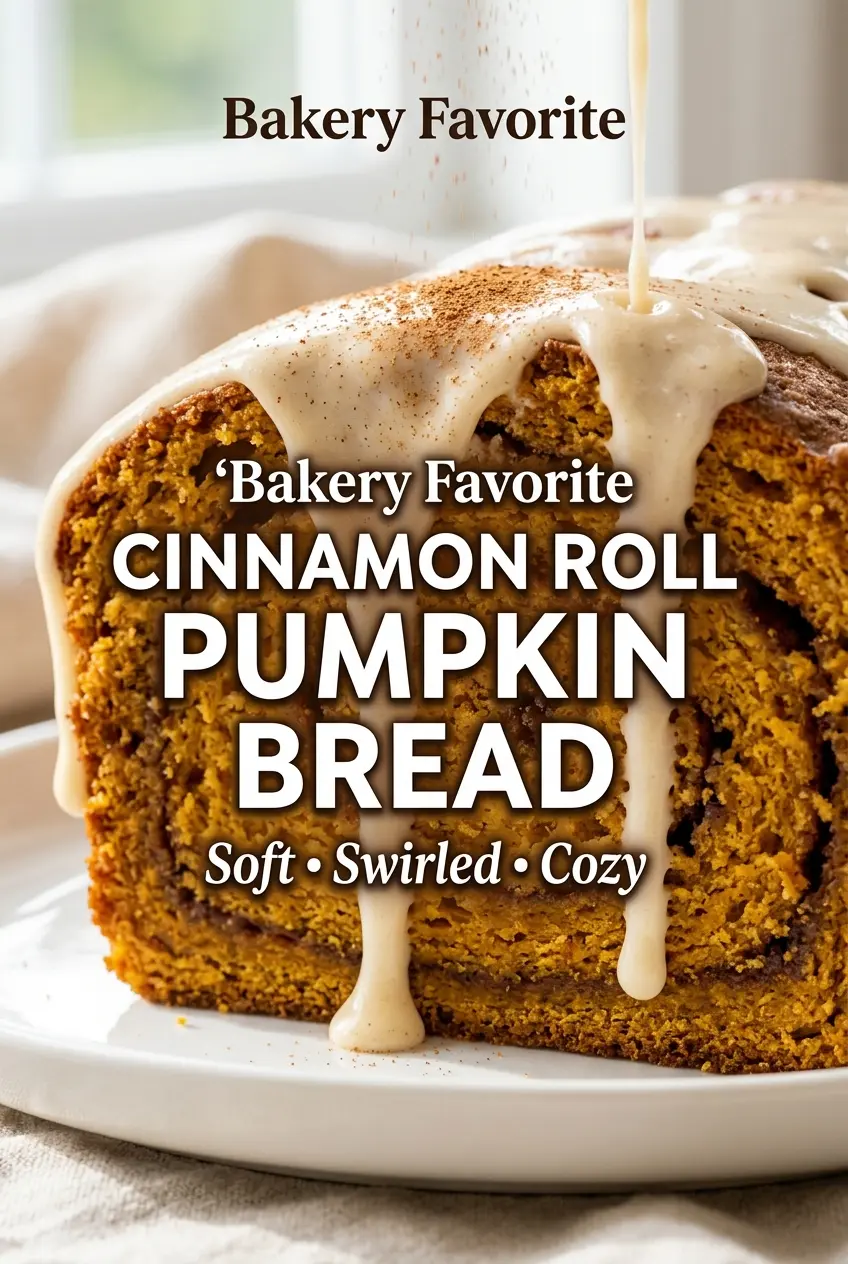
Cinnamon Roll Pumpkin Bread
Ingredients
Equipment
Method
- Preheat the oven to 350°F (175°C). Grease and line a 9×5-inch loaf pan with parchment paper.
- Whisk together the all-purpose flour, baking soda, baking powder, kosher salt, pumpkin pie spice, and ground cinnamon in a medium bowl until evenly combined. Visual cue: the spices should be uniformly speckled throughout the flour.
- Beat the granulated sugar, light brown sugar, pumpkin puree, eggs, vegetable oil, sour cream, and vanilla extract until smooth. Visual cue: the mixture should look glossy and free of streaks.
- Fold the dry ingredients into the wet ingredients just until combined. Visual cue: stop as soon as no dry flour pockets remain—do not overmix.
- Mix the light brown sugar, ground cinnamon, and melted butter in a small bowl until a thick paste forms. Visual cue: it should hold together like a spreadable mixture.
- Pour half of the pumpkin batter into the loaf pan. Visual cue: smooth the surface slightly so the swirl sits on top.
- Spoon half of the cinnamon mixture over the batter and swirl gently with a knife. Visual cue: you should see marbled cinnamon ribbons on the surface.
- Add the remaining batter and top with the remaining cinnamon mixture. Visual cue: keep the cinnamon layer mostly visible before baking.
- Swirl again with a knife to create a cinnamon roll pattern. Visual cue: create curved streaks from the middle toward the corners.
- Bake at 350°F (175°C) for 55–65 minutes, until a toothpick inserted into the center comes out with only a few moist crumbs. Visual cue: the top should look set and lightly browned.
- Cool in the pan for 15 minutes before transferring to a wire rack. Visual cue: the loaf should release slightly at the edges when moved.
- Whisk together the cream cheese, powdered sugar, milk, and vanilla extract until smooth. Visual cue: the glaze should be pourable with no lumps.
- Drizzle the glaze generously over the cooled bread before slicing and serving. Visual cue: glaze should fall in ribbons and lightly soak into the cinnamon top.