Italian Sausage Baked Ziti lands exactly where comfort food should: saucy, cheesy, and substantial enough to carry dinner without any side-eye from hungry people at the table. The pasta stays tender but not mushy, the sausage brings enough seasoning to carry the whole pan, and the baked top turns into that stretchy, browned layer everyone goes after first. It’s the kind of casserole that tastes like you worked harder than you did.
What makes this version hold together is the balance between the sauce and the cheese. The ziti gets pulled off the boil early, so it finishes in the oven instead of collapsing into softness. Ricotta goes in with the pasta mixture for creaminess, while mozzarella and Parmesan on top give you a clean, melty finish instead of a greasy blanket. The sausage is browned first, then the onion and garlic go into the same pan so every bit of flavor stays in the sauce.
Below, I’ll walk through the part that matters most: keeping the pasta from overcooking and getting the cheese layer bubbly instead of separated. I’ve also included a few smart swaps and make-ahead notes for when you want this dinner to work around your schedule.
Bake, Serve, Wear the Vibe 👕
Editor-picked tees our Oven To Fork readers love.



We may earn from qualifying purchases at no extra cost to you.
The sauce coated every noodle and the top browned beautifully without drying out. I also loved that the leftovers reheated like a dream the next day.
Save this Italian Sausage Baked Ziti for a cheesy casserole that reheats well and feeds a crowd without fuss.
The Mistake That Makes Baked Ziti Watery
Baked ziti gets soggy when three things happen at once: the pasta is cooked all the way through before it goes into the oven, the sauce is too loose, or the cheese mixture is diluted with too much moisture. This version avoids all three. The pasta finishes in the oven, the sauce simmers long enough to thicken slightly, and the ricotta is used in moderation so it adds creaminess without turning the whole dish loose.
The other problem is overmixing. Once the pasta, sauce, and cheese are combined, you want every piece coated, not drowned. If the mixture looks a little tighter than you expect, that’s a good sign. It loosens in the oven as the cheese melts and the sauce settles around the noodles.
- Parboiled ziti — Cooking it 2 minutes shy of done keeps the pasta from blowing out in the oven. It should still have a firm bite when you drain it.
- Reduced sauce — A brief simmer concentrates the marinara and tomato sauce so the final casserole slices instead of spreading across the plate.
- Ricotta — This adds creamy pockets between the noodles. Whole milk ricotta gives the best texture, but part-skim works if that’s what you have.
- Fresh herbs — Basil and parsley at the end brighten the rich sauce. Dried herbs won’t give you the same lift.
What Each Ingredient Is Actually Doing in This Dish
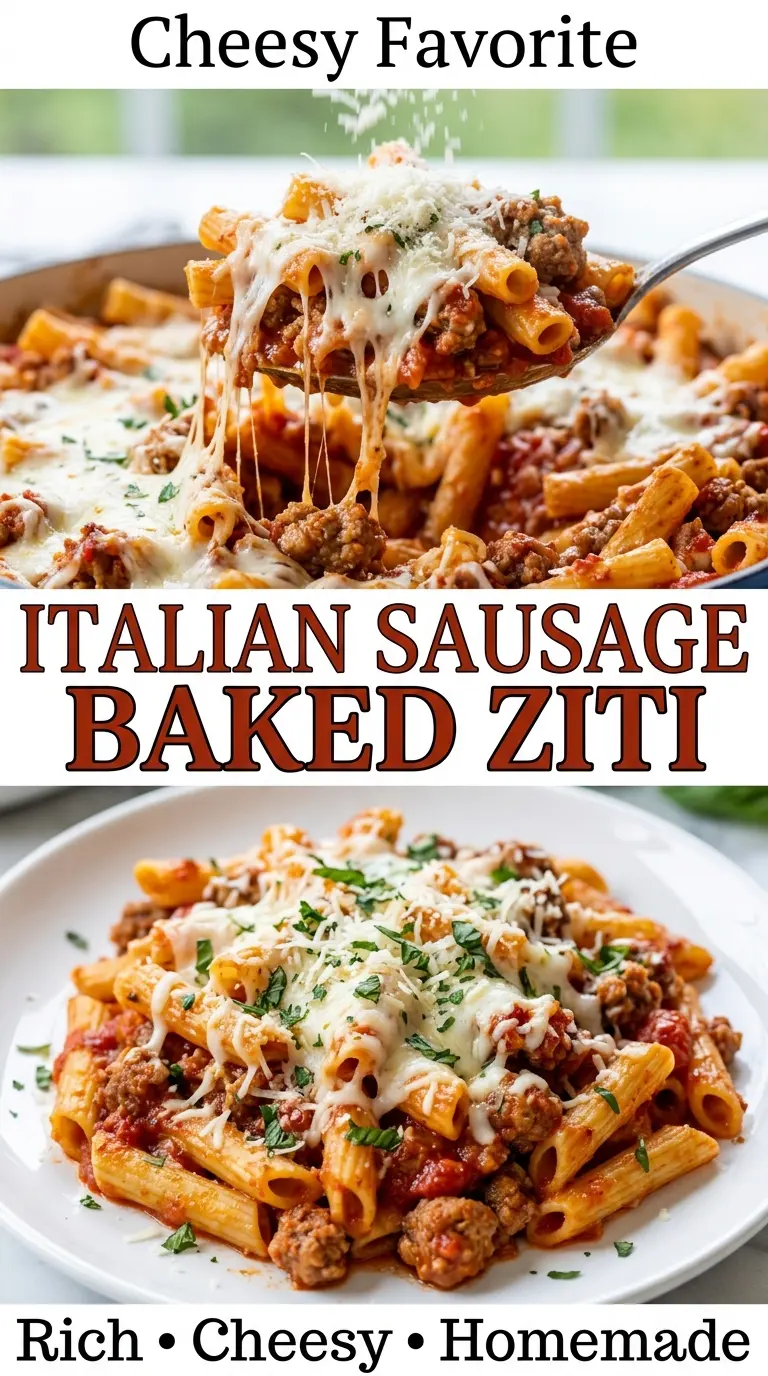
- Italian sausage — This is the main seasoning for the sauce. Mild sausage gives you a round, savory flavor; hot sausage brings more heat without needing extra spice. If you substitute ground beef, add more Italian seasoning and a pinch of fennel if you have it.
- Marinara and tomato sauce — The marinara gives you built-in seasoning, while the tomato sauce adds body. Using both keeps the flavor balanced and prevents the sauce from tasting flat. If your marinara is very salty, hold back a little of the added salt until the end.
- Ricotta, mozzarella, and Parmesan — Ricotta softens the center, mozzarella gives the melt, and Parmesan adds sharpness on top. If you only have cottage cheese, drain it first and expect a slightly looser texture.
- Ziti — The tube shape traps sauce and cheese in the middle, which is exactly what you want in a baked pasta. Penne works in a pinch, but ziti gives a better bite-to-sauce ratio.
Building the Pan So the Cheese Melts, Not Separates
Brown the Sausage First
Start with the sausage in a hot skillet and break it into small crumbles as it cooks. You want deep browning on the meat, not just gray cook-through, because those browned bits become the backbone of the sauce. If there’s a lot of fat in the pan, spoon off the excess before adding the onion so the finished bake doesn’t feel greasy.
Cook the Sauce Until It Tightens Up
Once the onion softens and the garlic turns fragrant, add the marinara and tomato sauce and let everything simmer until it looks slightly thicker than you think it should. That extra minute or two matters because baked pasta releases a little moisture as it sits in the oven. If the sauce is still thin in the skillet, it will be thin on the plate too.
Mix the Pasta While It’s Still Warm
Combine the drained ziti with the sausage sauce, ricotta, and part of the mozzarella while the pasta is still warm. Warm pasta helps the cheese melt into the noodles instead of clumping in cold streaks. Stir until every tube looks coated, then stop. Overmixing breaks the pasta and mashes the ricotta into the sauce instead of leaving you those creamy pockets.
Bake Until the Edges Bubbled and the Top Spots Turn Gold
Spread everything into the baking dish and cover the top with the remaining cheese. Bake uncovered until the edges are actively bubbling and the top has golden spots, not just pale melted cheese. Let it rest for 10 minutes before serving so the sauce settles and the first scoop holds together instead of sliding apart.
How to Adapt This for a Bigger Crowd, Less Dairy, or a Different Pasta
Dairy-Free Baked Ziti
Skip the ricotta and use a dairy-free mozzarella-style shreds for the top. The casserole will be less creamy in the middle, but the sausage sauce still carries the dish. Add a small splash of olive oil when mixing to keep the pasta from feeling dry.
Gluten-Free Version
Use a sturdy gluten-free ziti or penne and undercook it by the same 2-minute margin. Gluten-free pasta softens fast, so don’t leave it in the oven longer than needed. If your sauce is a little looser than usual, that’s normal — the pasta will absorb some of it as it bakes.
Make It Meatless
Swap the sausage for a plant-based Italian crumble or sautéed mushrooms with extra Italian seasoning. You’ll lose some of the savory fat that sausage brings, so add a little more olive oil and taste the sauce before baking. The texture stays hearty, especially if you keep the cheese layer generous.
Storage and Reheating
- Refrigerator: Store in an airtight container for up to 4 days. The pasta will absorb more sauce as it sits, so it gets a little thicker by day two.
- Freezer: It freezes well. Cool completely, wrap tightly, and freeze for up to 3 months. For best texture, freeze in portions rather than the whole pan.
- Reheating: Cover and warm in a 350°F oven until heated through, adding a splash of marinara or water if it looks dry. The common mistake is blasting it uncovered in the microwave, which dries out the edges before the center is hot.
Answers to the Questions Worth Asking
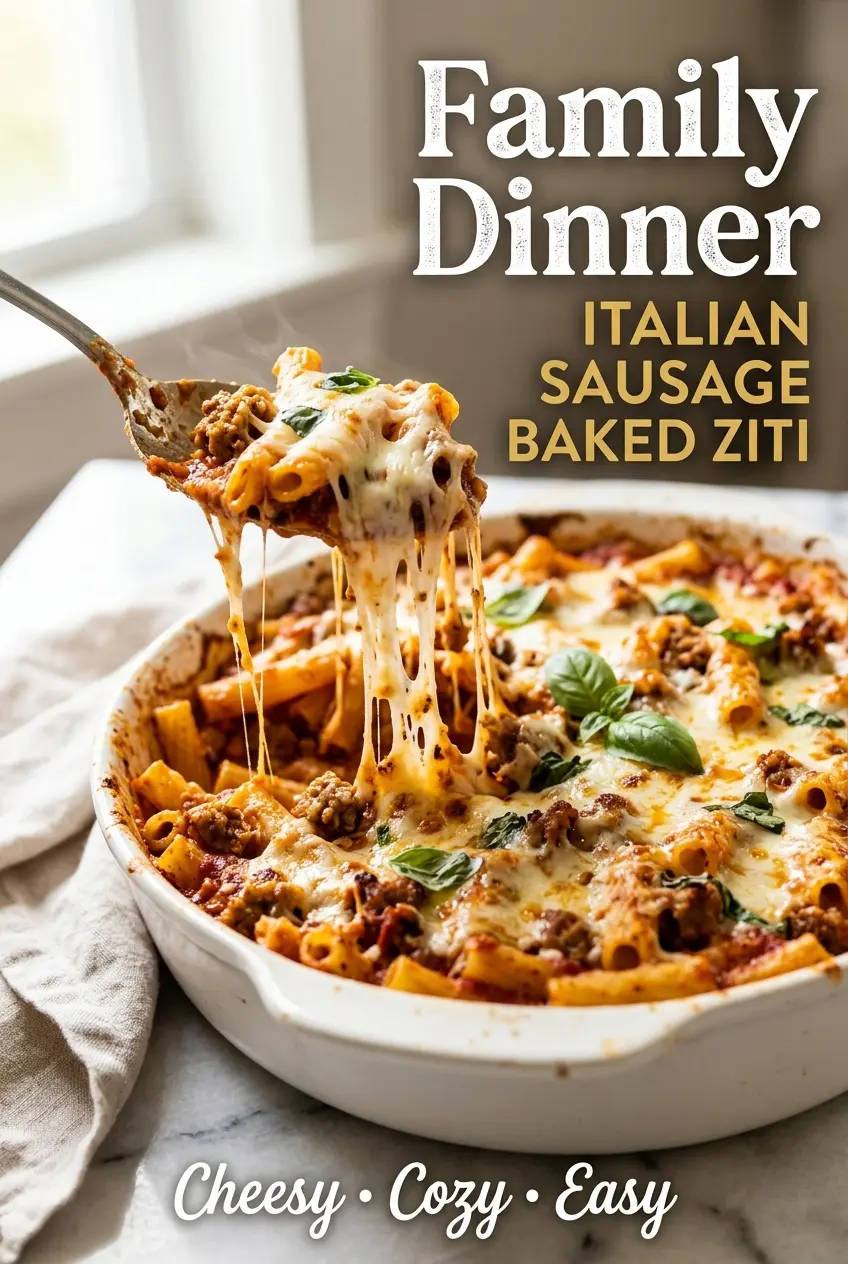
Italian Sausage Baked Ziti
Ingredients
Equipment
Method
- Preheat the oven to 375°F and lightly grease a 9×13-inch baking dish with a thin film of oil.
- Cook the ziti in salted boiling water for 2 minutes less than the package directions, then drain and set aside.
- Heat the olive oil in a large skillet over medium-high heat.
- Add the Italian sausage and cook for 6–8 minutes, breaking it into crumbles, until browned and fully cooked.
- Add the onion and cook for 4–5 minutes until softened.
- Stir in the garlic, Italian seasoning, and crushed red pepper flakes, then cook for 30 seconds until fragrant.
- Pour in the marinara sauce and tomato sauce, season with kosher salt and black pepper, and simmer for 8–10 minutes until slightly thickened.
- In a large bowl, combine the cooked ziti, ricotta cheese, half of the mozzarella, half of the Parmesan, and the sausage sauce; stir until evenly coated.
- Transfer the mixture to the prepared baking dish and sprinkle the remaining mozzarella and Parmesan evenly over the top.
- Bake uncovered for 25–30 minutes at 375°F, until the cheese is melted, bubbly, and lightly golden around the edges.
- Rest the baked ziti for 10 minutes before serving, then garnish with fresh basil and parsley.