Charred peppers, sweet onions, and juicy shrimp are a hard combination to beat, especially when they all finish on one pan with the edges just kissed by the oven. The shrimp stay tender, the vegetables pick up those browned spots that taste like they came off a hot skillet, and the whole dinner lands on the table with far less work than traditional fajitas.
The trick here is spacing and timing. The vegetables need a head start so they can soften and caramelize before the shrimp go in, because shrimp cook fast and turn rubbery in a hurry. A hot oven at 425°F gives you those roasted edges without steaming everything into softness, and tossing the shrimp with the spice mix separately keeps them from getting over-seasoned while they wait their turn.
Below, I’ve included the part that matters most: how to keep the shrimp from overcooking, how to get the peppers charred instead of limp, and a few smart swaps if you need to work with what’s already in the kitchen.
Bake, Serve, Wear the Vibe 👕
Editor-picked tees our Oven To Fork readers love.



We may earn from qualifying purchases at no extra cost to you.
The shrimp stayed plump and the peppers had those little charred edges I usually only get from a cast-iron skillet. I loved that the onions softened without turning mushy, and dinner was on the table faster than I could warm the tortillas.
Pin these sheet pan shrimp fajitas for a fast dinner with roasted peppers, juicy shrimp, and almost no cleanup.
The Reason the Shrimp Go in Last
Shrimp are the part of this dish that can go from perfect to tough in a couple of minutes, so the vegetables need their own roast time first. If you pile everything onto the pan at once, the shrimp finish before the peppers have a chance to char, and the whole tray ends up soft instead of crisp-edged and lively. Giving the peppers and onions a 12-minute head start changes the whole texture of the dish.
The other detail that matters is how the vegetables are spread out. If they’re crowded, they steam. A single layer with a little space between pieces lets the cut sides darken and the onions collapse just enough to turn sweet. That’s what makes sheet pan fajitas taste roasted instead of just heated through.
What Each Ingredient Is Actually Doing in This Dish

- Large shrimp — Use shrimp that are already peeled and deveined so they can go straight onto the pan. Large shrimp hold up better in the oven and are less likely to overcook before the vegetables are done. If you only have smaller shrimp, cut the second roast by a couple of minutes and start checking early.
- Bell peppers — This is where the sweetness and color come from. A mix of red, yellow, and green gives you better balance: red and yellow soften into something sweet, while green keeps a little bite. Slice them thin enough to char at the edges, not so thin that they collapse into ribbons.
- Onion — Thin slices matter here because thick onion wedges take longer to soften than the shrimp can afford. The onion should end up tender with browned edges, not raw in the center. Yellow or red onions both work, but red adds a little extra color and a sharper edge.
- Chili powder, cumin, smoked paprika, garlic powder, onion powder, and cayenne — This spice mix gives the dish its fajita backbone. Smoked paprika adds depth without needing a grill, and cumin keeps the flavor grounded. If you want less heat, cut the cayenne in half; if you want more punch, add it to the shrimp rather than the vegetables so it stays more concentrated.
- Lime juice — Add it at the end, not before roasting. Lime brightens everything and wakes up the spices, but if it goes in too early it can flatten the flavor and make the shrimp taste less clean. Fresh is worth using here.
- Tortillas and toppings — Warm tortillas turn this from a tray of roasted ingredients into dinner. Sour cream cools the heat, avocado adds richness, and salsa brings acidity and moisture. Cilantro is optional, but it adds the fresh finish that makes the whole plate taste complete.
How to Roast the Vegetables First and Keep the Shrimp Tender
Season the Pan in Two Rounds
Mix the spices first, then split them between the vegetables and the shrimp. That keeps the shrimp from sitting in a heavy spice coating while the oven heats, which can make them taste dull and a little muddy. The vegetables can handle the full first toss because they need more surface seasoning to build flavor as they roast.
Give the Peppers a Head Start
Spread the peppers and onions across the pan in one layer and roast them until the edges begin to brown. You’re looking for softened slices with a few dark spots, not limp vegetables that have given up their shape. If they’re piled on top of each other, move them to a bigger pan rather than waiting longer — the extra time won’t fix the steaming.
Finish with Shrimp and Lime
Push the vegetables aside and add the shrimp to the center of the pan for their short second roast. They’re done when they’re pink, opaque, and curled into a loose C shape; tight O shapes mean they’ve gone too far. Pull the pan the moment they’re ready, then squeeze the lime over the top while everything is still hot so the juice hits the spices and smells bright instead of flat.
How to Adapt These Fajitas for What You Have on Hand
Gluten-Free Taco Night
Use corn tortillas instead of flour tortillas and check that your chili powder blend doesn’t contain additives with gluten. The filling itself is naturally gluten-free, so this swap changes the experience only in texture: corn tortillas bring more flavor and a little more sturdiness if you warm them well.
Lower-Heat Version
Skip the cayenne entirely if you want the peppers and lime to lead instead of the heat. You’ll still get plenty of flavor from the cumin and smoked paprika, and the result tastes more family-style than fiery. A spoonful of salsa at the table can add heat back in for anyone who wants it.
Dairy-Free Finish
The recipe already works without dairy if you skip the sour cream or use a plain unsweetened dairy-free version. The avocado becomes even more useful here because it gives the same cooling richness that keeps the spices from feeling sharp. A little extra salsa helps replace the creamy contrast.
Storage and Reheating
- Refrigerator: Store the shrimp and vegetables in an airtight container for up to 3 days. The peppers soften a bit more after chilling, but the flavor stays good.
- Freezer: The vegetables freeze poorly once roasted, and the shrimp can turn a little watery after thawing. I don’t recommend freezing the finished dish.
- Reheating: Warm leftovers in a skillet over medium-low heat just until the shrimp are heated through. The microwave can push the shrimp past tender in a hurry, which is the fastest way to make this dish disappointing.
Answers to the Questions Worth Asking
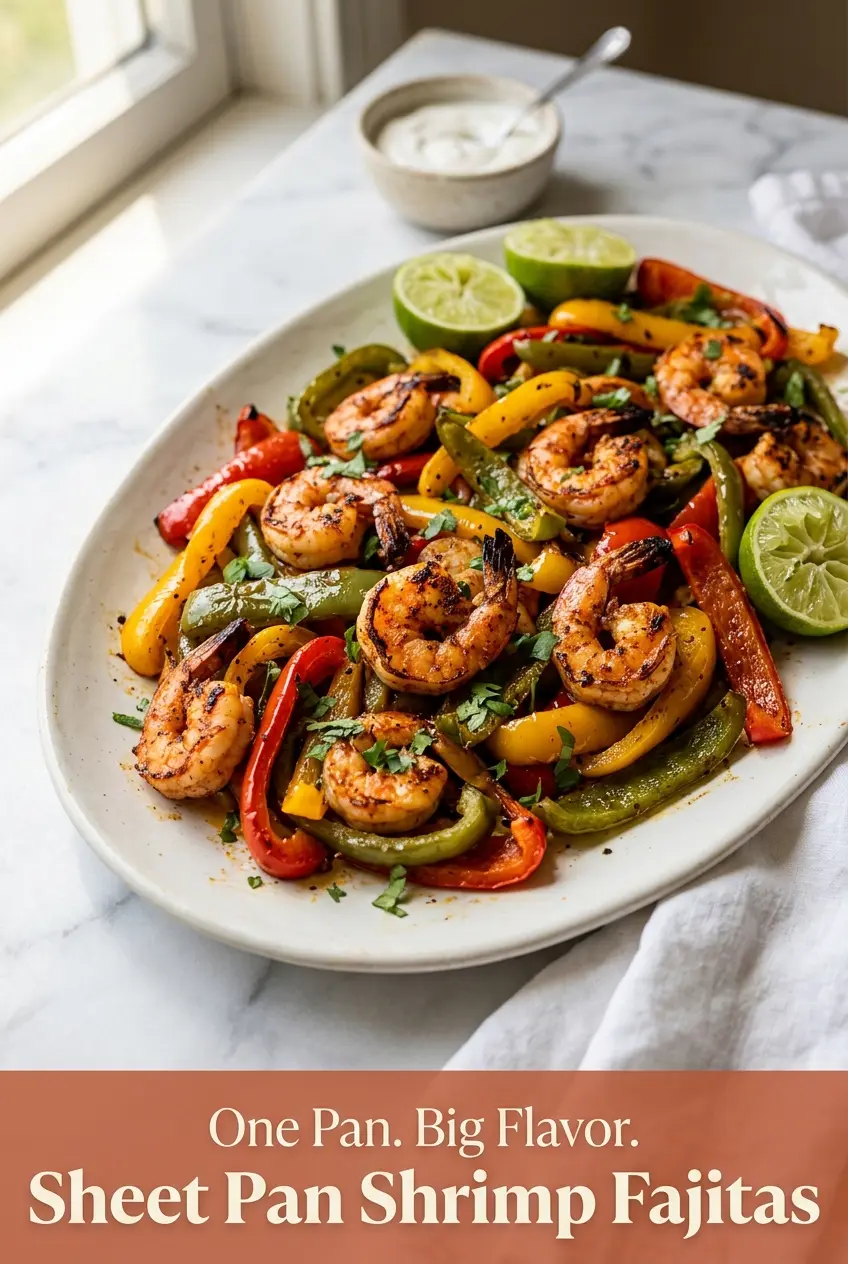
Sheet Pan Shrimp Fajitas
Ingredients
Equipment
Method
- Preheat the oven to 425°F and line a large sheet pan with parchment paper or foil as a nonstick base for easy cleanup.
- In a large bowl, combine chili powder, cumin, smoked paprika, garlic powder, onion powder, cayenne pepper, salt, and black pepper to make the fajita spice mix.
- Add sliced bell peppers and onion to the sheet pan, drizzle with 2 tbsp olive oil, and toss with half the spice mix so every piece is lightly coated.
- Spread bell peppers and onions in a single layer and roast for 12 minutes until they begin to soften and char at the edges, using the visual cue of browned spots.
- Toss the shrimp with the remaining 1 tbsp olive oil and the remaining spice mix so they’re evenly seasoned.
- Push the roasted vegetables to the sides of the pan and arrange the shrimp in the center so the shrimp cook directly in the heat pocket.
- Return to the oven and roast for 6–8 minutes at 425°F until shrimp are pink and opaque with curled tails; do not overcook to keep them juicy.
- Squeeze the juice of 1 lime over everything straight from the oven so the hot peppers and shrimp absorb the bright citrus flavor.
- Warm the tortillas and serve immediately with sour cream, fresh salsa, sliced avocado, fresh cilantro, and lime wedges for classic fajita assembly.