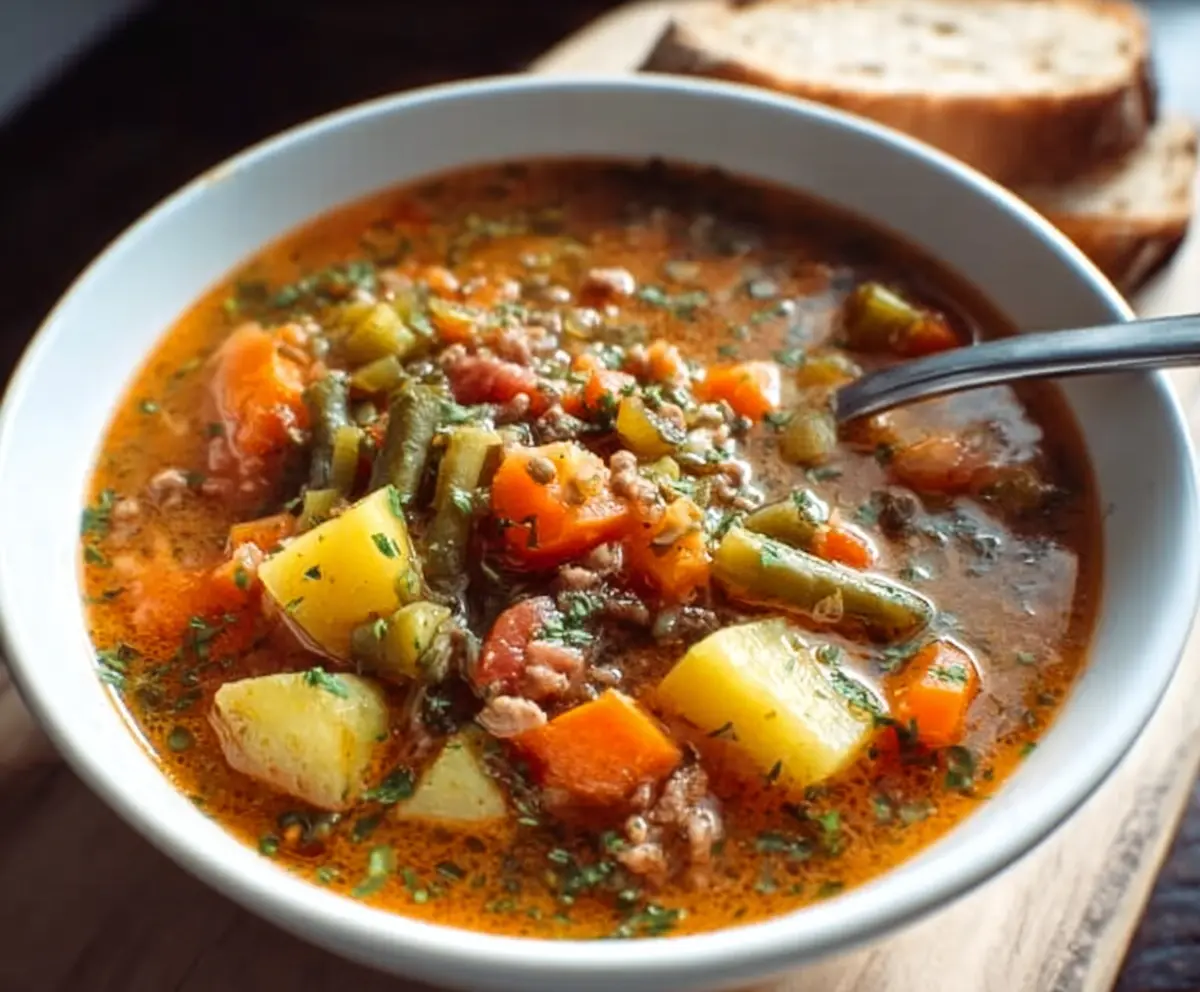
Rustic Vegetable Soup is like a warm hug in a bowl, filled with hearty chunks of fresh vegetables simmered gently to bring out their natural flavors. This soup usually has a mix of carrots, potatoes, celery, tomatoes, and green beans, giving it a cozy, countryside feel that’s both simple and satisfying.
I love making this soup on chilly days when I want something wholesome and filling without much fuss. What I appreciate most is how easy it is to customize—you can toss in whatever veggies you have on hand, and it still comes out delicious every time. I always add a sprinkle of herbs like thyme or rosemary to give it that extra little kick of warmth.
The best way I’ve found to enjoy this soup is with a slice of crusty bread to soak up all the tasty broth. It’s perfect for lunch or a light dinner, and I find it’s the kind of dish that brings people together. Whenever I serve it, everyone ends up asking for seconds, and it’s great for sharing stories around the table.
Bake, Serve, Wear the Vibe 👕
Editor-picked tees our Oven To Fork readers love.



We may earn from qualifying purchases at no extra cost to you.
Key Ingredients & Substitutions
Onion & Garlic: These two start the flavor base. Yellow onion works best for its mild sweetness. If you don’t have garlic, garlic powder can be a quick substitute, but fresh gives the best aroma.
Carrots & Celery: Classic soup veggies that add crunch and freshness. If you’re out of celery, try fennel or leeks for a slightly different but tasty twist.
Potatoes: They add body and creaminess. Yukon Gold or red potatoes hold their shape nicely. For fewer carbs, swap with cauliflower florets.
Green Beans: They bring color and texture. Fresh is best, but frozen frozen beans work fine — just add them towards the end of cooking so they stay crisp.
Diced Tomatoes: Provide acidity and richness. If you want a less tangy soup, use fresh tomatoes or omit the juice.
Broth: Vegetable broth keeps things vegetarian; chicken broth adds extra depth if you prefer. Homemade broth is great if you have it on hand.
Herbs: Thyme, oregano, and bay leaf give this soup its rustic charm. Fresh herbs are a nice touch if you have them, just add near the end of cooking.
How Can I Keep Vegetables Tender but Not Mushy?
This soup is all about having vegetables that are cooked through but still hold their shape. Here’s how I handle it:
- Cut veggies into similar-sized pieces for even cooking.
- Start by sautéing onions and garlic for flavor, then add harder veggies like carrots and potatoes early.
- Add softer veggies like green beans later in the cooking process, about 15 minutes before soup is done.
- Keep the simmer gentle, not a rolling boil, to avoid breaking down the vegetables too quickly.
- Test veggies with a fork as the soup cooks to check their texture and pull the pot off heat when they’re tender but firm.
Following these tips helps you get a perfect balance of tender, bite-able veggies that make the soup satisfying without turning mushy.
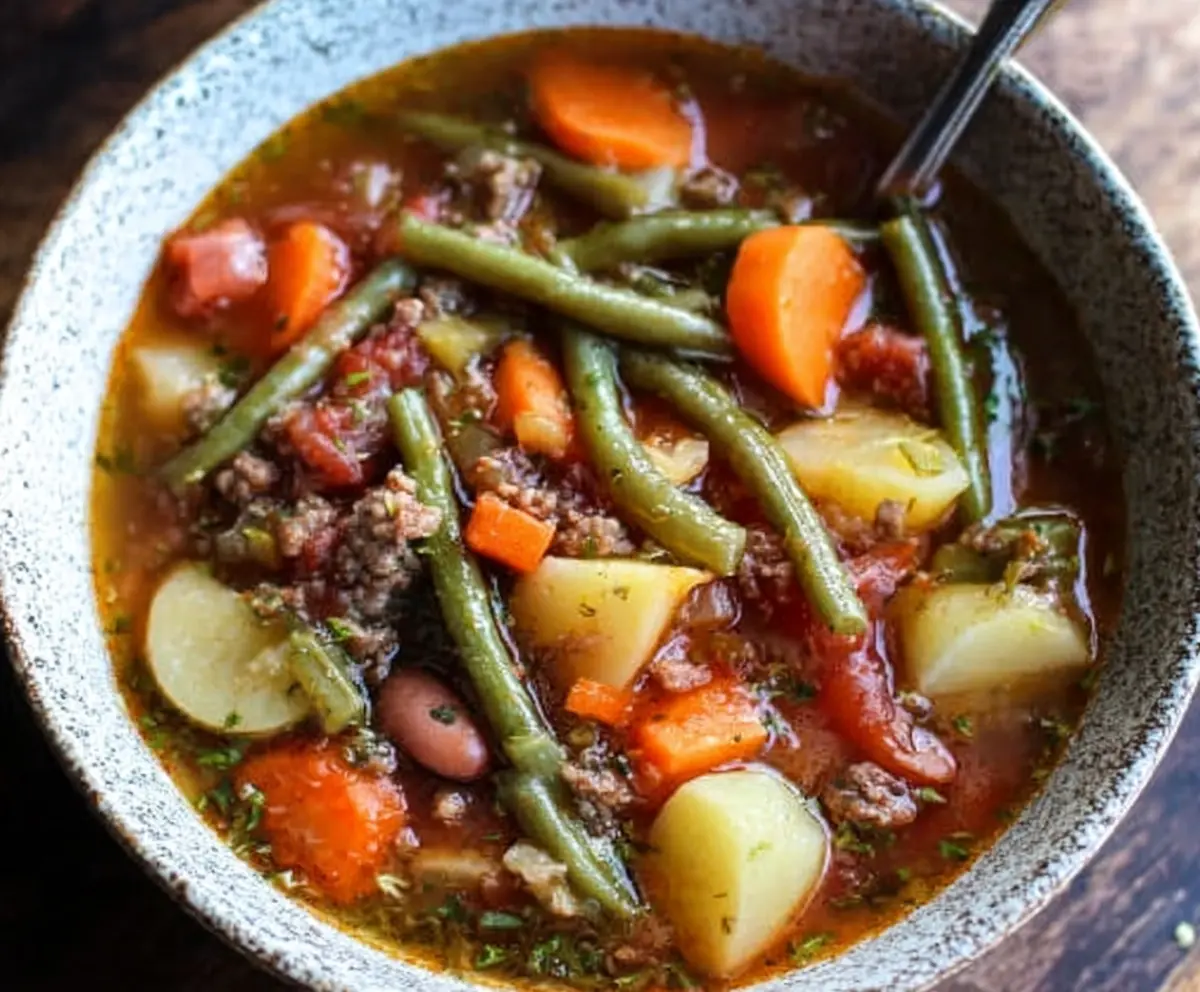
Equipment You’ll Need
- Large heavy-bottomed pot – perfect for even heat and slow simmering without burning your soup.
- Sharp chef’s knife – makes chopping all those veggies quick and safe.
- Cutting board – a sturdy surface to keep your workspace organized while prepping.
- Wooden spoon – great for stirring without scratching your pot.
- Ladle – helps you serve the soup easily into bowls without spills.
Flavor Variations & Add-Ins
- Add cooked lentils or beans for extra protein and heartiness, turning it into a filling vegetarian meal.
- Include chopped kale or spinach near the end for a boost of greens and color.
- Stir in cooked sausage or shredded chicken for more meaty flavor and texture.
- Sprinkle with grated Parmesan or a dollop of sour cream before serving to add creaminess and depth.
How to Make Rustic Vegetable Soup?
Ingredients You’ll Need:
- 2 tbsp olive oil
- 1 medium onion, diced
- 2 cloves garlic, minced
- 3 large carrots, peeled and chopped
- 2 medium potatoes, peeled and diced
- 2 stalks celery, chopped
- 1 cup green beans, cut into 1-inch pieces
- 1 can (14 oz) diced tomatoes, with juice
- 6 cups vegetable broth (or chicken broth for non-vegetarian)
- 1 tsp dried thyme
- 1 tsp dried oregano
- 1 bay leaf
- Salt and pepper to taste
- Fresh parsley or dill, chopped (for garnish)
How Much Time Will You Need?
This soup takes about 10 minutes to prepare and around 30 to 35 minutes to cook. In just under 45 minutes, you’ll have a warm, tasty meal ready to enjoy!
Step-by-Step Instructions:
1. Sauté the Aromatics:
Heat the olive oil in a large pot over medium heat. Add the diced onion and cook it until it becomes translucent, about 5 minutes. Then, add the minced garlic and sauté for another minute until it smells amazing.
2. Cook the Vegetables:
Stir in the carrots, potatoes, and celery, cooking for about 5 minutes while stirring occasionally. This softens the veggies a bit before simmering.
3. Add Remaining Ingredients and Simmer:
Add the green beans, diced tomatoes with juice, and vegetable broth. Give everything a good stir, then season with thyme, oregano, bay leaf, salt, and pepper.
Bring the soup to a boil, then lower the heat and let it simmer uncovered for 25 to 30 minutes, or until the veggies are tender but not mushy.
4. Final Touch and Serve:
Remove the bay leaf from the soup. Taste and add more salt and pepper if you’d like. Ladle the soup into bowls and sprinkle with chopped fresh parsley or dill for a nice fresh touch.
Enjoy your Rustic Vegetable Soup hot, ideally with some crusty bread on the side to soak up all the tasty broth!
Can I Use Frozen Vegetables Instead of Fresh?
Yes! Frozen vegetables work perfectly and can save time. Just add them a bit later in the cooking process—especially with green beans—to avoid overcooking and losing their texture.
Can I Make Rustic Vegetable Soup Ahead of Time?
Absolutely! The flavors actually deepen if you let it sit overnight in the fridge. Reheat gently on the stove and add a splash of broth or water if it thickens too much.
How Should I Store Leftovers?
Store leftovers in an airtight container in the refrigerator for up to 4 days. You can also freeze the soup for up to 3 months. Thaw in the fridge overnight before reheating.
Can I Add Protein to This Soup?
Definitely! Cooked beans, lentils, shredded chicken, or sausage make great additions for a heartier meal. Add them towards the end of cooking to warm through without drying out.