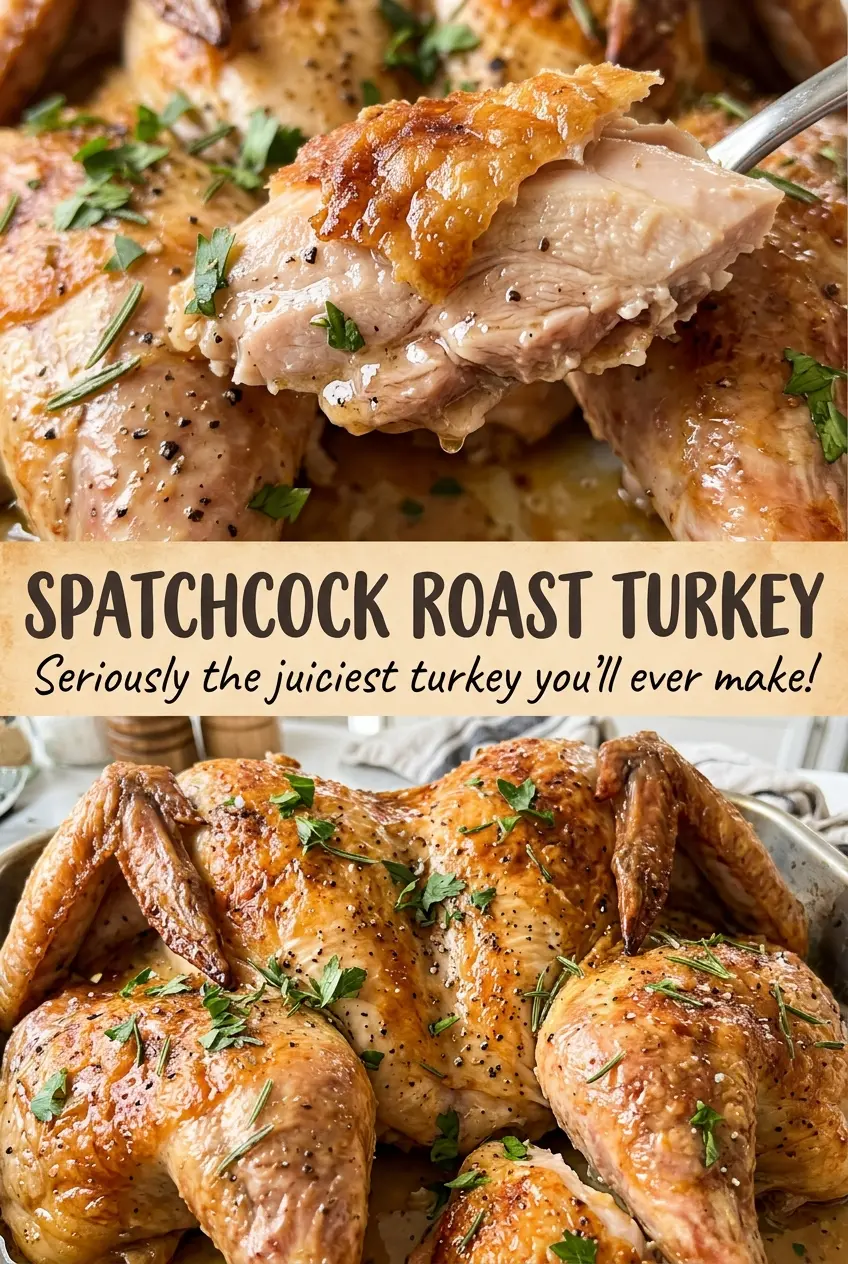
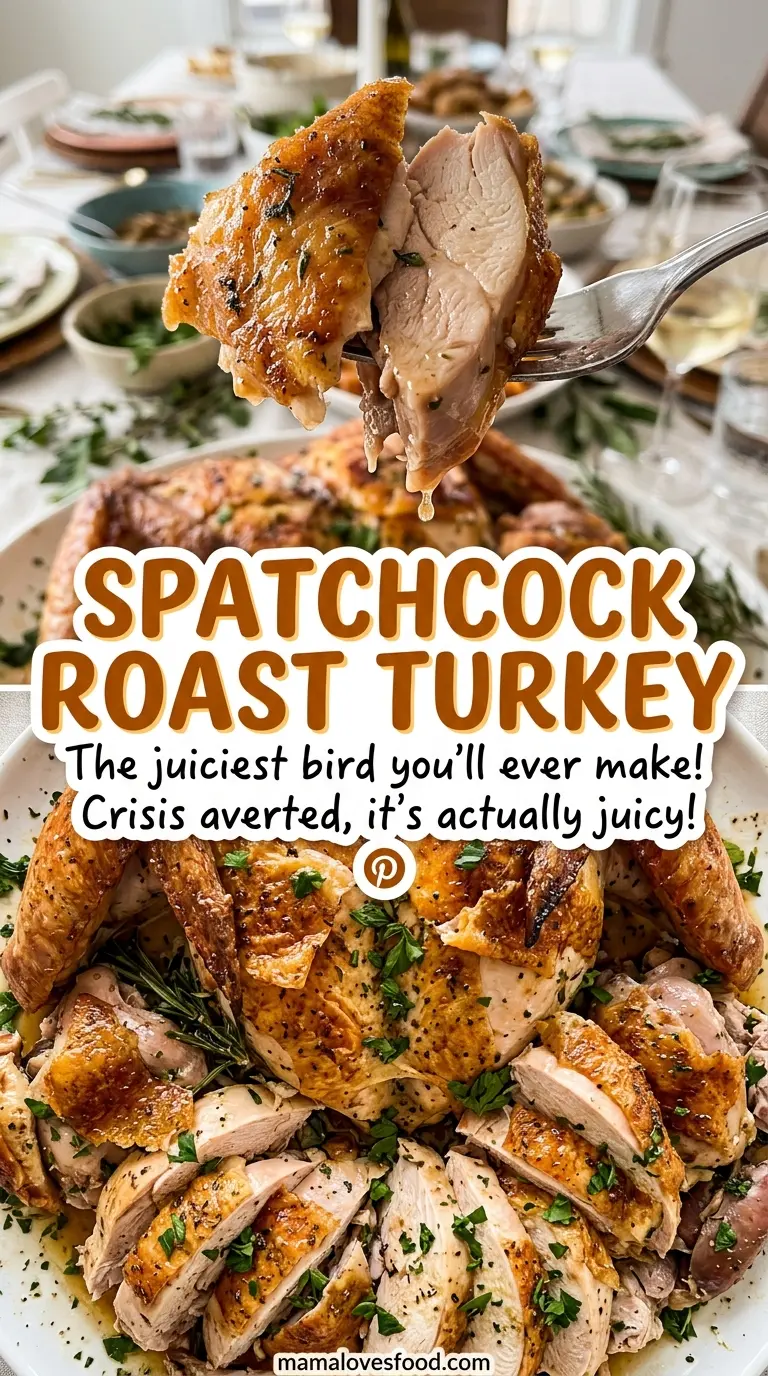
The first thing that changes when the backbone comes free is the shape: the tall bird opens out and lies flat, with the breast and legs on a more even plane. That’s what makes spatchcock roast turkey different from the usual whole-bird roast, and it’s a practical choice for a 12- to 14-pound turkey when you want the meat to cook more evenly.
I salt the turkey under the breast skin as well as over the outside, then leave it uncovered on a rack in the refrigerator. That gives the seasoning time to work through the meat while the exposed skin dries. Before it goes into the oven, softened butter mixed with thyme, rosemary, and black pepper goes both under the breast skin and across the outside. The result is a broad roast with herb-scented skin and juicy slices ready for the carving board.
Kitchen Note
Bake, Serve, Wear the Vibe 👕
Editor-picked tees our Oven To Fork readers love.


We may earn from qualifying purchases at no extra cost to you.
Use softened butter, not melted butter, for the herb mixture. It stays where you spread it under the skin and over the turkey instead of running off before the bird reaches the oven.
Save this spatchcock roast turkey for a crisp-skinned centerpiece with thyme, rosemary, and pepper butter.
Why Flattening the Turkey Helps the Breast and Thighs Finish Together
A whole turkey is tall, and its different parts don’t sit at the same height in the oven. The breast is thick, while the legs and thighs are tucked lower beside the body. Removing the backbone and pressing the breastbone until the bird lies flat changes that arrangement: more of the surface is exposed, and the breast and thighs roast in a more even layer.
That change in shape also makes the turkey easier to position skin-side up on a flat rack. It isn’t a way to skip checking the meat; thickness still varies, and the thermometer decides when it’s ready. The flat profile simply gives the heat a more direct path around the bird. For this version, the 18×13-inch rimmed baking sheet gives the 12- to 14-pound turkey a broad, supported place to roast without folding the edges underneath.
What the Butter, Herbs, and Salt Each Bring to This Turkey
- Whole turkey — A fully thawed bird is easier to cut along the backbone and press flat than one that’s still icy. Removing the neck and giblets leaves the cavity clear for the bird to open out on the board.
- Diamond Crystal kosher salt — Its light, flaky crystals make it easier to spread the seasoning over a large surface and beneath the breast skin. The specific salt matters here because crystal size affects how much salt fits into a measure.
- Unsalted butter — Butter carries the chopped herbs and pepper across the skin and beneath it, adding richness as the turkey roasts. Unsalted butter keeps the butter mixture from adding another unmeasured layer of salt.
- Fresh thyme — Finely chopped leaves distribute through the butter and give it a savory, woodsy aroma. Strip the leaves from their stems before chopping so you don’t end up with tough pieces in the mixture.
- Fresh rosemary — Its fragrant, piney note stands up to the size of the bird and pairs naturally with thyme. Chop it finely; larger pieces are harder to spread evenly under the skin.
- Freshly ground black pepper — Grinding it just before mixing keeps its aroma distinct in the herb butter. The fine, even grind also helps it spread across the turkey instead of collecting in a few spots.
From Cutting Board to Oven: The Spatchcocking and Roasting Stages
Cut Out the Backbone and Press the Bird Flat
Pat the fully thawed turkey dry with paper towels and set it breast-side down on a sturdy cutting board. Use poultry shears to cut along both sides of the backbone, then lift the backbone away. Turn the bird breast-side up and press firmly on the center of the breast until the breastbone cracks and the turkey lies flat. If it springs back into a tall shape, press again until it stays spread out.
Season Beneath the Skin and Let the Surface Dry
Gently loosen the skin over the breasts, taking care not to tear it. Rub the kosher salt over the entire turkey and beneath the loosened breast skin so the seasoning reaches both the surface and the meat below. Set the bird on a wire rack over a rimmed baking sheet and refrigerate it uncovered for 12 to 24 hours. The rack lets air circulate around the underside rather than leaving the turkey sitting against the pan.
Spread on the Herb Butter
Heat the oven to 425°F, then mix the softened butter with the finely chopped thyme, rosemary, and black pepper in a small bowl. Set a flat roasting rack in an 18×13-inch rimmed baking sheet. Spread the herb butter under the breast skin and over the outside of the turkey, then tuck the wing tips underneath. Place the turkey skin-side up on the rack, keeping the bird as flat as possible.
Roast, Check Both Areas, and Rest
Roast for 1 hour 15 minutes to 1 hour 45 minutes, rotating the pan halfway through. Cooking time varies with the turkey, so check with a thermometer in the thickest part of the breast and the innermost thigh, without touching bone. Both readings need to reach 165°F; a reading from only one area doesn’t tell you that the whole bird is ready. Transfer the turkey to a cutting board and let it rest for 30 minutes before carving.
Small Herb Changes That Shift the Flavor
Make the Butter Rosemary-Forward
Leave the thyme out of the butter and keep the rosemary and black pepper. The result leans more piney and aromatic, while keeping the same butter-spreading method and roast.
Let Thyme Take the Lead
Omit the rosemary and use the thyme with the pepper in the softened butter. The herb flavor is gentler and less resinous, without changing how the butter is applied.
Keep the Butter Pepper-Forward
Leave out both herbs and mix the butter with the black pepper. You’ll still have an easy-to-spread butter coating, with a simpler peppery finish instead of the layered herbal aroma.
Storage and Reheating
- Refrigerator: Refrigerate carved leftovers promptly in a covered container and use within 3 to 4 days. The breast meat will firm up as it chills.
- Freezer: Freeze carved portions in airtight freezer-safe packaging for up to 2 to 3 months for best quality. Thaw them in the refrigerator before reheating.
- Reheating: Arrange slices in a covered oven-safe dish and warm until hot throughout. Keep the dish covered; reheating the lean breast uncovered can dry it out.
Questions That Come Up When Roasting a Spatchcocked Turkey
Spatchcock Roast Turkey
Ingredients
Equipment
Method
- Pat the turkey dry with paper towels.
- Place it breast-side down on a sturdy cutting board.
- Cut along both sides of the backbone with poultry shears and remove the backbone.
- Turn the turkey breast-side up and press firmly on the center of the breast until the breastbone cracks and the bird lies flat.
- Gently loosen the skin over the breasts.
- Rub the salt over the entire turkey and under the loosened breast skin.
- Set the turkey on a wire rack over a rimmed baking sheet and refrigerate uncovered for 12 to 24 hours.
- Heat the oven to 425°F.
- Mix the butter, thyme, rosemary, and black pepper in a small bowl.
- Set a flat roasting rack in an 18x13-inch rimmed baking sheet.
- Spread the herb butter under the breast skin and over the outside of the turkey.
- Tuck the wing tips under.
- Place the turkey skin-side up on the rack.
- Roast for 1 hour 15 minutes to 1 hour 45 minutes, rotating the pan halfway through, until a thermometer inserted into the thickest part of the breast and the innermost thigh without touching bone reads 165°F.
- Transfer the turkey to a cutting board and rest for 30 minutes before carving.