Brown sugar glazed salmon lands on the table with a glossy, caramelized top and tender flakes underneath, and that contrast is what keeps it in the dinner rotation. The glaze bakes into a deep golden crust that tastes sweet, savory, and a little smoky, while the salmon stays juicy instead of drying out under the heat. It looks restaurant-worthy, but the method is straight home-cook practical.
What makes this version work is the balance: brown sugar for caramelization, Dijon for sharpness, soy sauce for salt and depth, and butter plus olive oil for a glaze that coats evenly without seizing up. The salmon gets baked first so it cooks through gently, then a short broil finishes the surface and gives you those sticky edges without overcooking the center. Patting the fillets dry matters here more than most people think, because moisture on the surface is the enemy of browning.
Below, I’ve included the small details that keep the glaze from sliding off, plus a few easy variations if you want to adjust the seasoning or work with what’s already in your kitchen.
Bake, Serve, Wear the Vibe 👕
Editor-picked tees our Oven To Fork readers love.



We may earn from qualifying purchases at no extra cost to you.
The glaze caramelized beautifully and didn’t burn, and the salmon stayed flaky and moist even with the broiler finish. My husband said it tasted like something from a nice restaurant.
Save this brown sugar glazed salmon for the nights when you want a caramelized dinner with almost no cleanup.
The Reason the Glaze Sticks Instead of Sliding Off
Brown sugar alone can turn into a thin syrup that runs right off salmon before it has time to color. The fix is combining it with Dijon, butter, and a little soy sauce so the mixture has body and can cling to the fish while it bakes. The glaze also needs heat from the oven to thicken in place; if you brush on a cold, watery glaze and expect it to set immediately, it usually ends up pooling on the pan instead.
The other part people miss is surface dryness. Salmon that still has moisture on top steams under the glaze, which keeps the sugar from caramelizing cleanly. A quick pat with paper towels gives you a better crust and deeper color in the final minute under the broiler.
What Each Ingredient Is Actually Doing in This Dish
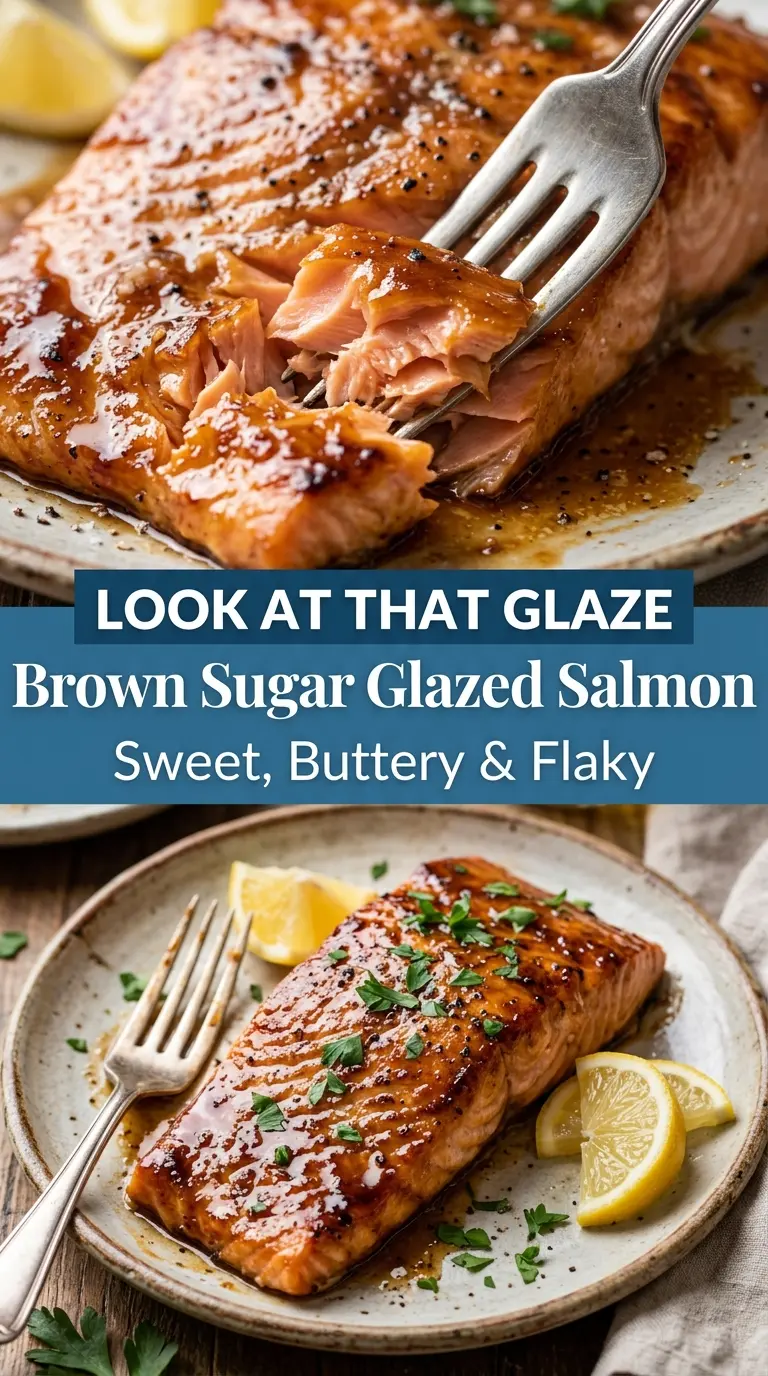
- Salmon fillets — Use center-cut fillets if you can; they cook more evenly and are less likely to dry out before the glaze colors. Frozen salmon works fine if it’s thawed fully and patted dry.
- Brown sugar — This is what gives the glaze its lacquered finish. Light or dark brown sugar both work; dark brown brings a deeper molasses note.
- Dijon mustard — Dijon keeps the sweetness in check and helps the glaze emulsify, so it spreads instead of separating. Yellow mustard won’t give the same sharp depth.
- Soy sauce — This adds salt and a savory backbone that keeps the glaze from tasting flat. Low-sodium soy sauce is an easy swap if you’re watching salt; just don’t skip it entirely.
- Butter and olive oil — Butter gives the glaze richness, while olive oil helps it brush on smoothly and brown without scorching quite as fast. Use both; replacing one with the other changes the final texture.
- Garlic, smoked paprika, and lemon juice — Garlic and paprika build warmth, while lemon juice brightens the finished glaze so it doesn’t taste sticky-sweet. Fresh lemon juice matters more than bottled here because the flavor is sharper and cleaner.
How to Bake It So the Glaze Caramelizes Without Burning
Mix the glaze until it looks smooth and loose
Whisk the melted butter, olive oil, brown sugar, Dijon, soy sauce, garlic, paprika, onion powder, lemon juice, salt, and pepper until the sugar is mostly dissolved and the mixture looks glossy. If you leave hard sugar lumps in the bowl, they tend to melt unevenly and create dark spots before the salmon is cooked through. The glaze should look brushable, not thick like frosting.
Start with dry salmon on a lined pan
Lay the fillets on parchment and pat them dry before anything else touches them. That dry surface helps the glaze cling and gives the top a better chance of browning instead of steaming. Brush on a generous layer, but don’t flood the pan; excess glaze should stay on the fish, not pool around it.
Bake first, then broil for the finish
Bake at 400°F until the salmon flakes at the edges but still looks slightly translucent in the center, usually 12 to 15 minutes depending on thickness. The broiler is for color, not extra cooking time, so keep the pan close enough to caramelize but watch it closely for that quick shift from glossy brown to scorched. If your broiler runs hot, two minutes can be too long.
Let the crust settle before serving
Give the salmon a minute or two out of the oven before moving it. That short pause lets the glaze firm up so it stays on the fillet instead of sliding off in the first cut. Finish with parsley and lemon slices for a clean, fresh edge against the sweet glaze.
What to Change When You Need a Different Version
Dairy-Free Version
Swap the butter for more olive oil or a neutral oil like avocado oil. You’ll lose a little richness, but the glaze still caramelizes well because the sugar and Dijon are doing most of the work.
Lower-Sugar Salmon
Cut the brown sugar to 2 tablespoons and keep the Dijon and soy sauce the same. The glaze will be less sticky and less dark, but the savory balance stays intact and the fish still gets a nice sheen.
Gluten-Free Swap
Use tamari instead of soy sauce. It gives the same salty depth without changing the rest of the method, and the glaze behaves the same in the oven.
Extra-Bright Finish
Add a little lemon zest to the glaze or squeeze fresh lemon over the salmon right before serving. That shift cuts through the sweetness and makes the whole dish taste cleaner and lighter.
Storage and Reheating
- Refrigerator: Store leftovers in an airtight container for up to 3 days. The glaze softens a bit, but the salmon stays usable for salads, rice bowls, or quick lunches.
- Freezer: You can freeze cooked salmon, but the texture turns softer after thawing, so I only do it when I know it’ll be flaked into another dish later. Wrap tightly and freeze for up to 2 months.
- Reheating: Warm it gently in a 300°F oven for about 8 to 10 minutes, covered loosely with foil. High heat dries salmon out fast and can burn the sugary glaze, so skip the microwave if you want to keep the texture intact.
The Things That Trip People Up With This Dish
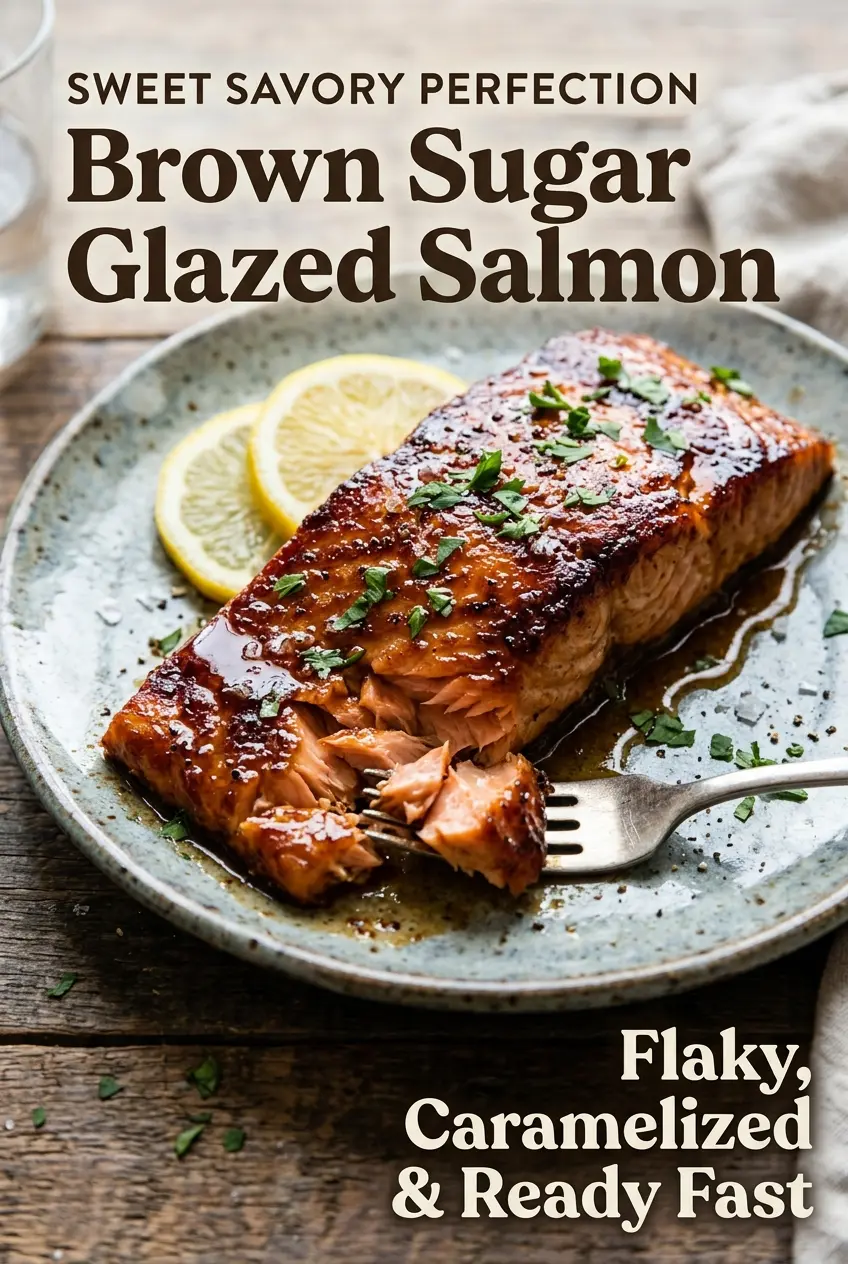
Brown Sugar Glazed Salmon
Ingredients
Equipment
Method
- Preheat the oven to 400°F (200°C).
- Line a sheet pan with parchment paper and lightly grease it.
- Pat the salmon fillets dry with paper towels.
- In a small bowl, whisk together the melted butter, olive oil, brown sugar, Dijon mustard, soy sauce, garlic, smoked paprika, onion powder, lemon juice, salt, and black pepper until smooth.
- Arrange the salmon fillets on the prepared sheet pan.
- Brush the glaze generously over each fillet.
- Bake for 12–15 minutes, depending on thickness, until the salmon is cooked through and just flakes.
- Broil for 1–2 minutes until the glaze becomes caramelized and golden at the edges.
- Garnish with chopped fresh parsley and lemon slices before serving.