Juicy salmon burgers should taste like actual salmon, not a generic seafood patty held together by breadcrumbs. These come out crisp on the outside, tender in the middle, and sturdy enough to stack on a bun without falling apart. The fresh lemon, herbs, and Dijon keep the flavor bright, while the chopped salmon gives you that clean bite you don’t get from a processed paste.
The trick is keeping the salmon finely chopped instead of ground or pureed. That small change gives the burgers a lighter texture and keeps them from turning dense. A short chill in the fridge also matters here, because the mixture firms up just enough to handle the pan without losing that soft center.
Below, I’ve included the part that matters most: how to keep the patties together, what to watch for in the skillet, and a few smart swaps if you want to change up the sauce or make the recipe work with what’s in your fridge.
Bake, Serve, Wear the Vibe 👕
Editor-picked tees our Oven To Fork readers love.



We may earn from qualifying purchases at no extra cost to you.
The salmon stayed chunky and the burgers held together beautifully after the 15-minute chill. The lemon dill sauce was the best part and kept everything from tasting heavy.
These salmon burgers stay tender in the middle and the lemon dill sauce keeps the whole sandwich bright and fresh.
The Salmon Burger Mistake That Leads to Dry, Crumbly Patties
The biggest mistake with salmon burgers is treating the fish like a meatball mixture. If you overwork it, the salmon breaks down and the patties turn soft, dense, and dry at the same time. Chopping the fish by hand keeps visible pieces intact, which gives you a juicier burger with better texture and a cleaner salmon flavor.
The other place these go wrong is the pan. Too much heat browns the outside before the center sets, and too little heat leaves the patties pale and fragile. Medium heat with a thin layer of olive oil gives you that deep golden crust without scorching the seasoning.
- Chopped salmon — This is the heart of the recipe. You want small, even pieces, but not a paste. If you can only find salmon fillets with skin on, peel it off first and trim away any dark bloodline for the cleanest flavor.
- Panko breadcrumbs — Panko keeps the burgers light instead of bready. Regular breadcrumbs work in a pinch, but the texture is tighter and a little heavier.
- Mayonnaise and egg — These bind the mixture and add moisture. The mayo disappears into the salmon and helps protect it from drying out in the skillet.
- Dijon, lemon, and dill sauce — Dijon sharpens the fish, lemon lifts it, and dill gives the sauce its familiar fresh finish. Greek yogurt keeps the sauce tangy and thick; sour cream works if that’s what you have.
What Each Ingredient Is Actually Doing in These Salmon Burgers
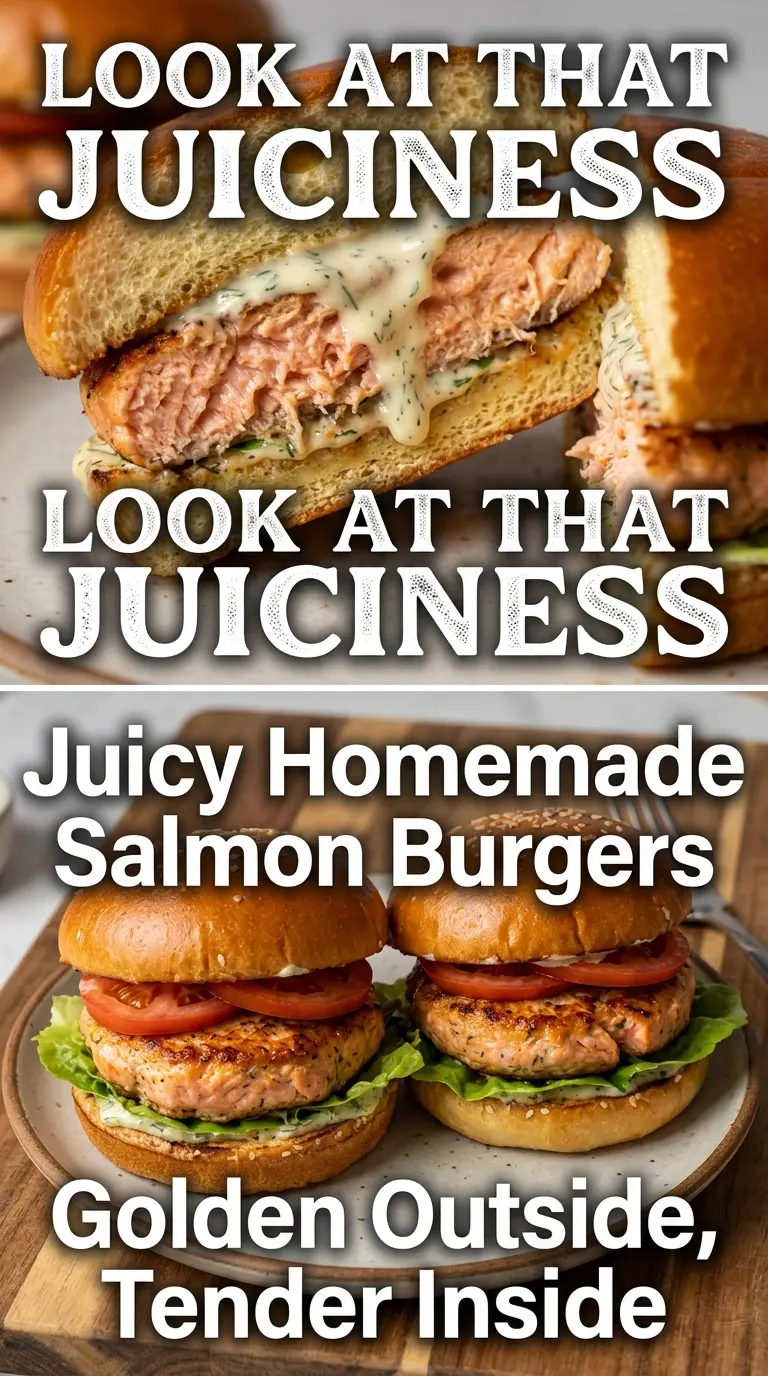
Fresh salmon matters more here than it would in a canned salmon cake. You want the natural fat and clean flavor of the fish to carry the burger, and the chopping method gives you control over the final texture. If you use previously frozen salmon, thaw it completely and pat it dry before chopping so the mixture doesn’t get loose.
Mayonnaise does more than bind. It adds richness without making the burgers taste heavy, and it helps the salmon stay succulent even after a few minutes in the skillet. Greek yogurt in the sauce brings the same kind of body with a sharper tang, which keeps the sandwich from tasting flat.
Brioche buns are a good match because they’re soft and slightly sweet, but they’re not mandatory. A sturdy sesame bun or potato roll also works. Pickles and red onion cut through the richness, so I wouldn’t skip them if you want the burger to taste balanced instead of one-note.
How to Keep the Patties Intact and the Centers Tender
Chop, Don’t Mash
Finely chop the salmon into small pieces and stop before it turns paste-like. You’re looking for bits that still look like salmon, because those pieces keep the burgers tender and give you the right bite. Once the fish is mashed, the patties pack down too tightly and lose that juicy texture.
Mix Just Until the Bowl Comes Together
Add the seasonings, egg, breadcrumbs, mayo, mustard, and herbs, then fold everything together gently. The mixture should hold when squeezed, but it shouldn’t look whipped or sticky. Overmixing works air out of the salmon and can make the burgers tough after cooking.
Chill Before the Pan
Shape the mixture into four patties, then refrigerate them for 15 minutes. That short rest gives the breadcrumbs time to hydrate and the fat in the salmon to firm up, which makes the patties much easier to flip. If they go into the skillet warm, they’re more likely to spread or break at the edges.
Cook to a Deep Golden Crust
Use medium heat and let the burgers cook without moving them for the first few minutes. You want the underside to turn a deep golden brown before flipping, because that crust helps lock the burger together. If the skillet smokes hard, the heat is too high and the outside will finish before the center does.
Finish With the Sauce
Stir the lemon dill sauce together while the burgers cook, then assemble right away. The sauce should be thick enough to spoon, not pour, so it stays on the bun instead of running off the plate. Toasted buns help too, especially if you’re serving tomato and pickles, because they keep the bottom from getting soggy.
Three Ways to Adapt These Salmon Burgers Without Losing the Good Part
Dairy-Free Version
Use a dairy-free yogurt in the sauce and keep the rest of the recipe the same. The burger itself is already dairy-free, so this swap only changes the sauce texture slightly; choose a thick, unsweetened yogurt so the sauce still clings to the sandwich.
Gluten-Free Salmon Burgers
Swap the panko for gluten-free breadcrumbs or crushed gluten-free crackers. The patties still bind well, though the texture will be a little denser if your crumbs are very fine, so keep the mix light and don’t add extra crumbs unless the mixture is too wet.
No Brioche? Use a Bowl or Lettuce Wrap
These burgers work well in lettuce wraps or over a salad if you want something lighter. You lose the soft, buttery bun experience, but you gain a fresher, cleaner finish that lets the salmon and dill stand out even more.
Storage and Reheating
- Refrigerator: Store cooked patties for up to 3 days. The crust softens a little, but the flavor holds well.
- Freezer: Freeze cooked patties in a single layer, then transfer to a bag for up to 2 months. Thaw in the fridge before reheating so the outside doesn’t overcook before the center warms.
- Reheating: Warm in a skillet over low heat with a lid for a few minutes per side, or use a 350°F oven until heated through. High heat dries salmon fast, so skip the microwave if you want the burgers to stay tender.
The Things That Trip People Up With This Dish
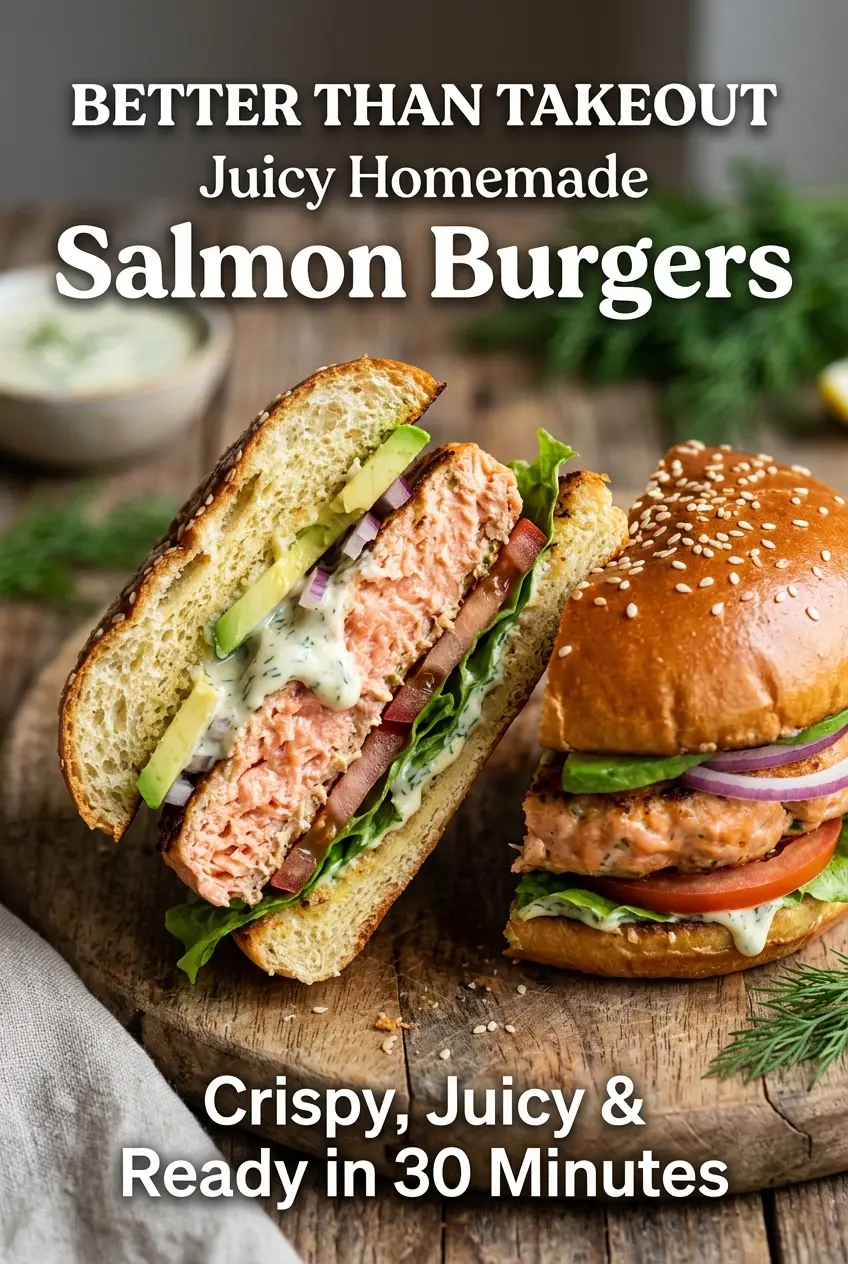
Juicy Homemade Salmon Burgers
Ingredients
Equipment
Method
- Finely chop the fresh skinless salmon into small pieces, keeping the texture chunky rather than pureed.
- In a large bowl, combine salmon, panko breadcrumbs, egg, mayonnaise, Dijon mustard, green onions, chopped fresh parsley, lemon juice, lemon zest, garlic powder, onion powder, smoked paprika, salt, and black pepper.
- Mix gently until just combined so the burgers stay tender and don’t become paste-like.
- Shape the mixture into four equal burger patties and press lightly so they hold their shape.
- Refrigerate the patties for 15 minutes so they firm up and cook cleanly.
- Heat olive oil in a large skillet over medium heat until it shimmers.
- Cook the patties for 4–5 minutes per side until golden brown and cooked through, flipping once for the best crust.
- Stir together Greek yogurt, mayonnaise, fresh lemon juice, chopped fresh dill, garlic powder, and salt and pepper to taste.
- Toast brioche burger buns if desired until lightly golden and crisp.
- Build each burger with lettuce leaves, tomato slices, red onion slices, a salmon patty, lemon dill sauce, and avocado slices if using.
- Add pickles to each burger for tang and serve immediately while the patties are hot.